Maven AI can analyze your data for you. Just ask.Try it now
growth in signups
increase in plan upgrades
more demo bookings
traffic growth

ContentStudio is a social media management and content marketing platform that helps businesses create, plan, publish, analyze, and manage content across multiple channels from a single place.
SaaS/Marketing & Social Media
50+ members
Claymont, Delaware, United States
ContentStudio is a social media management platform that acquires users through a combination of paid campaigns and organic channels, contributing to its trial signups and revenue growth.
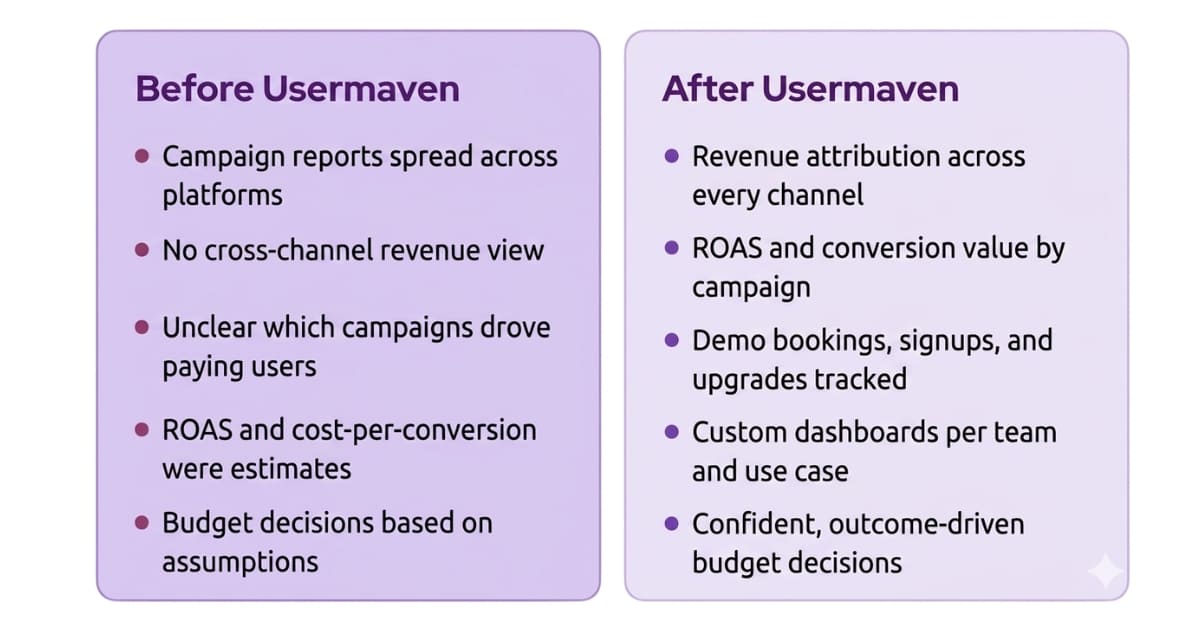
They ran campaigns across Google Ads and Meta Ads, while also testing additional channels like LinkedIn and X. Each platform provided click data and cost reports, but none connected ad spend to real outcomes like signups, demo bookings, plan upgrades, or revenue.
As a result, budget decisions were based on assumptions rather than clear attribution. The team could see surface-level activity, but not which campaigns were actually contributing to paying customers or long-term value.
After implementing Usermaven, ContentStudio established end-to-end attribution across all paid channels. They could now identify which campaigns drove conversions, which channels contributed to upgrades, and where funnel drop-offs were impacting revenue. This allowed them to allocate budget based on measurable outcomes instead of platform-reported metrics.
Ahmer (Product Manager) says:
“Usermaven made it easy for us to see which campaigns are actually bringing signups and paid users. We can now confidently track which channels and campaigns drive revenue and scale them without guesswork.”
This shift gave ContentStudio a clear path to improve marketing ROI by investing in campaigns based on actual revenue contribution.
ContentStudio's paid campaigns were generating traffic. The problem was everything that happened after the click. Platform dashboards like Google Ads and Meta Ads stop at clicks and reported conversions.
They offer no visibility into whether those conversions became paying subscribers, which plan tiers they chose, or how long it took them to convert.
As Ahmer explains:
"We were spending across Google and Meta but had no reliable way to confirm which campaign was actually generating paying customers. We could see clicks but not revenue."
GA4 added another layer of incomplete data. While it tracked traffic and some conversion events, GA4 reporting delays and limited attribution visibility made it difficult to connect specific users from paid campaigns to actual subscription revenue.
Multi-touch attribution was missing entirely. A user who clicked a Google ad, returned through organic search, and then converted after a Meta retargeting ad would be credited to only one source, or none at all.
This created three major challenges:
Some campaigns appeared profitable based on CPC or conversion metrics, but the team could not verify whether those conversions translated into paid subscriptions.
Ahmer adds:
"We could not confidently scale any campaign because we did not know if the conversions we saw in the platform dashboards were people who actually paid us. The attribution gap made every budget decision a risk."
Without reliable revenue attribution, ContentStudio lacked the clarity needed to optimize ad spend effectively across channels.
ContentStudio evaluated several tools before choosing Usermaven. The decision came down to three factors:
Ahmer adds:
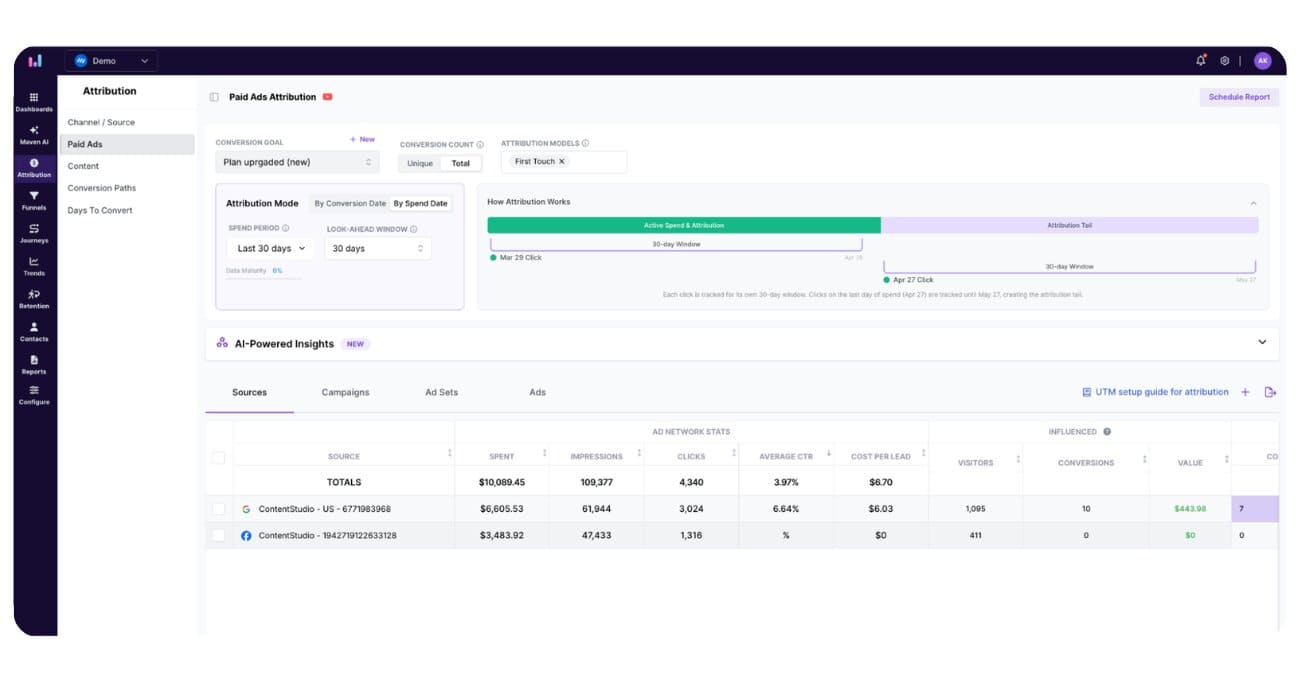
“Three things made it an easy call. First, the setup was genuinely painless & quick. We were tracking conversions cleanly within a day. Second, the Paid Ads Attribution view gave us, out of the box, the exact report we'd been trying to build manually for months: spend, clicks, CTR, cost per lead, conversions, and conversion value, all per source and campaign. Third, the custom dashboards let us build views that matched how we actually think about our funnel.”
Usermaven connected Google Ads and Meta Ads directly to signup activity, demo bookings, subscription upgrades, and revenue events inside the ContentStudio product.
This unified attribution reporting into a single view, allowing the team to track:
Custom dashboards gave both marketing and product teams a shared view of funnel performance and paid conversion analytics.

Form tracking added another layer of visibility by capturing how users interacted with high-intent actions like demo bookings. This helped the team identify drop-off points within the funnel and improve conversion rates based on actual user behavior rather than assumptions.
With clear attribution in place, ContentStudio shifted from tracking campaign activity to actively optimizing its paid acquisition strategy around revenue and ROI.
ContentStudio moved beyond platform-reported conversion counts and tracked each campaign's actual revenue contribution, for example, how many signups from a given Google Ads campaign converted to paid plans, at what tier, and within what timeframe.
This replaced assumed ROAS with measured ROAS across every active campaign and allowed ContentStudio to shift from campaign monitoring to revenue-driven campaign optimization.
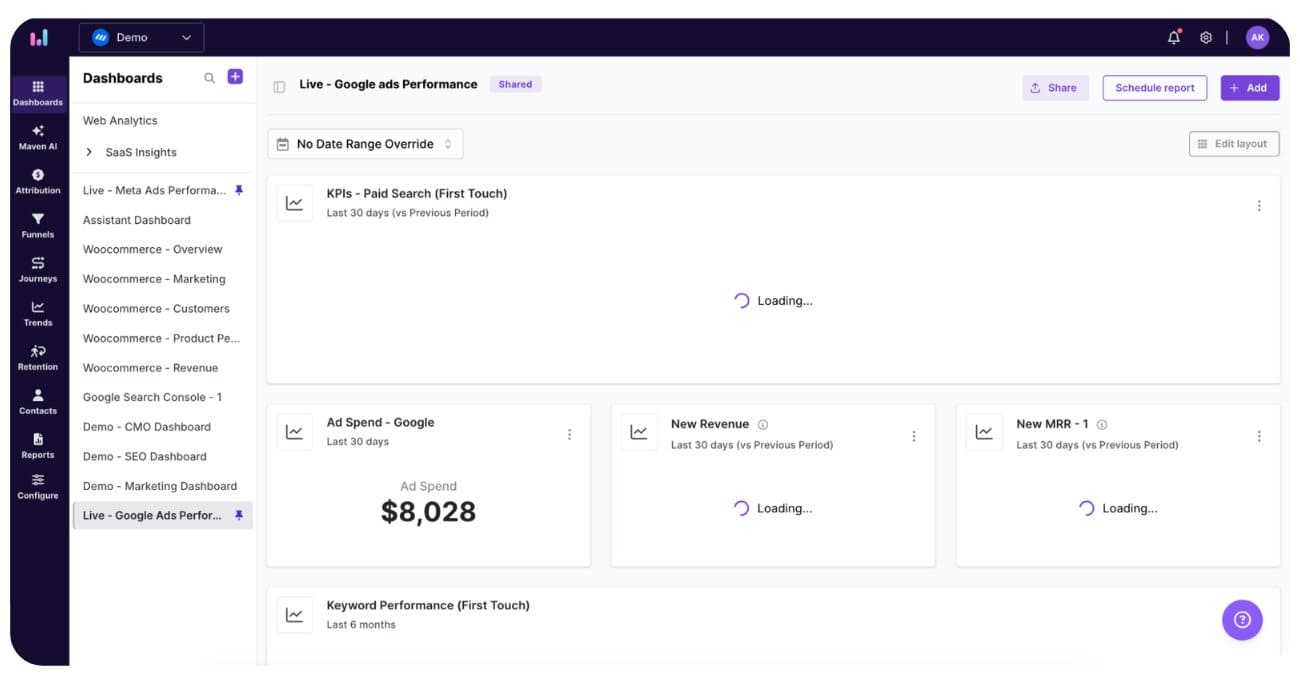
With multi-touch attribution enabled, ContentStudio could calculate cost per conversion against actual plan upgrade revenue, not just reported ad platform conversions.
Campaigns that appeared efficient in platform dashboards were re-evaluated against real CAC. Spend shifted toward campaigns where the cost per paying customer justified continued investment.
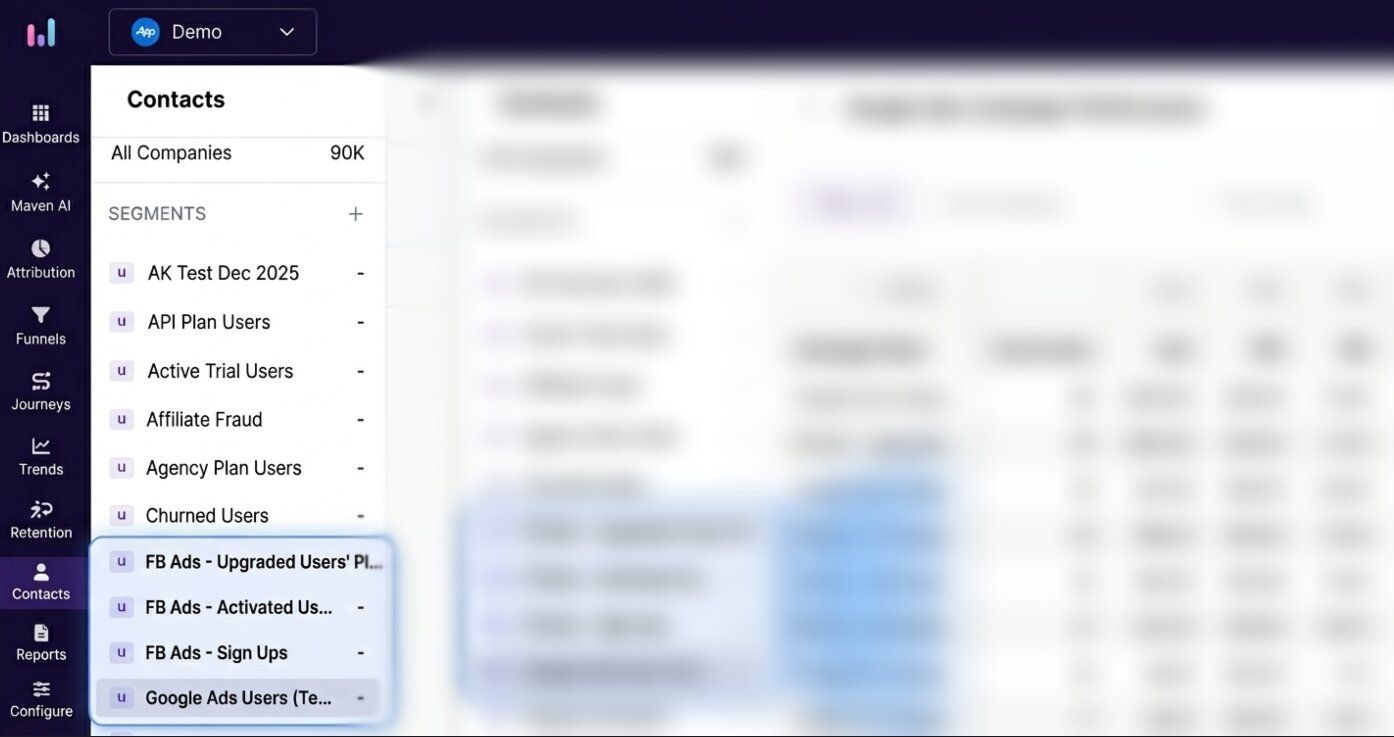
Users arriving from paid campaigns were segmented by source and tracked through their product journey. ContentStudio identified which campaign segments produced users with higher upgrade rates and shorter time-to-conversion.
These segments fed a retargeting strategy, concentrating paid spend on audiences that had demonstrated purchase intent.
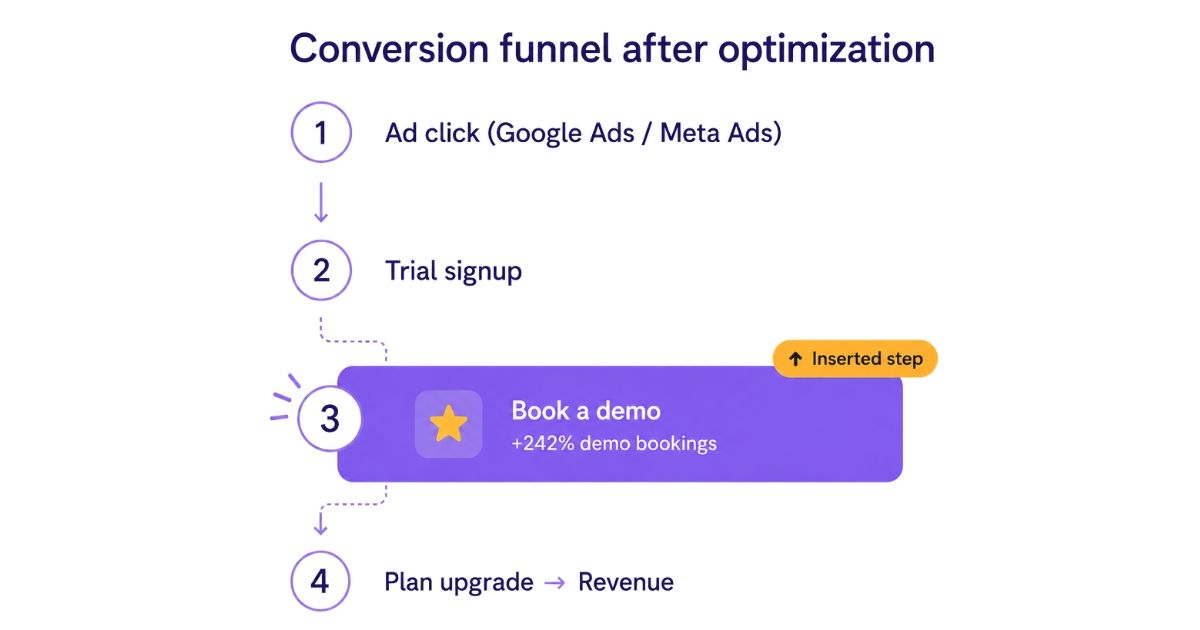
Funnel analysis showed that a meaningful share of paid traffic was dropping at a specific step in the demo booking flow.
Usermaven’s AI-powered insights helped surface where users were dropping off and suggested the most effective intervention points in the funnel.
ContentStudio fixed the friction point, resulting in a 242% increase in demo bookings, conversions that previously went uncaptured despite the paid traffic already being acquired.
Ahmer shares:
“We saw through Usermaven funnels that people were dropping off during the signup process. We added a ‘book a demo’ step at that point, and within a month, conversion rates improved.”
Usermaven's days-to-convert reporting showed that a significant portion of ContentStudio's paid conversions were completed 7 to 14 days after the initial ad click.
AI-assisted insights helped interpret delayed conversion patterns, making it easier to evaluate campaign performance beyond early signals.
Without this data, campaigns appearing low-conversion in the first week were candidates for budget cuts. With it, the team held spend through the conversion window and captured revenue that would otherwise have been attributed to the wrong source, or lost entirely.
Ahmer highlights:
“Some campaigns looked like they were not performing, so we were close to stopping them. After reviewing conversion timelines, we saw that users were converting later. Instead of cutting those campaigns early, we gave them more time, and they turned out to be profitable.”
This insight ensured that performance was evaluated over the full conversion cycle, not just early signals.

Once ContentStudio could see which campaigns drove paying customers, they reallocated budget from low-revenue channels to Google Ads campaigns with confirmed ROAS.
This improved overall ROAS by reallocating spend toward campaigns that consistently generated paying users, leading to a 30% increase.
Alongside improved attribution and budget allocation, ContentStudio also saw strong growth across key metrics. Traffic scaled from around 70K to 300K monthly visits (a 329%+ increase), while signups grew by 128%, plan upgrades increased by 92%, and demo bookings surged by 242%.
Ahmer says:
"Knowing which campaigns actually convert paid users changed how we allocate budget entirely. We stopped treating all traffic as equal and started investing in what the attribution data confirmed."
Channel contribution data from LinkedIn and X testing confirmed that primary ROAS came from Google Ads and Meta Ads. Rather than continuing to split the budget evenly across tested channels, ContentStudio concentrated paid investment in channels where attribution confirmed revenue.
LinkedIn and X were deprioritized based on cost-per-paying-customer data, a decision driven by attribution, not instinct.
Ahmer explained:
"The channel contribution breakdown was decisive. We stopped spreading budget across four channels and concentrated on the two that the attribution data confirmed were generating actual revenue."
This shift resulted in more efficient spend, improved ROAS, and a marketing strategy built around revenue-driven optimization.
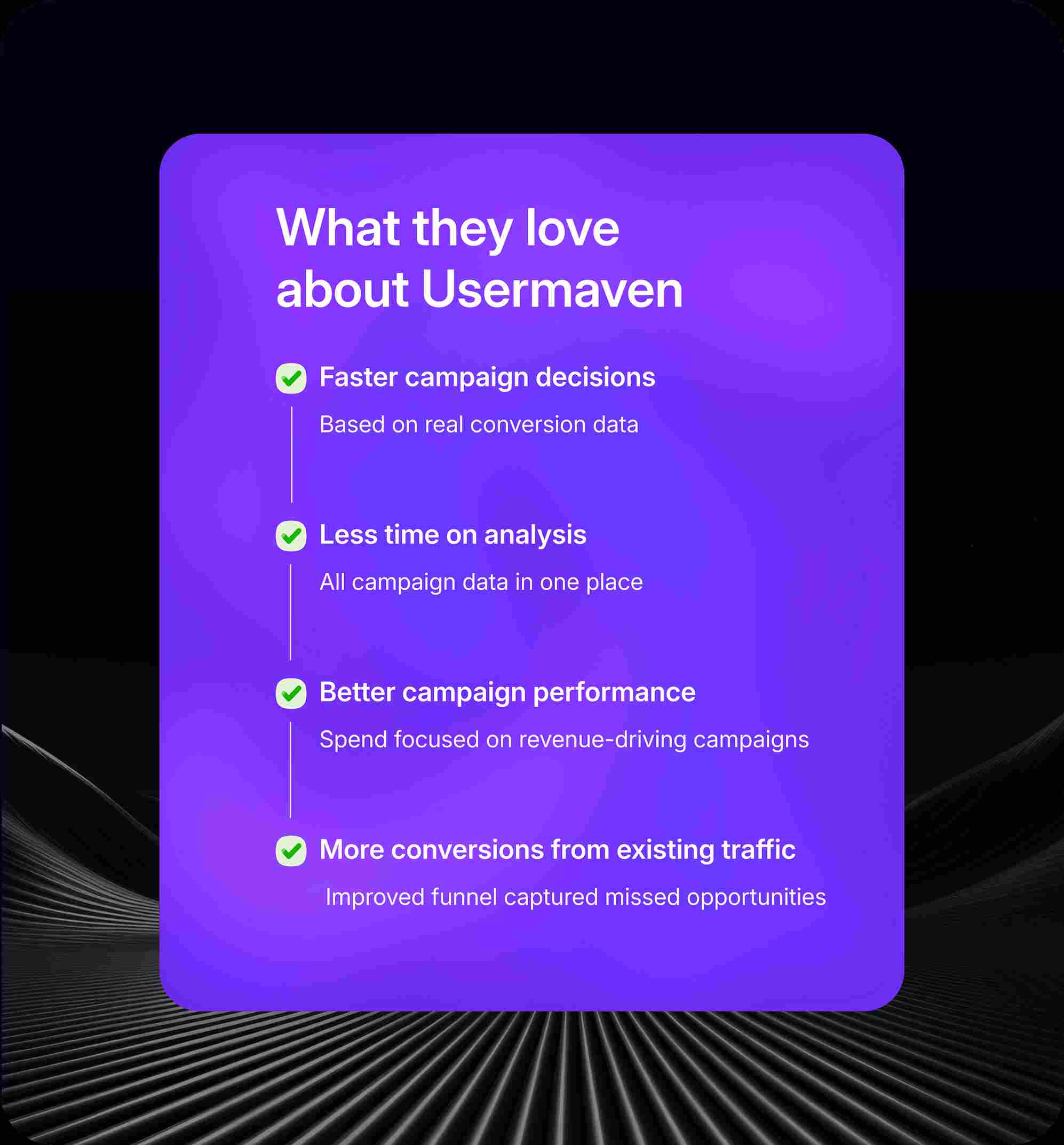
Here’s how the ContentStudio team describes their experience with Usermaven.
“I am a strong advocate of Usermaven for any team running paid campaigns that wants to know where their revenue is actually coming from. It’s simple and very easy to understand. If you are making budget decisions without full attribution, you are scaling the wrong campaigns.”
Ahmer A.
Product Manager at ContentStudio
Connect your ad spend to real outcomes, measure true ROAS, and invest in the channels that drive paying customers.
Grow your business faster with:
More stories