Maven AI can analyze your data for you. Just ask.Try it now
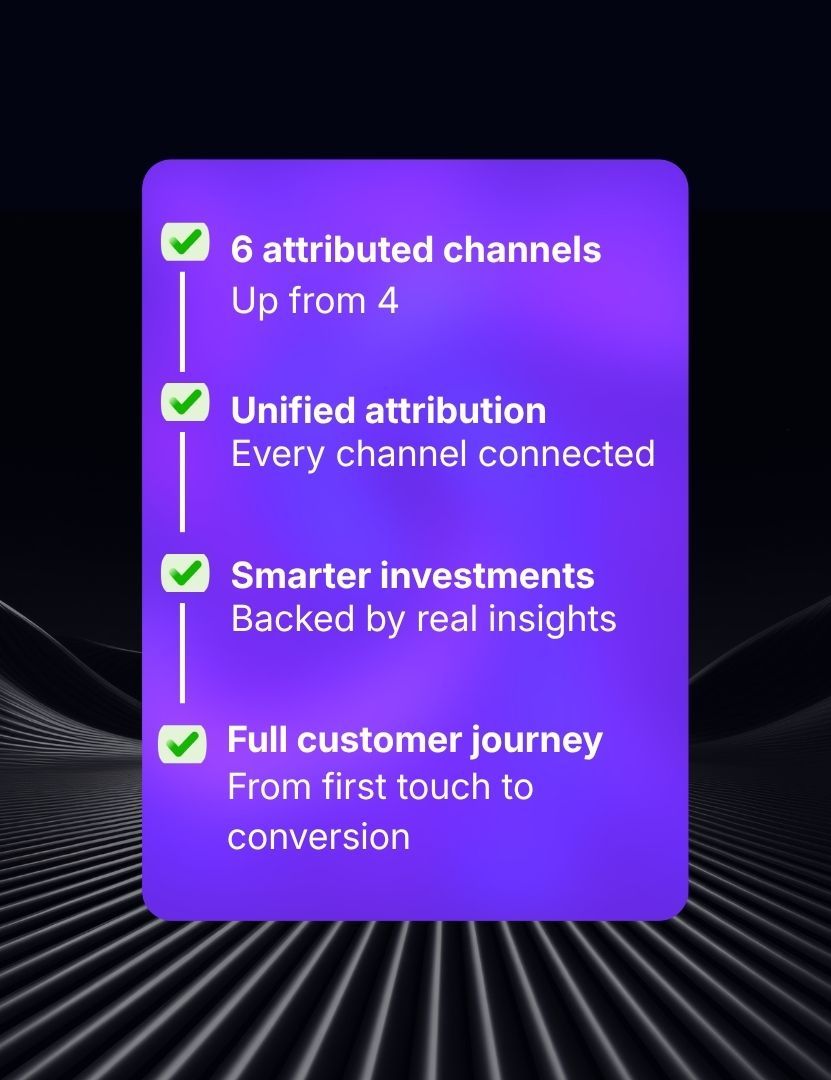
channels now attributed
visitor-to-goal conversion rate
organic search first-touch conversions
new sources uncovered

Hyperengage is a post-sales intelligence platform for B2B SaaS teams. It helps customer success, RevOps, and founders understand account health, spot renewal risks, and act on customer signals before they turn into churn.
SaaS/Post-Sales & Customer Intelligence
14-16 members
Global
Hyperengage grows primarily through content, organic search, podcast-led distribution, LinkedIn, email, and partnerships, a channel mix built on long, multi-touch paths rather than single-click conversions. As a company that helps its own customers make better decisions from post-sales data, Hyperengage wanted the same standard of clarity applied to its own marketing: not just traffic counts, but a real understanding of how each channel contributed to qualified pipeline.
Before Usermaven, the team measured performance with a mix of Google Analytics, CRM data, individual platform dashboards, and manual tracking.
That gave some visibility, but as the team put it,
"The picture was fragmented and often hard to trust."
The challenge was connecting data from multiple sources into one reliable view. Every platform told a different story, and with last-click attribution, the channels that started the customer journey like podcasts, blogs, and LinkedIn rarely received credit for the pipeline they helped create.
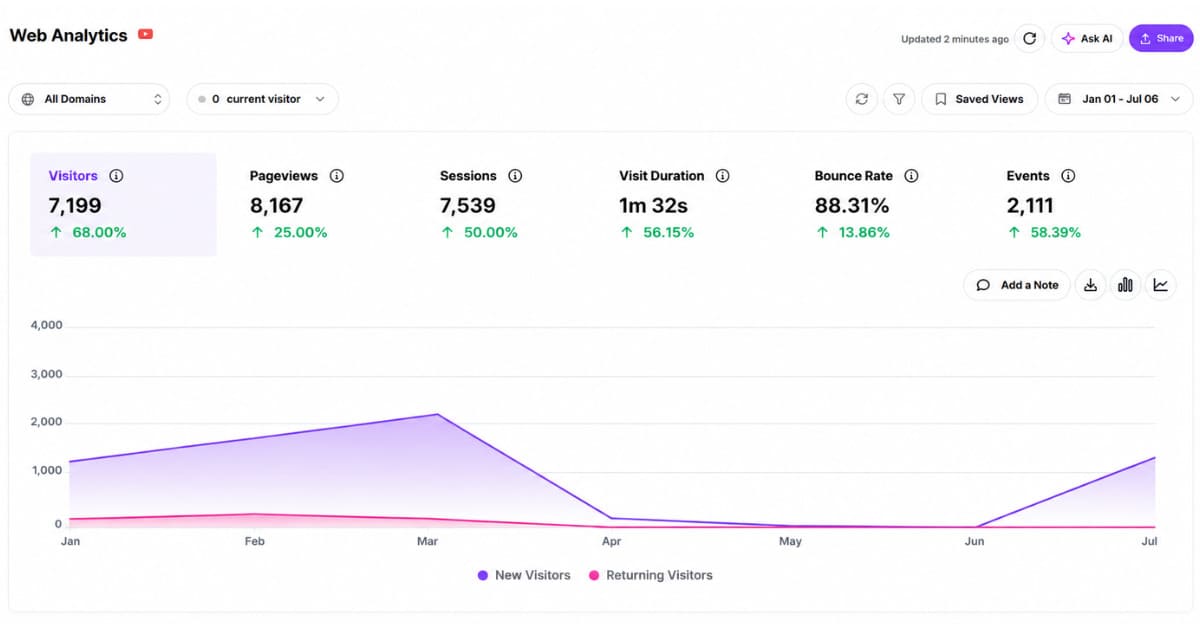
Over the engagement period, Hyperengage increased visitors by 68%, sessions by 49.7%, and pageviews by 25%. With Usermaven's multi-touch attribution in place, the team could see exactly which channels were behind that growth, rather than reading it as one traffic number and guessing at the cause.
The team summarizes the shift simply:
"Usermaven has helped us move from assumption-based marketing decisions to clearer attribution-based decisions. It gives us a more honest view of what is working and where to focus next."
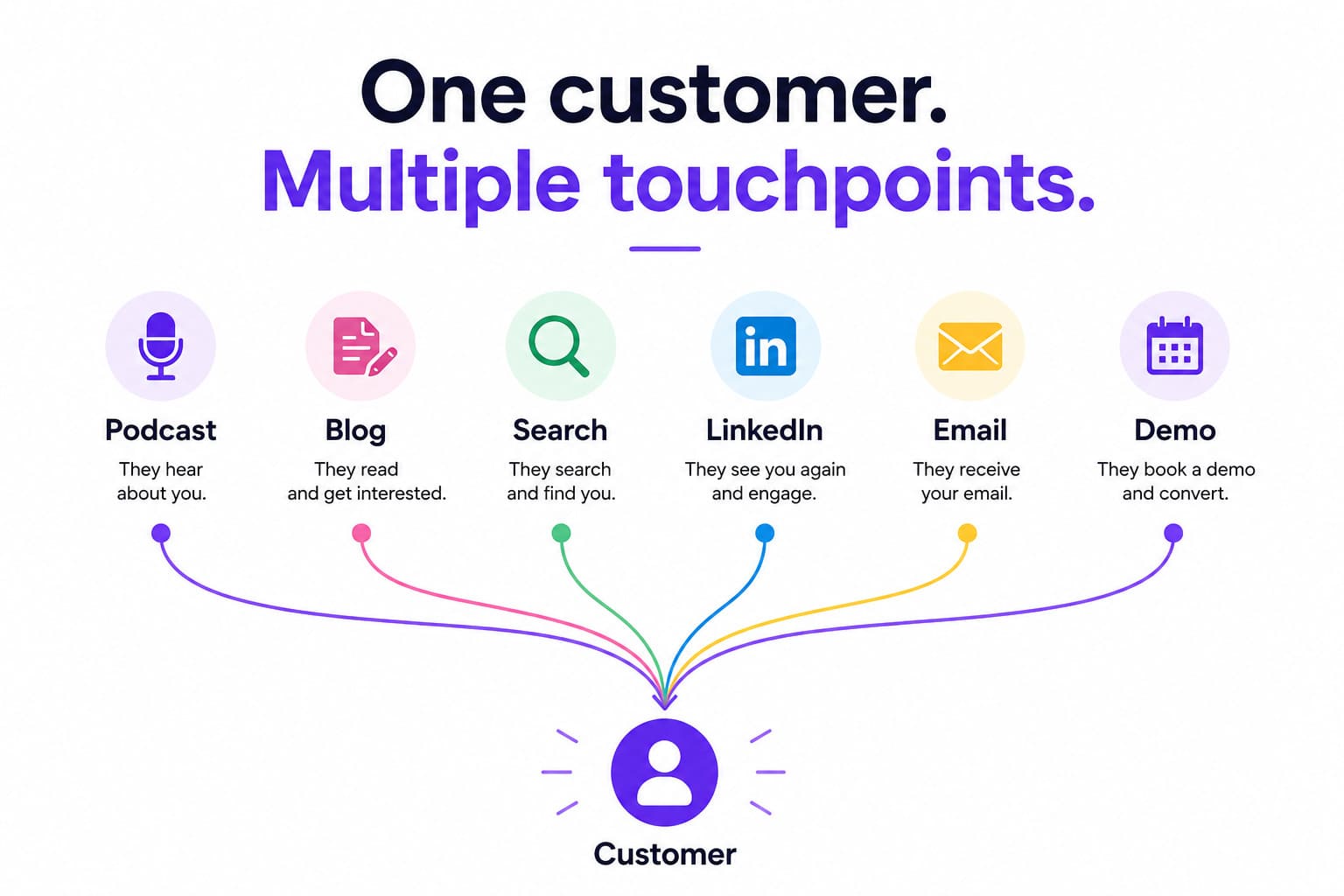
Hyperengage's buyers rarely convert in a single session. A prospect might discover the company through a blog post, come back later via organic search, engage with content on LinkedIn, and only then convert, sometimes weeks after the first touch.
Going in, the marketing team needed answers to questions no single dashboard could give them:
Without a unified view across the journey, the team described the core challenge directly:
"The biggest challenge was connecting the full journey. Someone might discover us through content, come back through search, engage on LinkedIn, and then convert later. Without clear attribution, it was easy to over-credit the last touch."
Platform-native reporting made this harder rather than easier. Google Ads, LinkedIn, and other platform dashboards each reported performance in isolation, with no shared source of truth:
"The main issue was that each platform showed its own version of performance. That made it hard to understand the real customer journey across multiple touchpoints."
This left the team with a familiar analytics problem: plenty of dashboards, but no single, trustworthy answer to which channels were actually driving qualified pipeline.
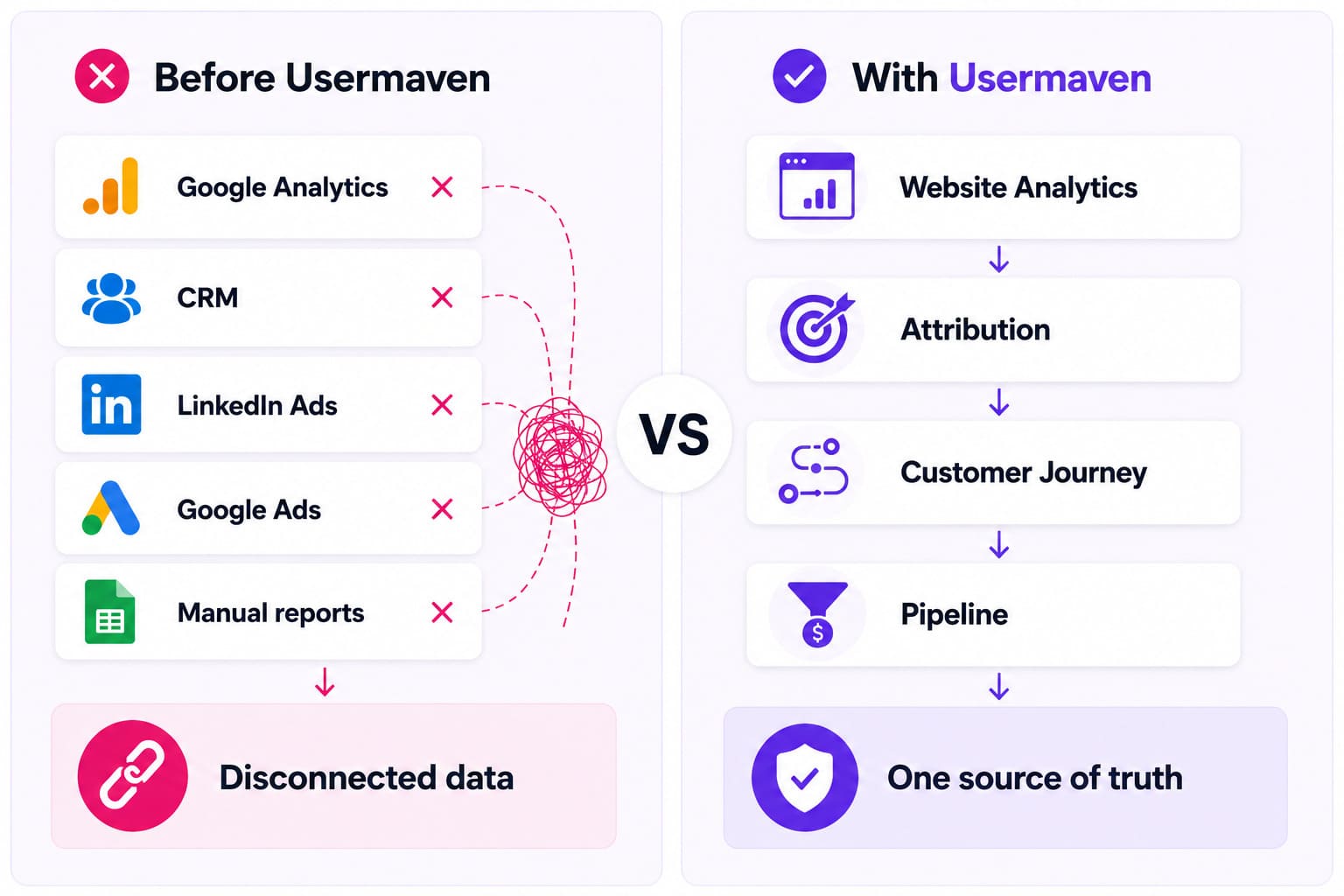
Hyperengage needed more than campaign-level reporting. They needed website analytics, attribution, and customer journeys unified into one view. Their objective going in was straightforward:
"We wanted a clearer view of which channels were actually bringing in qualified traffic, signups, and pipeline. We also wanted to reduce guesswork around what was working across content, organic, paid, and partner-led efforts."
Usermaven's attribution reporting, journey analysis, and Trends gave Hyperengage exactly that. Instead of crediting whichever channel happened to close the deal, the team could trace the full path a visitor took, from the first interaction through every return visit to eventual conversion.
"Usermaven helped us see which channels and pages were contributing to conversions beyond the final click. It gave us a cleaner view of how visitors moved from first touch to conversion."
Usermaven tracked 975 visitors completing the primary conversion goal, representing a 22.19% visitor-to-goal conversion rate. More importantly, every conversion could be traced back to the channels, campaigns, and pages that influenced it, giving the team actionable attribution instead of isolated conversion data.
That shift showed up immediately in the attribution data itself. Coverage expanded from 4 channels to 6, and organic search, which had shown 0 attributed first-touch conversions under the old model, was credited with 8, direct evidence that a channel the team had been underestimating was actually opening the door for real customers.
Surfacing undercredited channels
Last-click attribution hid organic search's real contribution. Under the old model, it showed up with 0 attributed first-touch conversions, even though the team suspected content and organic work were doing more than the numbers gave them credit for.
First-touch attribution told a different story. As attribution coverage expanded from 4 channels to 6, Organic search's first-touch conversions grew to 8, confirming it as a genuine entry point into the funnel, not just a channel that showed up late in the journey.
"It helped us see that some content and organic journeys were playing a bigger role than we initially thought, even when they were not the final conversion source."
Content and organic search were recognized as real demand-generation engines rather than supporting assets, reshaping how the team credited and prioritized its own SEO and content work.
A more balanced channel mix
Direct traffic had been the only dominant attributed channel, effectively the default bucket for any conversion the team couldn't trace back to a clear source.
With fuller attribution in place, Email and AI Search emerged as measurable acquisition sources in their own right, no longer buried inside an unexplained "Direct" bucket.
Hyperengage got a far more balanced, accurate picture of where its pipeline actually originated, and could start making channel-level decisions for Email and AI Search instead of treating that traffic as unattributable.
Mapping non-linear conversion paths
A single dashboard made the buyer journey look far more direct and linear than it actually was, hiding how many touchpoints a typical conversion involved.
Journey data revealed that return visits across different channels were far more common than the team expected.
"One surprise was how often people returned through different channels before converting. The journey was not as direct as a single dashboard made it look."
The team stopped judging channels by their performance in a single session and began accounting for their role in bringing people back across multiple visits, changing how repeat engagement was valued.
Shifting from last-click to full-journey evaluation
Under last-click evaluation, only the final touchpoint received credit, which meant content, SEO, paid campaigns, and partner activity were all being judged by an incomplete standard.
Viewing performance as a full journey, rather than a single closing touch, showed each of these channels contributing at different stages rather than only at conversion.
"We started looking at performance more as a full journey instead of a last-click result. That changed how we evaluated content, SEO, paid campaigns, and partner activity."
Every channel was re-evaluated on its contribution across the whole path, which changed the internal standard the team used to judge channel performance going forward.
Correcting attribution on specific conversions
Individual conversions were often credited entirely to whichever channel happened to close the deal, even when that channel wasn't where the customer relationship actually began.
Re-tracing specific conversions back to their true starting point showed that visitors who converted later had frequently discovered Hyperengage first through content or organic search.
"In a few cases, Usermaven helped us see that visitors who converted later had first discovered us through content or organic search. Without that attribution view, we may have given too much credit to the final source."
Content and organic search received accurate, case-by-case credit for the customers they actually introduced, giving the team a clearer signal for which content was worth investing in further.
Reallocating budget based on measured contribution
Spend was flowing toward channels and campaigns that looked good on the surface, bringing in traffic, without clear evidence they were tied to qualified conversions.
Measured contribution data gave the team the confidence to separate channels that merely generated traffic from channels that were actually influencing qualified conversions.
"We became more intentional about investing in content, SEO, and channels that were influencing qualified conversions. It also helped us question channels that looked good on the surface but were not clearly tied to meaningful outcomes."
The team pulled back where the data didn't hold up:
"Usermaven gave us more confidence to pull back from campaigns or channels that were bringing traffic but not enough qualified conversions."
And put more budget behind what was working:
"We were able to put more focus into content, organic search, and channels that showed a stronger connection to qualified pipeline."
With Usermaven, Hyperengage moved beyond measuring traffic to understanding which marketing efforts were actually driving qualified pipeline.
Here’s what changed:
As the team summarizes:
"Usermaven helped us improve channel quality, reduce wasted spend, and focus more on sources that bring better-fit prospects. The biggest measurable areas for us were an increase in qualified leads, stronger pipeline visibility, better marketing ROI, and less budget going toward channels that were not clearly contributing to conversions."
Without unified attribution, many of these insights would have remained hidden.
"It would have been difficult to know which marketing efforts were truly supporting the pipeline and which ones only looked good in isolated dashboards."
When asked about the single biggest impact Usermaven had on their business, the team pointed to something beyond the metrics: the confidence to make better marketing decisions.
"The most valuable outcome has been clarity. We can now understand the role each channel plays in the customer journey and make decisions with more confidence."
For marketing teams that want to understand the complete customer journey, not just isolated campaign metrics, Hyperengage's experience points to a clear takeaway:
“Usermaven, helps remove a lot of the guesswork. It gives you a clearer picture of what is actually contributing to conversions, not just what gets the last click.”
Team Hyperengage
Discover which channels influence pipeline, uncover hidden conversion paths, and confidently invest in the marketing efforts that drive growth.
Grow your business faster with:
More stories