Maven AI can analyze your data for you. Just ask.Try it now
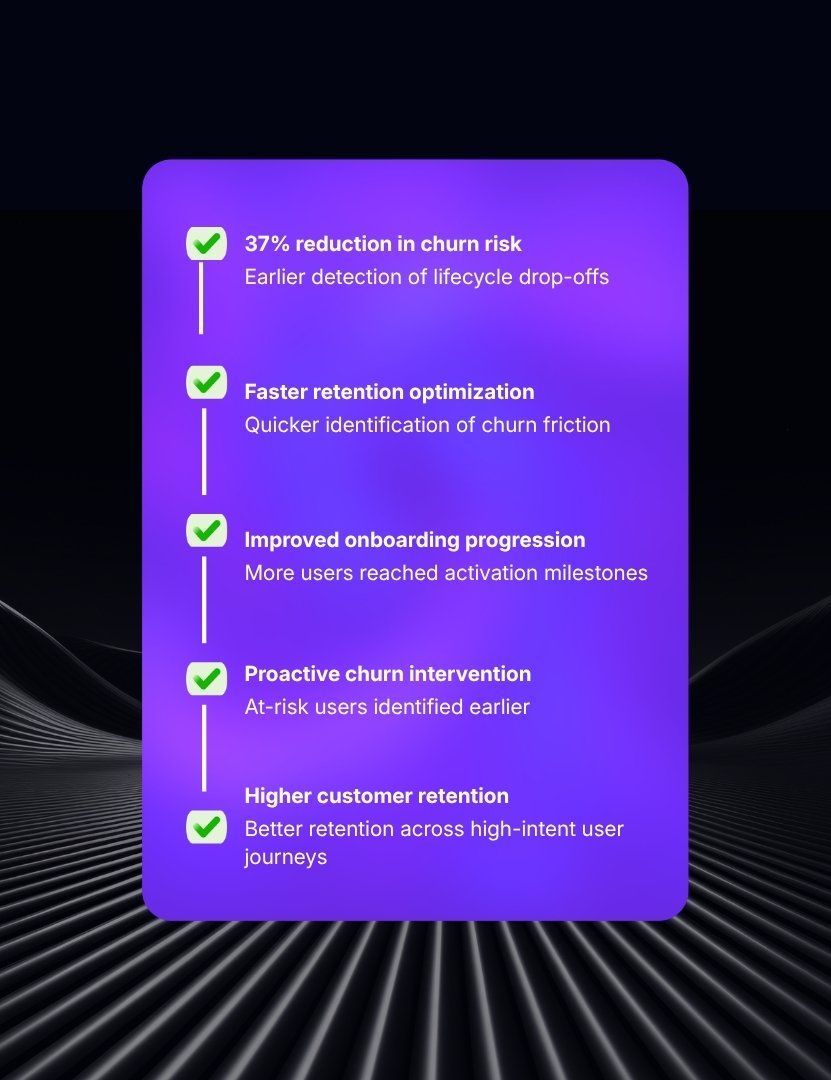
faster optimization cycles
reduction in churn risk
improvement in onboarding progression
increase in retained customer value

Short Hills Design helps dentists and physicians grow through website design, SEO, lead generation, and performance optimization. Managing multiple client websites requires a deep understanding of how users move, engage, and convert across different journeys.
Internet Marketing/Digital Agency
10-15 members
United States
Short Hills Design helps dentists and physicians grow through website design, SEO, lead generation, and performance optimization. Managing multiple healthcare client websites required the team to clearly understand how visitors moved across websites, where engagement dropped, and which journeys created the highest risk of losing potential patients or leads.
Before Usermaven, the team could see users dropping off but lacked a reliable way to connect churn patterns to specific onboarding flows, conversion paths, or engagement behaviors. As a result, optimization decisions often relied on assumptions, slowing down retention improvements across client accounts.
Usermaven changed this by providing full visibility into user journeys. Using journey tracking, funnel analytics, and segmentation, Short Hills Design could identify where users abandoned critical flows, prioritize high-friction lifecycle stages faster, and act on cancellation risk earlier.
With clearer lifecycle visibility, the team improved onboarding progression, accelerated optimization efforts, and reduced churn risk by 37%.
Short Hills Design works with dentists and physicians whose businesses rely heavily on converting and retaining high-intent visitors. While the team could see users dropping off across key journeys, their existing setup provided little visibility into where churn risks were actually developing or which lifecycle stages were causing users to disengage.
Without clear journey insights, optimization decisions became difficult to prioritize. Teams spent time debating which pages, onboarding flows, or conversion paths needed attention most, often without enough behavioral data to connect those issues to retention outcomes.
As team SHD explains:
"We had a hard time determining what pages to optimize."
That lack of end-to-end journey insights slowed down retention improvements. Instead of identifying churn drivers early, teams were reacting after engagement had already declined, making it harder to intervene before users dropped off completely.
The turning point came when Short Hills Design stopped relying on isolated page metrics and started analyzing complete user journeys with Usermaven. Instead of guessing where users were disengaging, the team could clearly see the lifecycle stages where momentum dropped, onboarding stalled, and user loss increased.
Journey tracking and funnel analysis revealed the exact points where users abandoned key flows before reaching activation milestones. Some friction points confirmed existing assumptions, while others uncovered overlooked lifecycle barriers that were quietly affecting retention and recurring revenue.
With lifecycle visibility centralized in one place, the team could identify high-risk drop-offs earlier, prioritize retention-focused improvements faster, and reduce the time spent diagnosing engagement issues across multiple client accounts.
Segmentation added another layer of clarity by helping the team identify lower-engagement user cohorts earlier in the lifecycle. This made it possible to intervene proactively before disengagement turned into long-term churn.
Instead of reacting to retention problems after performance declined, Short Hills Design could now connect user behavior to churn outcomes early and act on behavioral friction before it impacted customer retention.

With churn drivers clearly identified, Short Hills Design built a retention strategy based on actual lifecycle behavior instead of assumptions. Each optimization focused on reducing friction at the stages where users were most likely to disengage.
1. Onboarding friction reduced
Journey analysis showed that many users were dropping off before reaching key activation milestones. By simplifying onboarding flows and removing unnecessary friction, the team improved early-stage engagement and reduced the likelihood of users disengaging before experiencing product value.
2. High-risk conversion paths optimized
Funnel analysis revealed where high-intent users were abandoning critical journeys. Short Hills Design rebuilt these paths to create a smoother progression from entry to activation, helping retain more users already showing strong conversion intent.
3. Retention interventions personalized
Segmentation helped identify lower-engagement cohorts earlier in the lifecycle. Using these insights, the team deployed targeted messaging, flow adjustments, and engagement prompts at the moments where churn risk was highest.
Every optimization followed the same retention-focused process: identify the lifecycle drop-off, understand the behavior behind it, reduce the friction, and measure the retention impact. With clearer lifecycle visibility, the team could act faster on churn risks across multiple client accounts.

To reduce churn risk effectively, Short Hills Design needed more than surface-level analytics. The team needed clear behavioral visibility into where users disengaged, which journeys created retention risk, and how to act on those insights faster.
Usermaven provided the tools that made that possible.
Just as important as the insights themselves was the speed at which the team could act on them. Faster visibility into lifecycle friction meant faster retention decisions and shorter optimization cycles across multiple client accounts.
As the SHD team explains:
"Clear interface and ease of setting up goals and journeys for our clients."
By reducing the time between identifying churn risks and deploying improvements, Short Hills Design was able to act proactively on lifecycle drop-offs and improve retention outcomes faster.
By combining end-to-end journey insights with analytics, Short Hills Design shifted from reactive retention management to proactive churn prevention.
With clearer insight into where users disengaged, the team identified retention bottlenecks earlier, optimized onboarding and conversion journeys faster, and reduced churn risk by 37% within four months across key customer flows.
Faster access to behavioral insights also helped accelerate customer retention optimization and improve onboarding progression across multiple client accounts.
Short Hills Design works across multiple SaaS client accounts where retention performance depends on quickly identifying churn risks and optimizing high-friction user journeys. To do that effectively, the team needed analytics that were easy to configure, fast to interpret, and directly connected to lifecycle behavior.
Usermaven helped the team move beyond disconnected metrics by providing clear visibility into how users progressed, where they disengaged, and which lifecycle stages required immediate attention. With journey analytics, funnel analysis, and segmentation in one place, Short Hills Design could prioritize retention-focused improvements faster and intervene before users dropped off completely.
“In Usermaven, we can look at a home page and easily see where the user went after that, or look at the contact page and see how the user got there before that.”
Team Short Hills Design
Identify lifecycle friction early and optimize the journeys that retain more users.
Grow your business faster with:
More stories