Maven AI can analyze your data for you. Just ask.Try it now
demo-to-signup conversion rate
increase in organic traffic
clicks on Create Carousel
less reporting time

PostNitro is a SaaS platform that helps teams create, manage, and optimize content, with a particular focus on carousel creation and content efficiency. The company runs a lean global team of 10–12 people.
SaaS/Content creation technology
10-12 members
Global
PostNitro is an AI-powered carousel creation platform that helps marketers, founders, and content teams create high-quality social content quickly.
PostNitro is built to deliver value instantly, allowing users to create something shareable within minutes. As the product scaled, growth became closely tied to how quickly users reached their “aha moment” and experienced that value firsthand.
Driving signups was only part of the equation. The bigger opportunity was improving user activation, helping users move from landing on the site to creating their first piece of content and eventually becoming paying customers with minimal friction.
To do that, the team needed clearer visibility into how users moved through this journey and where they were dropping off. And that's where Usermaven became the operating system behind every product decision.
As PostNitro founder Muneeb Ahmed shares:
“Usermaven has become the layer we run product decisions through. Much of our product direction now comes from real user behavior and engagement patterns.”
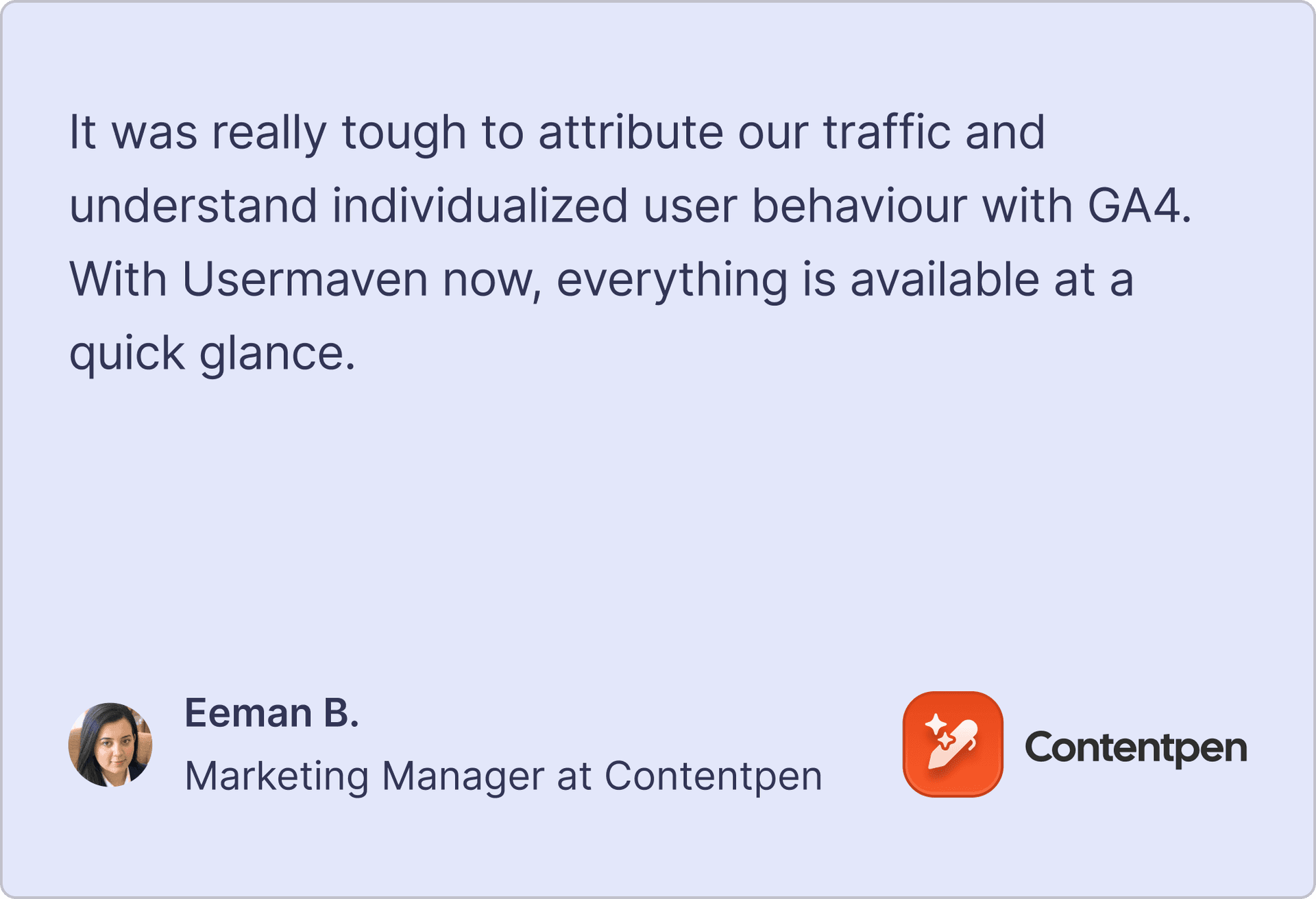
Before adopting Usermaven, PostNitro relied primarily on Google Analytics 4 for performance insights. GA4 provided traffic visibility, while deeper user behavior insights required more granular tracking.
As Muneeb put it:
"With GA4, we could see users arriving, but we needed clearer visibility into what they did next and how they moved toward conversion.”
This made it difficult to understand how users moved through the onboarding journey, from their first visit to activation. The team needed a clearer picture of user behavior, key conversion paths, and the actions that signaled real intent.
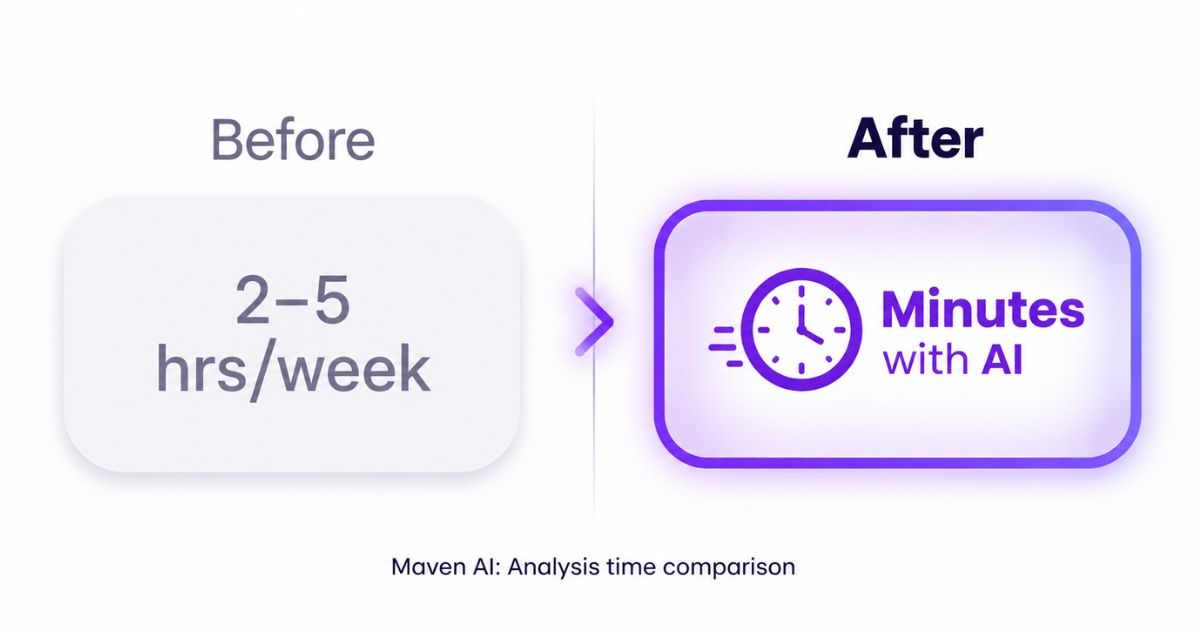
Improving the signup flow or homepage experience required manual analysis, often taking 2–5 hours at a time. While insights were there, turning them into actionable changes took time and slowed down iteration.
To move faster, PostNitro needed a way to track the full onboarding journey more clearly and identify where users were engaging, dropping off, or converting in real time.
PostNitro implemented Usermaven as its primary web and product analytics platform, making it the central layer for product, marketing, and growth decisions.
With activation behavior tracking powered by custom events, the team gained clear visibility into how users moved through onboarding, which actions signaled intent, and what drove users toward activation.
Muneeb adds:
“We plan campaigns around where engaged users come from, guided by data rather than intuition.”
This visibility allowed the team to move from analyzing reports to actively using data to guide decisions. Maven AI further accelerated this process by making insight discovery instant. Instead of spending hours analyzing reports, the team could quickly answer complex questions about user behavior and act on them immediately.
As Muneeb mentioned:
“We use Maven AI whenever we need a quick answer from the data. It helps us move faster without digging through reports.”
With this setup, approximately 30% of product decisions became directly tied to user behavior data, allowing the team to act faster and improve the onboarding experience more consistently.
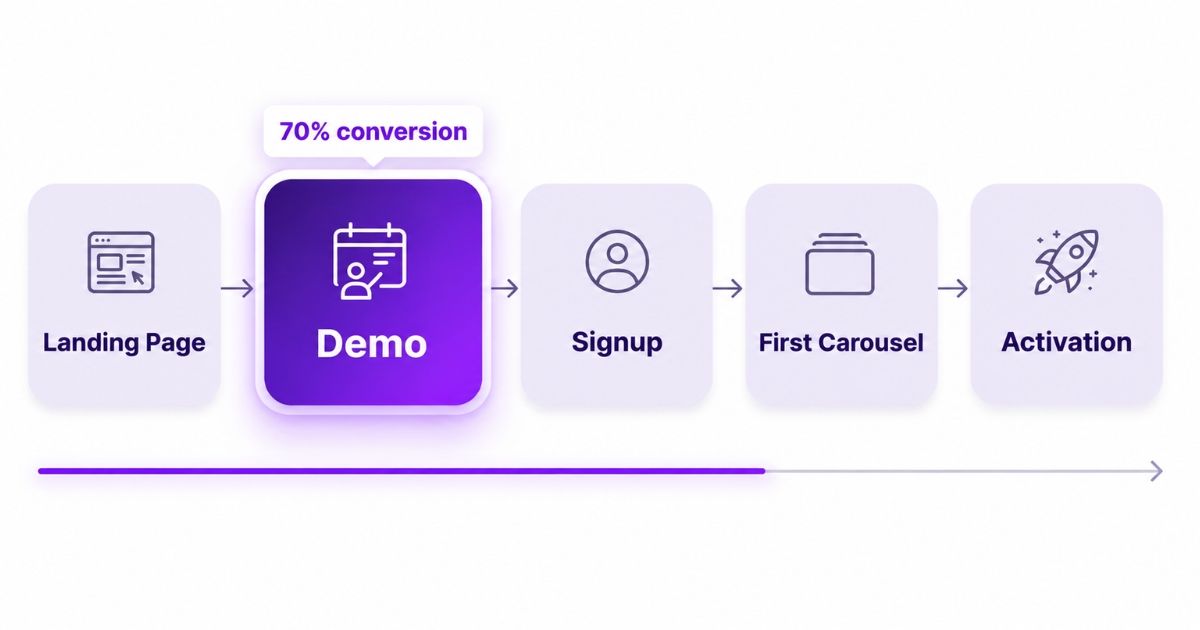
With Usermaven's activation behavior tracking in place, PostNitro's team began reading the onboarding journey as a continuous signal, not a static funnel. Three strategic shifts defined the transformation.
Drop-off analysis showed that a meaningful segment of high-intent visitors were exiting the homepage before engaging with any CTA. By analyzing scroll depth, clicks, and exit points, the team identified specific friction areas and adjusted the homepage to communicate value more clearly.
Muneeb adds:
“Usermaven made drop-offs immediately visible. We could see where users were leaving and optimize those moments quickly.”
This led to stronger movement from landing to first engagement.
One of the most important decisions informed by Usermaven was introducing a demo experience. Behavioral data showed that many high-intent users wanted to explore the product before signing up.
The team introduced a demo flow to give users that opportunity.
As Muneeb explained:
"The data told us clearly: users who experienced the product before signing up converted at a dramatically higher rate. The demo wasn't a nice-to-have; it became essential."
The impact was clear.
The demo flow generated 576 clicks and converted to signups at around 70%, making it one of PostNitro’s strongest activation drivers.
He added:
“We introduced a demo experience that lets users interact with the product before signing up. Around 70% of users who engaged with it converted, making it a core activation driver.”
This made the demo a critical lever for improving activation and accelerating user conversions.
The signup flow was continuously improved using onboarding drop-off analysis. Each iteration was validated against behavioral data, tracking where users paused, where they progressed, and what completion rates looked like across cohorts.
The team moved from slow, manual improvement cycles to faster, data-driven iterations.
Muneeb says:
“We can track onboarding behavior in real time and improve friction points early, long before users report them.”
This shift allowed the team to move faster and improve the onboarding experience with every iteration.
As the team continued optimizing onboarding through real user behavior, these learnings didn’t just stay internal. Muneeb often shared them publicly, breaking down how small, data-backed changes in the user journey can significantly impact activation and conversions.
There is a science behind each of these elements.. at least thats what I think 😅
We've been using @usermaven for analytics, and I think at least 30% of the platform has some sort of custom event linked to it.
So here is how I justify these elements in the hero section of @postnitroai 😎
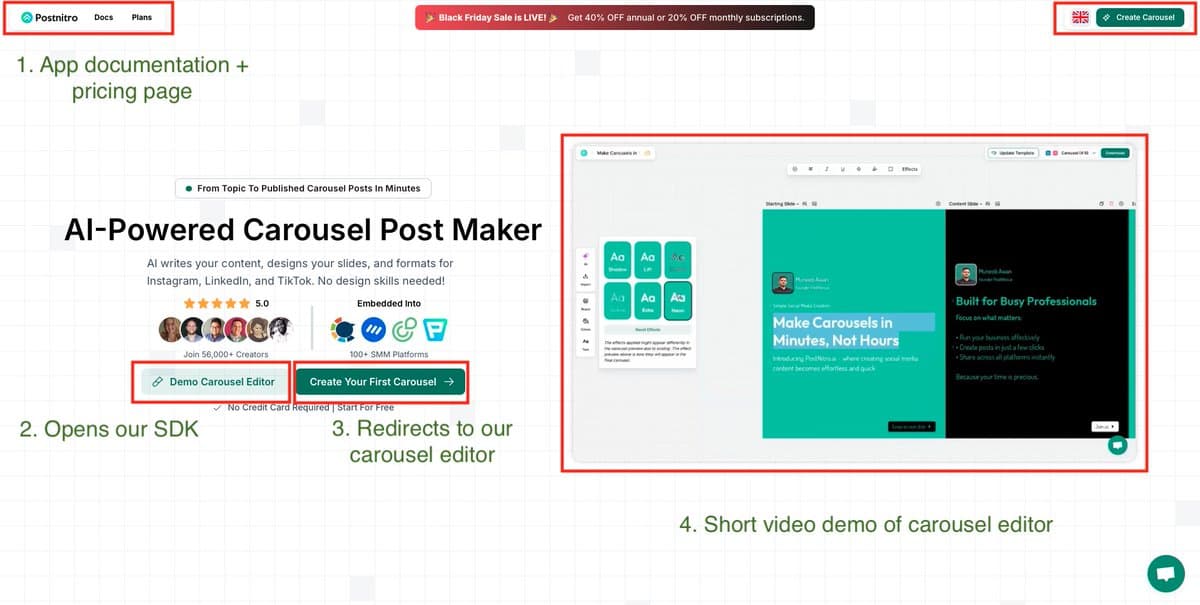
1. The header bar was over crowded with too many buttons and dropdowns that were rarely getting clicked.
I also wanted to make it consistent with our app, so we followed the same UI pattern.
Kept just the Docs and Plans (pricing) link on the left and the language switcher and CTA for carousel editor on the right.
2 & 3. Here are some interesting facts from the past 2 months:
- Demo button clicked 576
- Create Carousel button clicked 6,555
I noticed from UM that there were users who came here but didn't go ahead to the app or signed up.
The logic behind adding the "Demo" button was that people might find it overwhelming and feel like it is some sort of commitment going to the editor and they would be interested in demo-ing it.
Also, since we were loosing users here, we had no record of them (email) to retarget them.
The demo button opens up our Embed SDK :D haha, which is basically the same as going to the carousel editor but in an iframe and I've noticed that at least 70-ish% users have signed up when they open the SDK.
Haha, the added bonus here is that it has become 100x easier to test the SDK integration after each release xD
The create carousel button goes directly to the carousel maker editor, since this is the primary reason why the users are there in the first place so it is the most clicked button between the two.
4. Well, before the release, the users would just see the text on the left. There was no interactive element here, or any way for the user to get a quick walkthrough about the carousel editor.
Plus, earlier, the users were spending very less time here and often bounced.
The video gives a quick demo, makes the users stay a bit longer and get a grasp of how the carousel editor works.
Not sure if this is the reason or not but the bounce rate has gone down since we added it here.
--
Haha, and this is how I justify adding these elements on our hero section.
I might have missed some things or made some mistakes here.
If you have any feedback please let me know :)
With clearer visibility into user behavior and onboarding performance, PostNitro was able to improve how users moved from first interaction to activation and conversion.
The changes made across the onboarding journey, especially the introduction of the demo flow and continuous signup optimization, led to measurable improvements across key metrics:
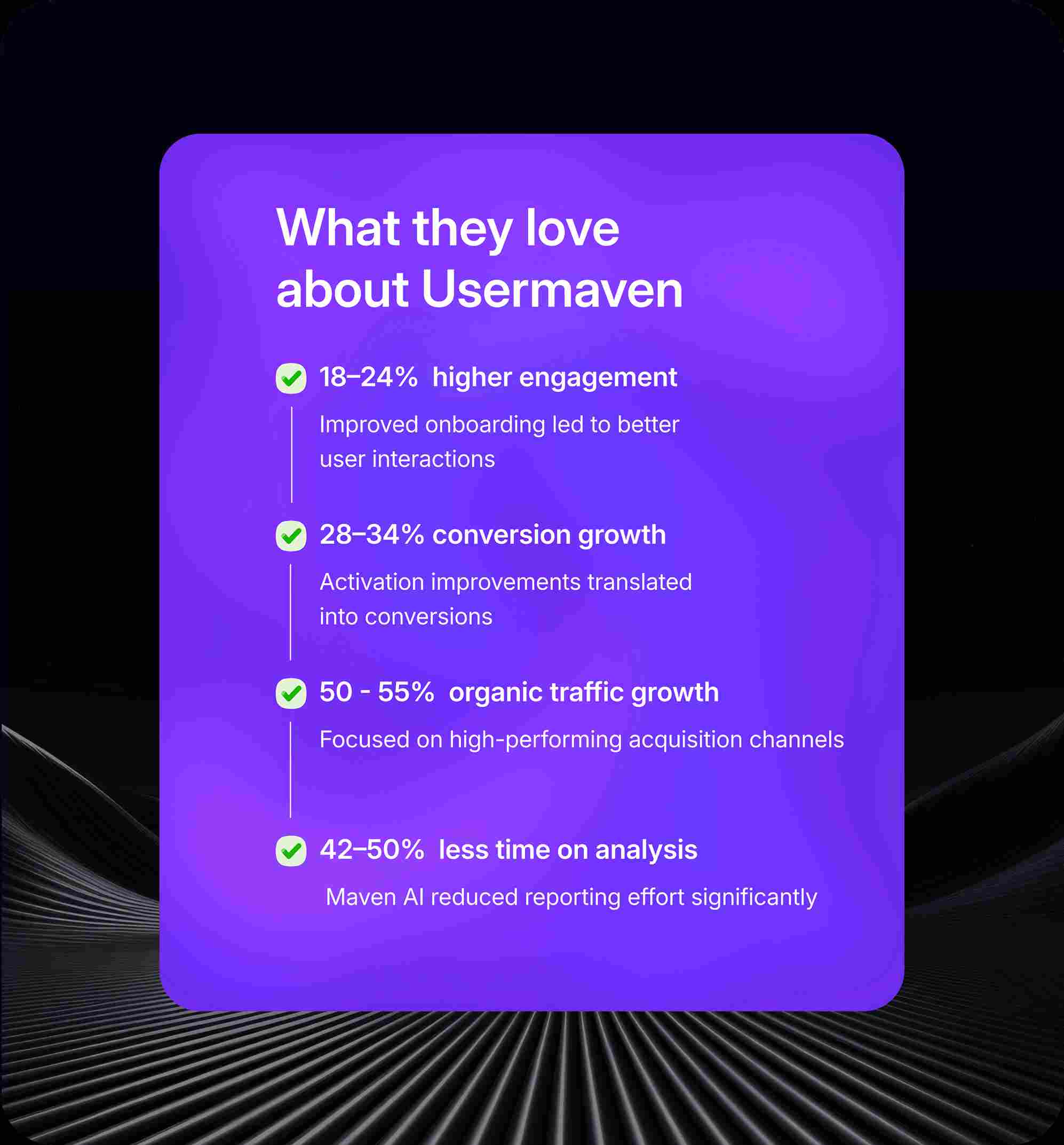
Usermaven became a core part of how PostNitro understands user behavior and improves its product experience.
Usermaven is used regularly across product and growth teams, helping them move faster and make decisions with more confidence.
“We chose Usermaven early because it was built to solve real product analytics problems and that clarity shows in how it works.”
Muneeb A.
Founder at PostNitro
Turn it into your biggest growth driver with Usermaven.
Grow your business faster with:
More stories