Maven AI can analyze your data for you. Just ask.Try it now
increase in conversions
growth in user engagement
decisions with real-time analytics
time spent on analysis

Contentpen.ai is an AI-powered blog writing platform that generates SEO and AEO-optimized content, helping users manage, track, and scale content through an end-to-end content management solution.
SaaS/Content & Publishing
15-20 members
Global
Contentpen is an AI-powered content writing platform generating strong organic traffic, but the team lacked visibility into what users were actually doing after landing on the site.
They couldn’t clearly see user journeys, drop-offs, or which content actually led to conversions, making it difficult to improve performance.
As Eeman, marketing manager at Contentpen, explains:
“We were getting users, but we didn’t really know what they were doing after landing.”
Without that clarity, decisions were based on surface-level marketing metrics rather than real user behavior, making it harder to turn traffic into meaningful outcomes.
To fill that gap, the team relied on multiple tools.
SEO platforms, Search Console, and analytics dashboards all showed parts of the picture, but nothing connected in a way that made sense.
They could see:
But not:
As Eeman puts it, the process often felt frustrating and incomplete.
“We were spending hours trying to figure out which traffic was leading to conversions, but we couldn't zero in on the sources figuratively.”
The process was time-consuming and fragmented.
The team spent between 2–5 hours every week manually piecing together user behavior data across different tools. Even after all that effort, they still lacked clear answers they could confidently act on.
Instead of improving conversion paths, most of their time went into interpreting disconnected reports.
The shift became clear in how the team started working with their data after switching to Usermaven.
Before, analyzing performance meant pulling numbers from different tools and trying to connect them manually.
After moving to Usermaven, that process changed almost immediately.
Instead of starting with reports, they started with customer journeys.
They could open a page and trace what users actually did next. Not just where they came from, but how they moved, what they clicked, and where they stopped.
This changed how the team approached analysis.
Instead of asking:
They started asking:
That shift made their analysis more focused. As Eeman said;
“We didn’t need more data. We needed to understand the data we already had. It was the journey of SEO to CRO for us.”
With less time spent on manual analysis, the team was able to review performance more frequently and act on insights sooner.
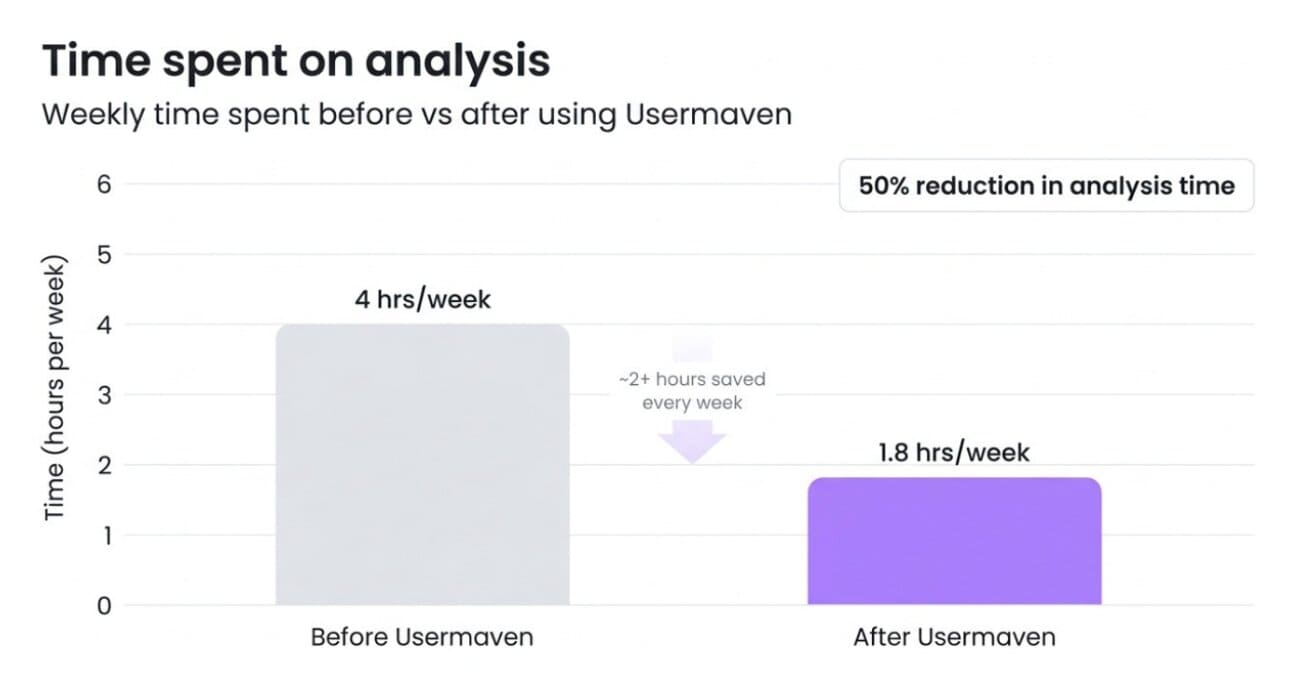
Contentpen now works in a more consistent way, where analyzing user behavior and optimizing content happen in parallel.
With Usermaven, Contentpen moved from disconnected insights to a clear, unified understanding of how users actually interact with their content and convert.
Instead of relying on surface-level traffic metrics, the team started seeing how users actually moved across their content, from the first visit to meaningful actions.
They could track complete journeys, understand which pages contributed to conversions, and identify where users were losing interest. This made it easier to prioritize what to optimize instead of guessing.
Eeman shares how this shifted their workflow:
“Instead of solely focusing on traffic, I started checking Usermaven daily to understand user behaviour, conversion sources, and to focus on conversion-led content optimization.”
With features like website analytics, attribution, and Maven AI insights, the team could move beyond reporting and start making decisions backed by real behavior patterns.
Funnels gave the Contentpen team a step-by-step view of how users moved from content to conversion.
They could see:
This clarity made optimization much more direct.
“Funnels showed us exactly where users were leaving. Once we saw that, fixing things became much easier.”
Instead of making broad changes, they could focus on specific friction points, whether it was a page, a section, or a form, and improve performance incrementally.
One of the biggest shifts was moving from aggregated data to understanding actual users.
With Contact Hub and identity-level tracking, the team could:
“Now we don’t just see numbers. We can actually see users and how they move through our content. Getting to attribute the users from organic and AI search separately was a big win!”
This made it easier to understand what high-value users were doing differently and double down on what was working.
Usermaven also helped align different teams around the same data.
With easy setup (no-code tracking), shareable reports, and even password-protected dashboards, insights were no longer siloed. Marketing, content, and growth teams could collaborate around the same user journeys and performance metrics.
This shared visibility made decision-making faster and more aligned across the team.
As these improvements came together from better user visibility, to clearer funnels and aligned teams, the impact became visible in their engagement trends.
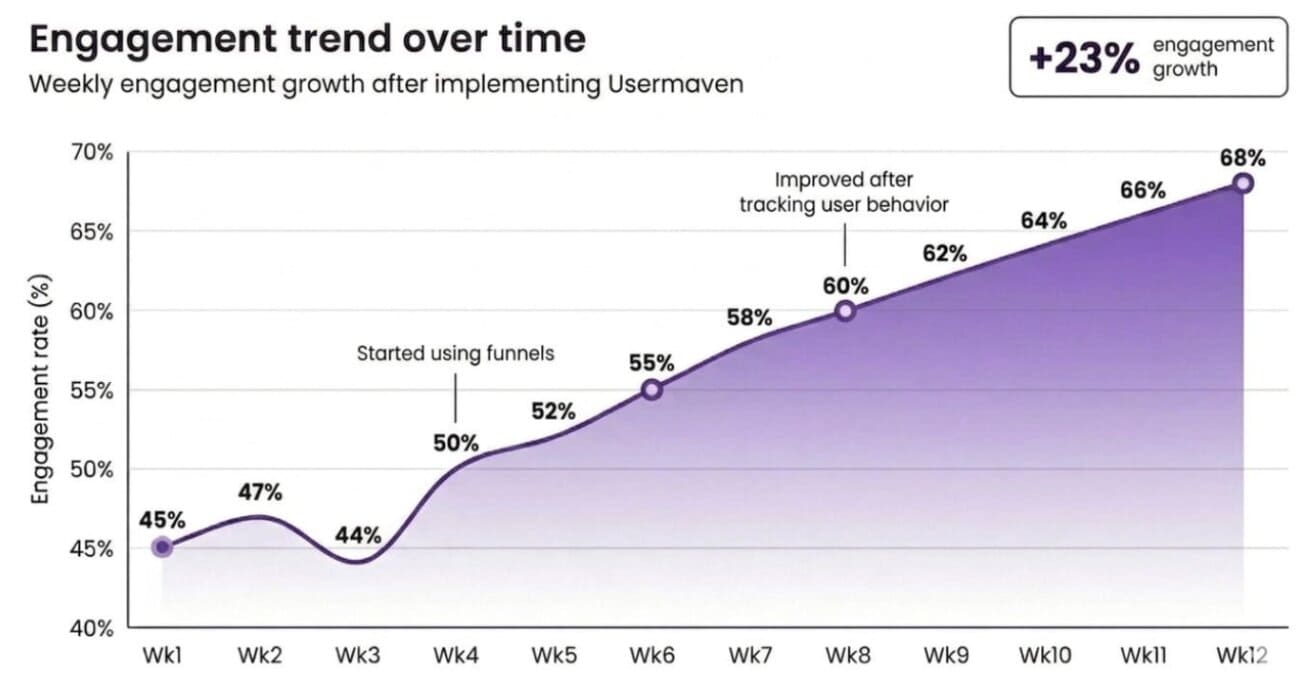
This consistent upward trend gave the team confidence to optimize faster and focus on what worked.
Eeman sums it up well:
“With growing traffic sources, Usermaven's attribution and funnel features really helped us understand our audience better, helping us increase our MRR considerably.”
Once Contentpen could actually see what users were doing, things started to improve quickly.
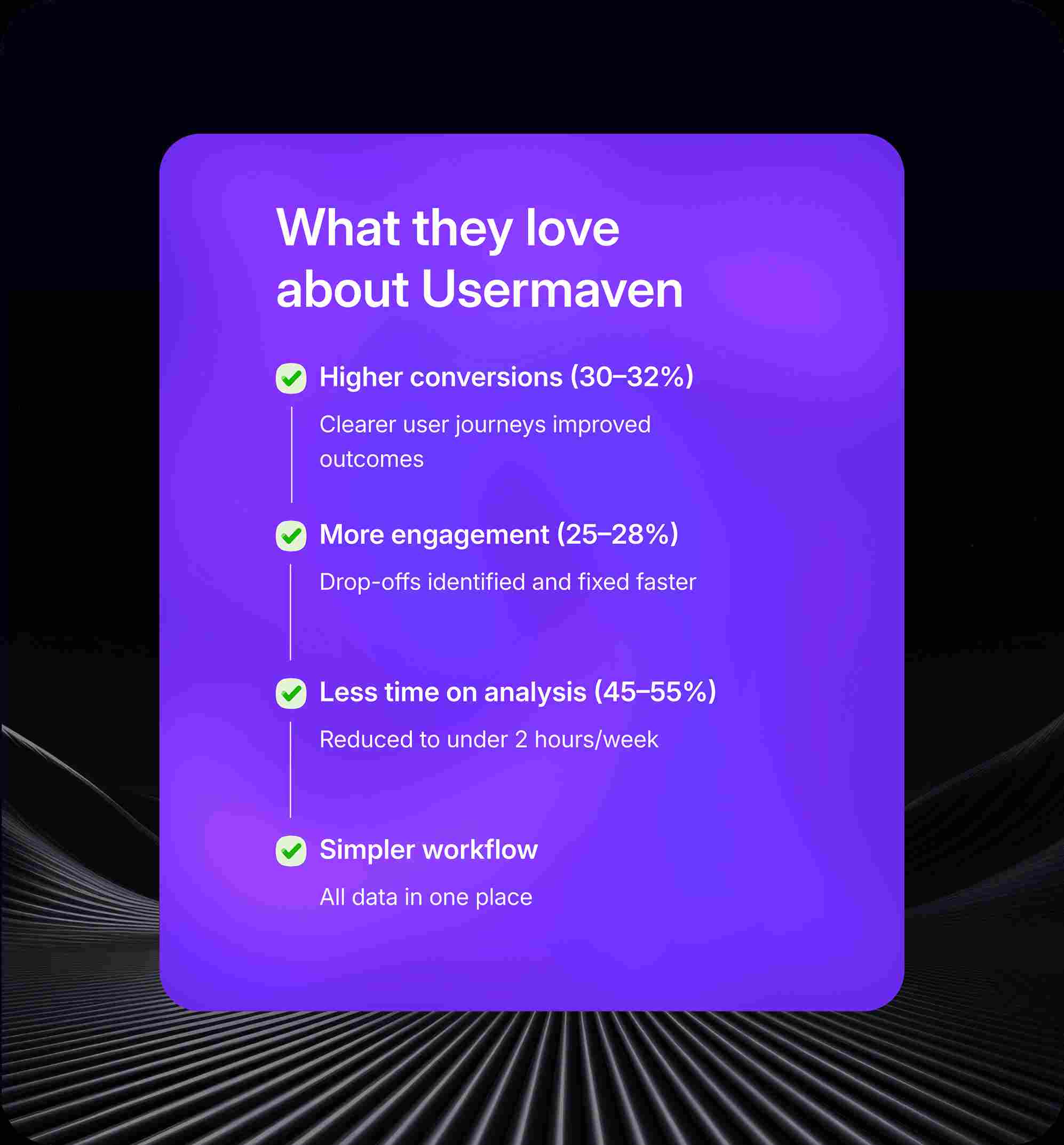
Overall, they spent less time switching between tools and more time making decisions that actually improved results.
Usermaven stood out by showing exactly what users were doing, not just how many were visiting.
Features like user journeys, funnels, multi-touch attribution, and Maven AI insights worked together to create a connected view of performance. The team could move from isolated metrics to a clearer understanding of how different pages, channels, and touchpoints contributed to conversions.
This made it easier to answer questions that were previously unclear.
Rather than relying on assumptions, the team could open a journey or funnel and pinpoint exactly where users lost interest, whether it was midway through a page or just before completing a signup.
Eeman explains it simply:
“Usermaven records real user journeys after the user enters your website. Instead of just showing how many people came, it shows what they did.”
Having this level of visibility changed how the team approached optimization. Content decisions became more focused, and improvements were based on actual user behavior rather than guesswork.
Usermaven is now part of Contentpen’s daily workflow.
It’s simple to use, so the team doesn’t need to spend time figuring things out or setting up complex reports. They can open the dashboard, check what’s happening, and move on with clear next steps.
“We finally understand how users move through our content. That changed everything for us.”
Eeman B.
Marketing Manager at Contentpen
Fix drop-offs and understand your users with AI-powered analytics, funnels, and contact-level insights.
Grow your business faster with:
More stories