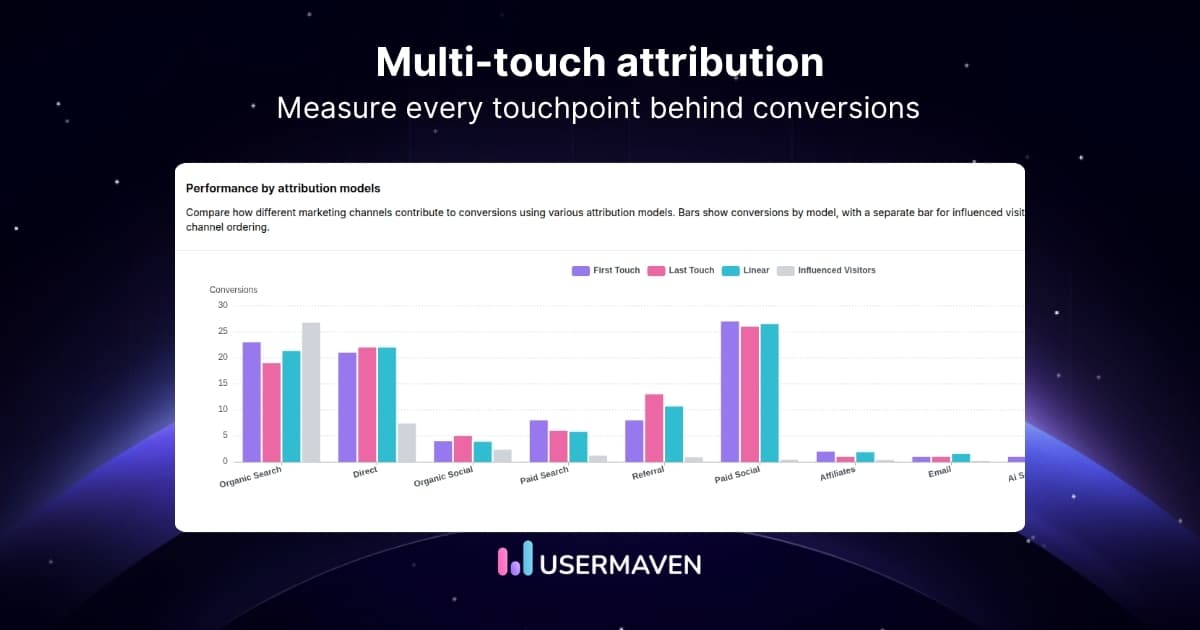
Marketing teams spend countless hours improving attribution accuracy. They compare attribution models, fix tracking discrepancies, add UTM parameters, and optimize conversion paths.
Yet one marketing touchpoint often goes completely unnoticed.
Every day, employees send hundreds or even thousands of emails containing links back to your website. Prospects click those links from conversations with sales representatives, customer success managers, executives, recruiters, and support agents. Those clicks influence buying decisions, generate demos, and even close deals.
Unfortunately, most analytics platforms don’t identify them correctly.
Instead, they frequently appear as direct traffic, creating an attribution blind spot that quietly skews channel performance and marketing reports.
The problem isn’t that the traffic is missing. The problem is that it’s hiding in plain sight.
In this guide, you’ll learn why email signatures create attribution blind spots, how they affect attribution models, and how to accurately measure their contribution using proper tracking and attribution practices.
Key takeaways
- Email signature links are rarely tagged with UTM parameters, making them invisible to most analytics platforms.
- Untracked signature clicks are typically misattributed to direct traffic, distorting your channel performance data.
- This creates an attribution blind spot that causes marketers to undervalue email signatures as a revenue-driving channel.
- Adding UTM parameters to all signature links is the most effective way to surface their true contribution to conversions.
- Proper signature tracking reveals real ROI and helps you make smarter decisions about where to invest your marketing efforts.
What is an attribution blind spot?
An attribution blind spot is any customer interaction that influences a conversion but isn’t properly identified or credited within your analytics platform.
These blind spots reduce attribution accuracy because conversions are assigned to the wrong marketing channel or touchpoint.
Some common examples include:
Offline conversations
Dark social sharing
Private Slack messages
Internal referrals
Cross-device browsing
Cookie limitations
Email signatures
Each of these touchpoints contributes to the customer journey but often escapes traditional attribution methods.
The result is incomplete marketing reports and inaccurate budget decisions.
Imagine someone first discovers your company through LinkedIn Ads. A few days later, they exchange emails with one of your sales representatives and click a product link inside the representative’s email signature before requesting a demo.
If that click is recorded as direct traffic, your attribution report may credit either LinkedIn or direct instead of recognizing the role the email conversation played in moving the buyer forward.
Over time, these hidden interactions accumulate and distort your understanding of what actually drives revenue.
For companies investing heavily in marketing attribution, identifying attribution blind spots is just as important as improving campaign tracking.
Maximize your ROI
with accurate attribution
Why email signatures create an attribution blind spot
Email signatures are one of the most overlooked acquisition channels in B2B marketing.
Every employee becomes a distribution channel.
Sales representatives send pricing information.
Customer success teams share documentation.
Support agents send troubleshooting guides.
Executives communicate with prospects.
Recruiters engage future employees.
Every one of those emails typically contains links pointing back to your company website.
Unlike marketing emails, however, these links are rarely treated as campaign assets.
There is usually:
no tracking strategy
no ownership
no reporting
no attribution
As a result, companies unknowingly generate thousands of website visits every month without understanding their impact.
This becomes especially important during longer B2B buying cycles.
Buying committees regularly forward conversations internally.
A single email may move between a champion, department manager, procurement, finance, and the final decision maker before anyone submits a demo request.
Each forward carries the same email signature.
Those clicks often represent some of the highest-intent visitors your business receives.
Yet most analytics tools simply classify them as direct traffic.
The channel exists.
The influence exists.
The attribution does not.
Why direct traffic hides email signature clicks
Direct traffic is often misunderstood.
Many marketers assume direct means someone typed the website URL directly into their browser.
In reality, direct traffic acts as a fallback bucket whenever analytics platforms cannot confidently determine where a visitor came from.
This happens for several reasons.
1- Email clients often remove referrer information
Unlike web pages, many desktop and mobile email applications do not consistently pass referrer information when a user clicks a link.
Without a referrer, analytics platforms have limited context.
The safest assumption becomes direct traffic.
2- Cross-device behavior breaks attribution
A buyer may receive an email on their phone but later continue researching on a laptop.
Even if both visits belong to the same person, connecting those sessions isn’t always possible without identity resolution.
The email touchpoint disappears from the attribution path.
3- Email signatures rarely include campaign tracking
Marketing teams carefully tag advertising campaigns, newsletters, and social media posts with UTM parameters.
Employee signatures usually receive far less attention.
Many organizations allow employees to create or modify their own signatures independently.
That means:
inconsistent formatting
missing UTM parameters
broken links
outdated campaigns
different destination pages
Without standardized tracking, signature traffic becomes almost impossible to analyze accurately.
Why this becomes a bigger problem in attribution models
Most email marketing attribution models intentionally reduce the importance of direct traffic.
That’s generally considered good practice.
If someone first discovers your company through organic search, then later returns directly to purchase, most marketers want search to receive the credit, not an untracked direct visit that could easily be a click from an email signature.
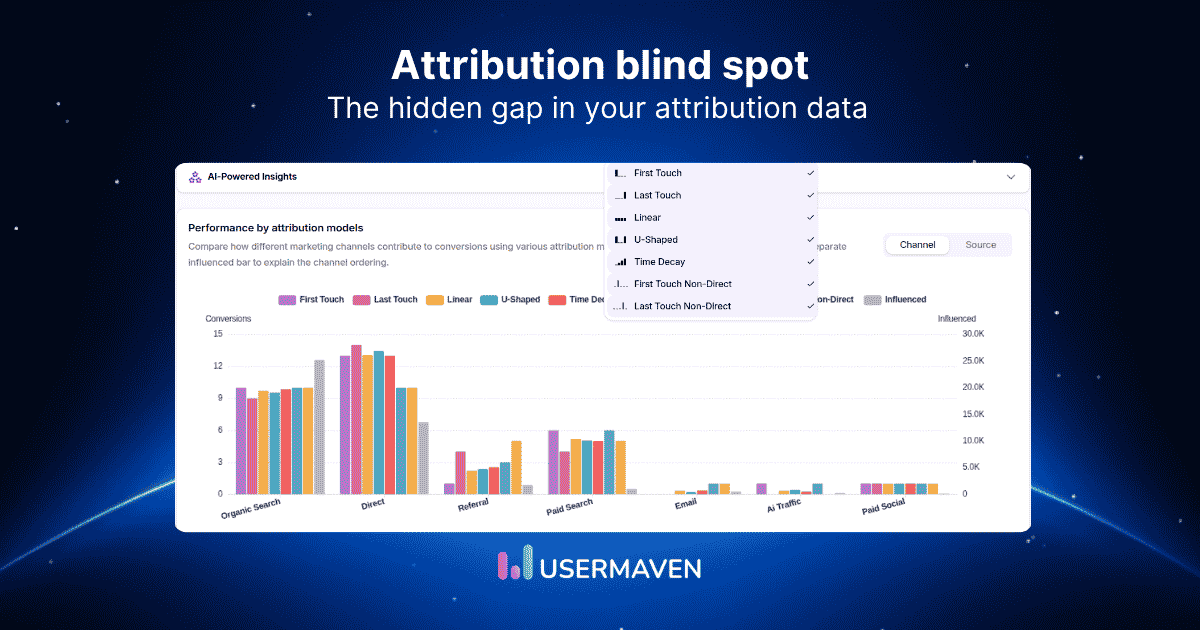
Models like First Touch Non-Direct and Last Touch Non-Direct are designed specifically for this purpose.
The problem begins when email signature traffic has already been classified as direct.
Instead of recognizing the email interaction, these models simply remove direct from consideration altogether.
The conversion is then reassigned to another marketing channel.
For example:
A prospect discovers your website through Google Ads.
They exchange emails with your sales representative.
They click a link inside the representative’s email signature.
They book a demo.
If the signature click appears as direct, the attribution model ignores it.
Google Ads receives the credit.
The sales email disappears from the customer journey.
Nothing in the report suggests the attribution is incorrect because the conversion is still assigned to a legitimate channel.
This is what makes attribution blind spots particularly dangerous.
Unlike broken tracking, they don’t create obvious errors.
They create believable reports that tell an incomplete story.
Why email signatures deserve their own attribution channel
Not every marketing touchpoint deserves its own reporting category.
Email signatures do.
They behave differently from traditional email campaigns in almost every way.
Marketing emails are broadcast to lists.
Email signatures appear inside one-to-one conversations.
Marketing campaigns are initiated by your company.
Email signatures travel organically as conversations are forwarded between stakeholders.
Marketing emails have defined campaigns.
Email signatures exist continuously.
Treating both as the same channel makes analysis more difficult.
Instead, organizations should separate signature traffic from email marketing using dedicated UTM conventions such as:
utm_source=signature
utm_medium=email-signature
utm_content=sales, support, customer-success, or leadership
Creating a dedicated attribution channel allows marketing teams to answer questions such as:
Which departments generate the most engaged traffic?
Which signature links drive demo requests?
Which landing pages perform best from employee conversations?
How much pipeline originates from signature clicks?
Which teams influence revenue beyond marketing campaigns?
Once signature traffic becomes its own channel, it stops inflating direct traffic and starts contributing meaningful attribution data.
How to track email signature clicks correctly
Fixing this attribution blind spot requires consistent governance, standardized tracking, and proper attribution rules.

Step 1: Standardize email signatures
The first priority is consistency.
In many organizations, employees create or edit their own signatures. Over time, this leads to multiple layouts, outdated links, inconsistent CTAs, and missing tracking parameters.
Instead, centralize email signature management so every employee uses an approved template. This ensures that every customer-facing email follows the same branding and tracking standards.
This is also where email signature management software becomes valuable. Instead of relying on employees to manually update signatures, these platforms allow IT or marketing teams to manage signatures from one place, ensuring every link remains accurate and properly tagged.
Step 2: Add consistent UTM parameters
Once signatures are centralized, create a dedicated UTM naming convention specifically for email signatures.
For example:
utm_source=signature
utm_medium=email-signature
utm_campaign=default or the current campaign
utm_content=sales, support, success, or leadership
Avoid using utm_source=email because it groups signature traffic together with newsletters, lifecycle emails, and marketing campaigns. Employee conversations represent a completely different customer touchpoint and deserve their own reporting category.
Using department names in utm_content also helps identify which teams generate the most engaged visitors and qualified leads.
Step 3: Create a dedicated attribution channel
Tracking alone isn’t enough.
If your analytics platform still groups signature traffic under email or direct, you’ll continue losing visibility into its contribution.
Instead, create a custom attribution channel called Email signature based on your UTM parameters.
In Usermaven, this can be done using Custom Channel Mappings, allowing traffic with utm_source=signature to appear as its own acquisition channel instead of being classified as direct.
Once configured, signature traffic becomes visible across attribution reports, user journeys, funnel analysis, and conversion reports.
Step 4: Use redirect links where possible
Landing pages change over time.
Campaigns end.
Resources move.
If every employee’s signature links directly to a specific page, updating hundreds of signatures becomes a maintenance challenge.
Instead, use redirect URLs that you control. When the destination changes, you only need to update the redirect rather than every employee’s signature.
This keeps tracking consistent and prevents broken links from accumulating over time.
Step 5: Review performance regularly
Email signatures are a long-term attribution channel rather than a short-term campaign.
Review performance monthly instead of weekly.
Track metrics such as:
Sessions generated from email signatures
Demo requests
Contact form submissions
Assisted conversions
Revenue influenced
Landing page performance
Department-level engagement
Over time, these reports reveal which signature links contribute most to pipeline generation and customer acquisition.
Best practices for email signature management
Tracking email signatures is only effective when the underlying process is well managed.
Follow these best practices to maintain accurate attribution over time.
Keep signatures simple
Avoid filling signatures with multiple banners and promotional links.
Instead, limit them to a few high-value destinations such as:
Product page
Too many links reduce click-through rates and make attribution harder to interpret.
Match links to each department
Every department has different objectives.
Sales teams should encourage demo bookings.
Customer success teams can promote documentation or onboarding resources.
Support teams should direct users to the knowledge base.
Recruiters may link to career pages.
Tailoring signature links makes attribution data more meaningful because each department contributes to different business outcomes.
Audit signatures regularly
As companies grow, signatures often drift away from approved templates.
Schedule periodic audits to check for:
Missing UTM parameters
Broken links
Outdated campaigns
Inconsistent branding
Duplicate destination pages
Routine audits prevent attribution blind spots from reappearing.
Measuring email signature attribution in Usermaven
Once tracking is configured, the next step is measuring its impact.
Rather than looking only at sessions, evaluate how email signatures contribute throughout the customer journey.
Start by reviewing your traffic sources report.
Your newly created email signature channel should appear alongside organic search, paid search, direct, referral, and social.
Next, analyze user journeys.
These reports reveal where email signatures appear within the buying journey. In many cases, you’ll find that signatures are rarely the first interaction or the final conversion touchpoint. Instead, they influence users during the consideration stage by encouraging prospects to revisit your website, book a demo, or explore additional resources.
Then review Funnels to compare visitors arriving through email signatures against other acquisition channels.
Questions worth answering include:
Do signature visitors convert at a higher rate?
Which landing pages perform best?
Which departments generate the most qualified traffic?
How long does it take these visitors to convert?
Which signatures contribute most to assisted conversions?
Finally, compare attribution models.
Looking only at Last Touch Attribution may understate the influence of email signatures because many of these interactions occur during the middle of the buying journey.
Instead, compare multiple attribution models, including:
Comparing models provides a more complete understanding of how email signatures influence conversions across the customer journey.
Maximize your ROI
with accurate attribution
Common mistakes to avoid
Many organizations implement tracking but still struggle to measure email signature performance accurately. The most common mistakes include:
Treating email signatures as traditional email marketing instead of a separate acquisition channel.
Using inconsistent UTM naming conventions across departments.
Allowing employees to manually edit signatures without governance.
Reviewing only last-touch attribution instead of comparing multiple attribution models.
Ignoring assisted conversions and customer journey reports.
Leaving signature traffic inside the direct traffic bucket.
Avoiding these mistakes significantly improves attribution accuracy and gives marketing teams a clearer picture of how customer interactions contribute to revenue.
Conclusion
Email signatures may seem like a small part of your marketing strategy, but they can become a significant attribution blind spot when left untracked. By standardizing signatures, adding consistent UTM parameters, and treating signature traffic as its own attribution channel, you can improve attribution accuracy and gain a more complete view of the customer journey.
With Usermaven, you can track email signature traffic alongside every other touchpoint, compare attribution models, analyze user journeys, and measure its real impact on conversions and revenue all from a single platform.
How many conversions are being credited to the wrong channel?
Ready to see Usermaven in action? Explore the platform or book a demo for a closer look.
Frequently asked questions
Why are email signatures considered an attribution blind spot?
Email signatures often contain links to your website, but many organizations don’t track those links with UTM parameters. As a result, clicks are frequently classified as direct traffic or attributed to another channel, making email signatures an overlooked touchpoint in the customer journey.
How can I track email signature clicks in Google Analytics or Usermaven?
The most effective approach is to add consistent UTM parameters to every link in your email signatures. You can then create a dedicated channel for email signature traffic to separate it from newsletters and direct traffic. In Usermaven, Custom Channel Mappings make it easy to group this traffic and analyze its impact across attribution reports and customer journeys.
Do email signatures affect marketing attribution?
Yes. Email signatures can influence prospects during the consideration stage, especially in B2B sales cycles. If they are not tracked correctly, attribution models may assign conversions to direct traffic or another marketing channel, reducing attribution accuracy.
Should email signatures have UTM parameters?
Yes. Every website link in an email signature should include standardized UTM parameters. This allows analytics platforms to identify signature traffic correctly and prevents it from being grouped with direct traffic or other email campaigns.
Can email signature traffic generate conversions?
Absolutely. Sales representatives, customer success managers, executives, and support teams communicate with prospects throughout the buying journey. Their email signatures often lead visitors back to pricing pages, product documentation, case studies, or demo pages, making them an important contributor to assisted conversions.
What is the difference between email marketing and email signature attribution?
Updated

Written by
Lauren Brooks
Lifecycle Marketing Strategist
Lauren Brooks is a lifecycle marketing strategist with 4+ years of experience helping SaaS businesses create meaningful customer experiences. She specializes in user engagement, retention, and conversion optimization, helping brands build stronger customer relationships beyond acquisition.
All articles by Lauren →