Small businesses usually do not need more marketing dashboards. They need to know which ads create calls, customers, purchases, and revenue before a limited budget is wasted.
The challenge is that Google, Meta, analytics tools, call-tracking systems, and a CRM can all report different versions of the same journey. The right ad attribution software should reduce that confusion without creating enterprise-level cost or implementation work.
This guide compares ad tracking platforms by business model, setup effort, attribution-ready pricing, online and offline conversion support, revenue connection, and scalability. The goal is to find the amount of tracking your business actually needs, not the longest feature list.
Ad tracking platforms for small business at a glance
Start with how your business sells. An ecommerce store, local service company, digital B2B firm, and high-ticket business can all run paid ads while needing very different measurement systems.
| Small-business type | Best fit | Why |
|---|---|---|
| SaaS / digital B2B | Usermaven | Ads + behavior + CRM revenue |
| Multi-channel paid ads | Cometly | Server-side attribution |
| Lead generation / offline | Ruler Analytics | Online → offline revenue |
| Shopify ecommerce | Triple Whale | Commerce-native attribution |
| High-ticket sales | Hyros | Long journeys + calls |
| Lightweight conversion tracking | AnyTrack | Focused tracking + CAPI |
| Low budget / free | Google Analytics 4 | Free measurement baseline |
| HubSpot-first B2B | HubSpot Marketing Hub | CRM-native measurement |
| Local lead generation | WhatConverts | Calls + forms + lead quality |
| Performance-heavy campaigns | RedTrack | Paid traffic + conversion data |
Key takeaways
- Start with the business model: Ecommerce, local services, B2B, and high-ticket businesses should not buy the same tracking stack by default.
- Do not overbuy: Native ad-platform tracking and GA4 may be enough while a small business runs one channel with a simple conversion.
- Offline conversions matter: Calls, appointments, sales conversations, and invoices require different tracking from an ecommerce checkout.
- Compare usable price: The cheapest plan is irrelevant if the attribution, CRM, or call-tracking features you need sit on a higher tier.
- Measure beyond clicks: As spend grows, ads should be connected with qualified leads, customers, purchases, and revenue, not just platform conversions.
- Ease of operation matters: A sophisticated platform can still be a poor SMB choice if every campaign change requires engineering, RevOps, or a dedicated analyst.
Ad tracking platforms vs advertising platforms
The phrase “ad platform” can mean two different things. This guide covers platforms that measure advertising performance, not the networks where you buy the ads.
An advertising platform is where campaigns run: Google Ads, Meta Ads, LinkedIn Ads, or TikTok Ads. An ad tracking platform measures which campaigns and touchpoints contribute to calls, leads, purchases, customers, and revenue.
For a broader market-wide comparison of measurement products, the ad tracking software guide covers tools across more business types and company sizes.
Best ad tracking platforms for small business
The platforms below are ranked by business fit rather than feature count. Some are stronger for digital B2B, while others are much better for calls, ecommerce, or high-volume performance marketing.
1. Usermaven: Best for SaaS and digital B2B

Overview
Usermaven connects paid and organic acquisition with website behavior, product usage, customer journeys, known contacts and companies, CRM pipeline, and revenue. It is built for teams that need to understand what happens after the click rather than stopping at ad-platform conversion counts.
Best for
B2B SaaS, software companies, digital agencies, PLG businesses, and online-first service firms where the journey remains largely digital before the customer or opportunity reaches revenue.
Pricing
Growth starts at $84/month for 250,000 events. Scale starts at $199/month and is the more relevant attribution-ready plan because it adds deeper paid, channel, CRM pipeline, and revenue attribution capabilities. Current Usermaven pricing shows live event tiers and plan limits.
Key capabilities
- Paid ads, channel, content, landing-page, CRM pipeline, and revenue attribution
- Website and product analytics on the same event dataset
- Funnels, journeys, events, profiles, segments, and conversion paths
- Google, Meta, LinkedIn, and other paid-channel context
- HubSpot and Salesforce data for pipeline and revenue analysis
- Conversion feedback to supported ad platforms
- Maven AI, MCP, and measurement-health diagnostics
Why it stands out
Product analytics helps show whether paid traffic activates and uses the product, while customer journeys reveal the path from first visit through conversion and revenue.
Funnels add progression context, helping a small team separate an acquisition problem from a landing-page, onboarding, product, or sales-process problem.
Verdict
Best for digital SMBs that need attribution, behavior, and revenue in one self-serve workflow without adopting a larger enterprise GTM platform.
2. Cometly: Best for multi-channel paid acquisition

Overview
Cometly is a B2B SaaS attribution platform centered on pixel and server-side tracking, multi-touch attribution, account journeys, CRM-connected pipeline, revenue reporting, and conversion feedback.
Best for
Small B2B and lead-generation teams that spend meaningfully across paid channels and want a clearer view of which campaigns produce qualified pipeline or revenue.
Pricing
Cometly’s current pricing page uses usage-based pricing rather than fixed public dollar tiers. It sizes plans around pageviews, stack requirements, and support, with monthly or annual billing.
That makes Cometly pricing an important part of evaluation for small businesses that need to understand how traffic and implementation requirements may affect cost.
Key capabilities
- Pixel and server-side tracking
- Multi-touch attribution
- Account journeys and events
- CRM-connected pipeline and revenue
- Conversion API feedback
- Custom dashboards, audiences, and AI analysis
Verdict
Best when paid acquisition is the central measurement problem. Businesses comparing that paid-media focus with broader behavioral and product analytics can evaluate the tradeoff in the Cometly alternative comparison.
3. Ruler Analytics: Best for calls and offline revenue

Overview
Ruler Analytics connects website activity with forms, phone calls, live chat, CRM opportunities, offline conversions, and revenue. It is designed to close the gap after a prospect leaves the website and enters a sales process.
Best for
Professional services, agencies, appointment-led businesses, local-service companies, and B2B lead-generation teams where phone calls or offline sales are important conversion events.
Pricing
Ruler currently lists its Small plan from $400/month for up to 10,000 monthly visits on monthly billing. Pricing scales with traffic and the product, data, and integration requirements.
The Ruler Analytics pricing breakdown is useful for estimating when call and offline attribution becomes worth the higher monthly cost.
Key capabilities
- First-party visitor tracking
- Forms, calls, chat, ecommerce, and offsite conversions
- CRM opportunity and revenue stages
- Multi-touch and data-driven attribution
- Cross-domain and multi-device reporting
- Marketing mix modelling on advanced setups
Verdict
Best when the path is ad → call or form → salesperson → CRM → revenue. The Ruler Analytics alternative comparison helps digital-first teams judge whether they need that offline specialization.
4. Triple Whale: Best for Shopify and ecommerce

Overview
Triple Whale is an ecommerce measurement platform centered on first-party tracking, multi-touch attribution, store revenue, blended performance, customer economics, creative analysis, and AI workflows.
Best for
Shopify and DTC small businesses that want commerce-native measurement across Meta, Google, TikTok, email, creative performance, orders, and customer value.
Pricing
Triple Whale has a free plan. For the lowest GMV tier shown on its current pricing page, Foundation is $219/month and adds multi-touch attribution; Automate is shown at $749/month. Pricing changes with annual GMV and package.
The Triple Whale pricing breakdown makes that GMV-based structure easier to compare with fixed-price analytics products.
Key capabilities
- Triple Pixel first-party tracking
- Multi-touch ecommerce attribution
- Order and channel revenue
- Blended ROAS and customer economics
- Post-purchase survey inputs
- Creative, cohort, product, and AI analysis
Verdict
Best when the trusted revenue record is the ecommerce order. The Triple Whale alternative comparison is more relevant when a business also needs SaaS-style product, CRM, or journey analytics.
5. Hyros: Best for high-ticket and long sales cycles

Overview
Hyros focuses on ad tracking for long paid journeys involving calls, funnels, subscriptions, high-ticket sales, or delayed conversions. Its current site positions pricing and implementation by business model rather than a single self-serve package.
Best for
High-ticket services, education and coaching, call-driven sales, and businesses where the revenue event occurs well after the initial ad click.
Pricing
Hyros now routes buyers through custom quotes by business model, including ecommerce, info products, SaaS, and B2B calls. That makes final cost dependent on the specific setup rather than a single published plan.
Small businesses can use the Hyros pricing analysis to understand the revenue-based pricing logic and the tradeoff between guided paid-attribution setup and a more self-serve stack.
Key capabilities
- Long customer-journey tracking
- Calls, funnels, subscriptions, and revenue
- Advanced/custom attribution
- Ad-platform conversion feedback
- LTV and subscription analysis
- AI-assisted ad optimization
Verdict
Best when high-ticket paid traffic and long conversion paths justify a specialized attribution platform. The Hyros alternative comparison is more useful when the business also needs broader website, product, and CRM analytics.
6. AnyTrack: Best lightweight conversion tracking

Overview
AnyTrack is a conversion tracking platform focused on connecting paid traffic, ecommerce and lead sources with conversion signals that can be reported and sent back to advertising platforms.
Best for
Lean performance teams, affiliate-driven businesses, and small companies that mainly need better conversion tracking and server-side signal quality without a broader analytics suite.
Pricing
AnyTrack has a free plan for one site and 5,000 monthly sessions. Starter is $100/month, Personal $150/month, Advance $300/month, and custom pricing is available above that.
Key capabilities
- Server-side and cookieless tracking
- Journey logs and identity resolution
- Ad-platform integrations
- Conversion API
- Campaign and ROAS reporting
- Cross-domain and custom integrations on higher tiers
Verdict
A practical fit when a small business wants focused conversion tracking and ad-platform feedback without paying for a broader attribution or product-analytics system.
7. Google Analytics 4: Best free starting point

Overview
Google Analytics 4 is a free analytics baseline for website and app activity. It can connect acquisition sources with events and attribution reports, but it is not a dedicated small-business ad attribution platform.
Best for
Small budgets, one or two acquisition channels, and businesses that need basic traffic and conversion measurement before paying for dedicated tracking.
Pricing
Standard GA4 is free. The real cost is operational: event design, tagging, UTM discipline, debugging, reporting, and connecting downstream CRM or offline revenue can still require time or technical support.
Key capabilities
- Traffic source and campaign reporting
- Website and app events
- Attribution paths and model comparison
- Google Ads integration
- Funnels and explorations
- Audiences and custom reporting
Verdict
Start here when the business is too early or too simple to justify dedicated software. A Google Analytics 4 alternative becomes more relevant when cross-channel attribution, identity, product behavior, or CRM revenue become central.
The easiest GA4 alternative for marketers and product teams
8. HubSpot Marketing Hub: Best for CRM-first small businesses

Overview
HubSpot Marketing Hub combines contacts, forms, campaigns, lifecycle stages, automation, deals, reporting, and revenue context inside the HubSpot ecosystem.
Best for
B2B service companies and small sales teams that already use HubSpot as the operational CRM and want marketing measurement to stay close to contact and deal records.
Pricing
HubSpot offers free tools and Starter pricing from $10 per seat in its current promotional view. Professional starts at $890/month and Enterprise at $3,600/month; advanced revenue and journey capabilities sit on higher tiers.
Key capabilities
- CRM-native contacts and companies
- Campaign and lifecycle reporting
- Forms and lead capture
- Advertising and audience tools
- Automation
- Deal and revenue context on eligible tiers
Verdict
Best when CRM simplicity matters more than adopting a separate attribution platform. The HubSpot and Usermaven integration becomes relevant when the team wants richer pre-lead website and behavioral context around those CRM records.
9. WhatConverts: Best for local lead generation

Overview
WhatConverts tracks phone calls, forms, chat, transactions, campaign sources, and lead quality. Higher plans add customer journeys and multi-click attribution, making it particularly practical for small businesses that sell through leads rather than online checkout.
Best for
Local services, legal and professional firms, contractors, clinics, agencies, and appointment-based companies that need to connect advertising with calls and qualified leads.
Pricing
WhatConverts starts at $30/month for call tracking. Plus is $60/month for calls, forms, and chat; Pro is $100/month; Elite is $160/month and adds customer journeys, multi-click attribution, page views, and lead intelligence. Usage charges can apply.
Key capabilities
- Dynamic call tracking numbers
- Calls, forms, chat, and transactions
- Campaign and keyword reporting
- Customer journeys on Elite
- Multi-click attribution on Elite
- Lead qualification and reporting
Verdict
Best for local and service SMBs that care more about which campaigns create qualified calls and leads than about product analytics or complex ecommerce attribution.
10. RedTrack: Best for performance-heavy advertising

Overview
RedTrack is a performance tracking platform for paid media, ecommerce, lead generation, and affiliate workflows. It combines server-side Conversion API, ad-spend syncing, attribution, customer journeys, and conversion data sent back to ad platforms.
Best for
Performance-oriented SMBs managing several paid sources, ecommerce brands, and media buyers that need more control over tracking and ad-platform signals than a basic analytics tool provides.
Pricing
RedTrack currently lists Builder from $69/month for media buyers. Its ecommerce Brand plan is shown from $83/month in the selected annual pricing view, with higher tiers and add-ons for faster spend sync, automation, AI dashboards, and scale.
Key capabilities
- Server-side Conversion API
- Ad-spend and conversion sync
- Multi-platform paid tracking
- Customer journey and attribution reports
- Rules and automation options
- MCP and API access on eligible plans
Verdict
Best when paid-media operations are sophisticated enough to justify a dedicated performance tracker, but the business does not need a full enterprise analytics suite.
Compare small-business ad tracking platforms
Use this table to shortlist by the operational problem first. Pricing access describes how easy it is to understand the entry model, not the total cost at scale.
| Tool | Best for | Setup | Offline tracking | Revenue connection | Pricing access |
| Usermaven | SaaS / digital B2B | Low–medium | CRM-based | Strong CRM/revenue | Public |
| Cometly | Paid B2B acquisition | Medium | CRM-based | Strong pipeline/revenue | Quote / usage-based |
| Ruler Analytics | Calls / offline | Medium | Very strong | Very strong | Public |
| Triple Whale | Shopify / ecommerce | Low–medium | Limited | Strong order revenue | Public / GMV-based |
| Hyros | High-ticket | Guided | Strong calls/funnels | Strong | Custom quote |
| AnyTrack | Lean conversion tracking | Low | Via integrations | Good | Public |
| GA4 | Free baseline | Medium DIY | Limited | Limited without setup | Free |
| HubSpot | CRM-first B2B | Medium | CRM-based | Strong on higher tiers | Public tiers |
| WhatConverts | Local lead gen | Low | Very strong | Lead/value focused | Public + usage |
| RedTrack | Performance-heavy | Medium | Via integrations | Strong paid/ecom | Public + add-ons |
What small businesses need from ad tracking
Small businesses usually need fewer capabilities than enterprise teams, but the capabilities they do need must be easy to operate and directly connected to budget decisions.

Fast setup
A small marketing team should be able to connect the website, ad platforms, and key conversions without a long implementation project. The faster the data becomes trustworthy, the sooner it can influence spend.
Clear pricing
Compare the attribution-ready tier, not the cheapest logo on the pricing page. Include traffic or event limits, call usage, seats, onboarding, overages, and any add-ons required for CRM revenue or conversion feedback.
Multi-channel visibility
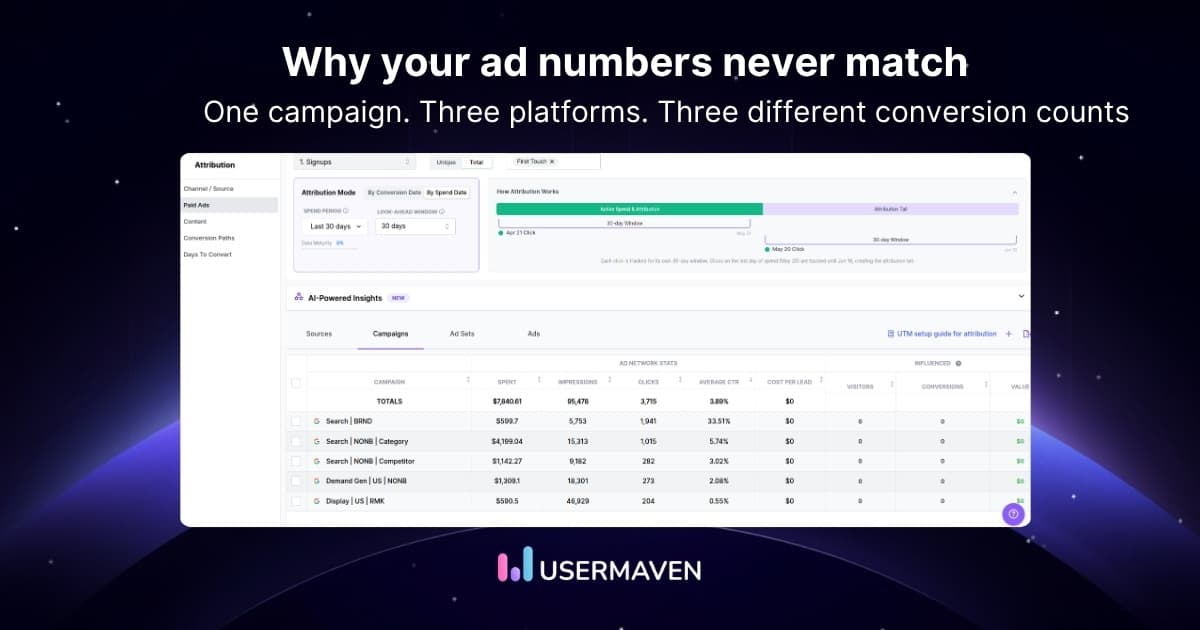
Google and Meta can both claim the same conversion. Independent tracking becomes more useful as the channel mix expands and each platform’s self-reported view becomes harder to reconcile. Keeping source attribution consistent also helps keep campaign origins comparable before credit is distributed across later touchpoints.
IAB Tech Lab’s measurement standards also highlight the fragmentation that appears as advertising spans more devices, platforms, and channels.
Calls and offline sales
Local services, professional firms, agencies, and high-ticket businesses often convert through calls, appointments, salespeople, or invoices. The tracking system must preserve the original marketing source through that offline outcome.
Revenue connection
The useful chain is Ad → lead or purchase → customer → revenue. For B2B, that may mean opportunity and Closed Won; for ecommerce, order revenue; for services, a booked and paid job.
Simple reporting
An owner or lean marketing team should be able to answer which campaigns create customers, which channels waste spend, and where lead quality differs without building a BI stack.
Room to scale
The platform should survive more spend, more channels, a CRM rollout, and a longer customer journey. Small businesses should buy enough headroom without paying early for enterprise complexity.
Early-stage companies have an overlapping but different decision framework. The ad tracking software for startups guide puts more weight on growth stage, product activation, and how the analytics stack evolves as a startup scales.
Does your small business need dedicated tracking?
Dedicated tracking is not automatically the right answer. The need usually appears when advertising complexity grows faster than native platform reports can explain.

One channel and a simple sale
If one paid platform drives a straightforward online purchase or form submission, native conversion tracking plus GA4 may be sufficient. Focus first on reliable events and clean campaign naming.
Multiple paid channels
Independent tracking becomes more useful when Google, Meta, or other networks begin claiming overlapping conversions. Cross-platform ad tracking creates a shared view instead of letting every platform grade its own performance.
Calls or appointments
If the valuable outcome happens by phone, in a calendar, or after a salesperson follows up, dedicated call and CRM attribution can connect the original campaign with the eventual sale.
Long sales cycle
A customer may click an ad today and buy weeks later. The attribution window should reflect the normal buying cycle so early demand-generation touches are not erased.
Meaningful ad spend
As monthly spend rises, the cost of a wrong budget decision rises with it. Independent tracking becomes easier to justify when even a small percentage of wasted spend exceeds the platform cost.
| Advertising setup | Recommended tracking level |
| One platform + simple online sale | Native tracking / GA4 |
| Google + Meta or several paid channels | Independent cross-channel tracking |
| Calls / appointments / offline sales | Call tracking + CRM attribution |
| Long sales cycle | Multi-touch + CRM |
| High monthly ad spend | Server-side + revenue attribution |
What should small businesses measure?
The right KPI depends on how the business makes money. Track the deepest reliable outcome, then use earlier funnel metrics to diagnose why performance changed.
Local and service businesses
Track cost per call, cost per qualified lead, booked appointment rate, close rate, revenue per lead, and CAC. A campaign that creates many calls can still be weak if few calls become qualified or paid customers.
SaaS and B2B
Track qualified lead rate, lead-to-opportunity conversion, pipeline, win rate, sales-cycle length, CAC, and Closed Won revenue. Revenue attribution helps connect campaign touchpoints with the commercial outcome instead of treating every lead equally.
For software companies where activation and product quality matter after acquisition, ad attribution software for SaaS should connect paid campaigns with signup, activation, opportunity, and recurring revenue.
Ecommerce
Track CAC, ROAS, average order value, purchase revenue, repeat purchase rate, and LTV. The ad tracking solution for ecommerce framework is more useful than a generic lead model when the trusted outcome is an order.
Use ROAS consistently against attributed revenue, but do not confuse it with profit. Margin, refunds, fulfillment, and repeat value still determine whether customer acquisition is healthy.
How much should a small business spend on tracking?
Tracking software should cost less than the decisions it improves. The goal is not to buy the cheapest product; it is to avoid paying enterprise prices for measurement complexity the business does not need.
Free baseline
Native ad tools and GA4 are sensible when spend is low, the funnel is simple, and there is little ambiguity about what created the conversion.
Lightweight paid tracking
Tools around roughly $30–$150 per month can make sense once calls, multiple traffic sources, or conversion feedback become important. The return comes from better lead quality and fewer wasted budget decisions.
Specialist attribution
Several hundred dollars per month can be justified when calls, CRM revenue, long customer journeys, or advanced ecommerce measurement affect meaningful ad spend.
Enterprise-style platforms
High-cost platforms are usually unnecessary unless channel complexity, sales cycles, data integrations, or media budgets make simpler systems inadequate. A marketing attribution software cost comparison should include implementation and operating effort, not only subscription price.
How to choose by business model
For ecommerce: Prioritize order revenue, ROAS, CAC, AOV, first-party tracking, and repeat purchase value.
For local services: Prioritize call tracking, qualified leads, appointment outcomes, CRM stages, and revenue per lead.
For B2B: Prioritize identity, opportunity creation, pipeline, Closed Won revenue, and longer attribution windows.
For SaaS: Prioritize acquisition plus activation, product behavior, paid conversion, retention, and recurring revenue.
For high-ticket sales: Prioritize calls, long journeys, CRM stages, customer value, and revenue that arrives well after the first click.
Why tracking accuracy matters
Small businesses can afford fewer measurement mistakes because each campaign decision represents a larger share of the total budget. A precise-looking dashboard is not useful if the underlying campaign, identity, or conversion data is incomplete.

Clean campaigns
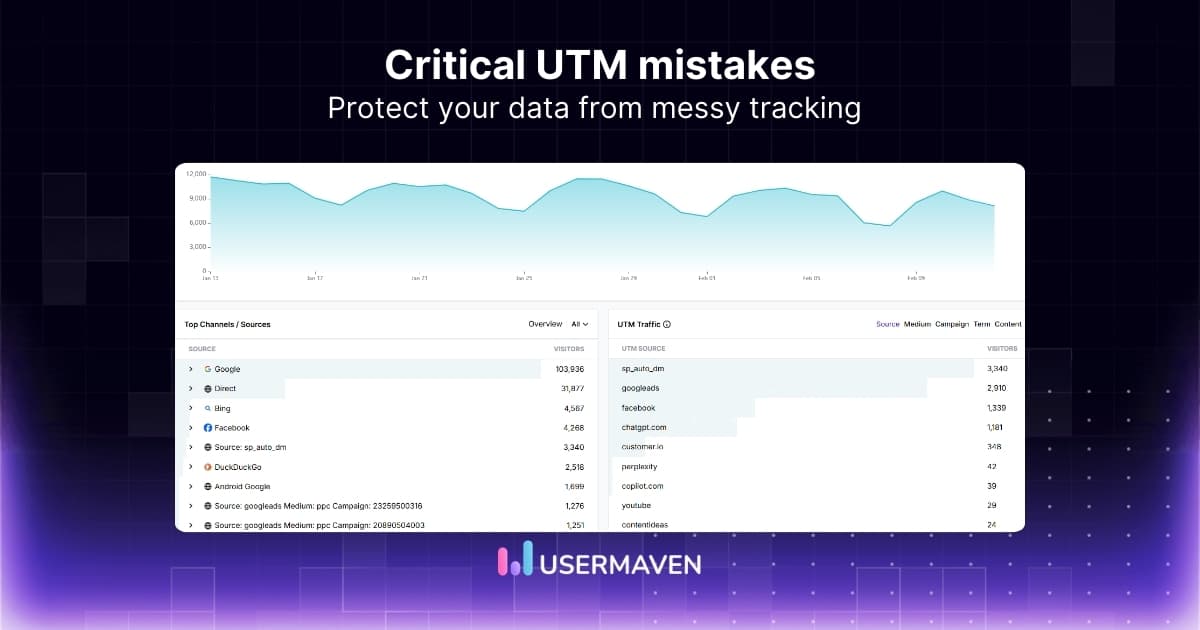
Keep UTMs, click IDs, naming conventions, and conversion definitions consistent so one channel does not fragment into several labels.
Track real conversions
Forms, calls, purchases, appointments, and CRM stages should represent meaningful business outcomes rather than the easiest event to capture.
Preserve identity
As browser restrictions grow, ad tracking without third-party cookies depends more on first-party signals and durable connections between the visit and the eventual customer.
For digital SMBs, Contacts Hub can connect earlier acquisition activity with known contacts and companies after identification, helping preserve context across longer journeys.
Connect offline outcomes
Microsoft Advertising’s offline conversion tracking shows the same principle in practice: a click ID and conversion data can connect an online ad interaction with a later offline outcome, making campaign ROI more complete.
Validate discrepancies
When ad platforms and analytics disagree, understanding why ad tracking is inaccurate helps separate real tracking failures from expected differences in attribution rules and reporting windows.
Monitor measurement health
Usermaven’s Measurement Trust Center treats collection, identity, integrations, conversion delivery, and reliability as part of the measurement workflow rather than an afterthought.
A repeatable attribution checklist then helps verify campaign capture, identity, conversion definitions, and downstream revenue before budget decisions depend on the report.
Real-world tracking evidence
A useful tracking platform should change budget decisions, not simply create cleaner charts. ContentStudio provides a good example of why downstream outcomes and conversion timing matter for lean marketing teams.
In the ContentStudio case study, the team connected Google and Meta Ads with signups, plan upgrades, demo bookings, and revenue. It reported 128% growth in signups, 92% more plan upgrades, and 242% more demo bookings after improving attribution and funnel analysis.
The timing insight was just as important: a meaningful share of paid conversions completed 7–14 days after the original ad click. Campaigns that looked weak in the first week could become profitable when evaluated across the full conversion cycle.
| Why this evidence matters: Small businesses often have little room for premature budget cuts. A tracking system should reveal whether a campaign is genuinely weak or simply converts later than the ad platform’s early reporting suggests. |
|---|
How Usermaven fits digital small businesses
For online-first SMBs, the useful workflow is Ad → website → behavior → lead or customer → CRM → revenue. Usermaven is strongest when the business wants that chain in one analytics environment rather than separate tools for every stage.

Track acquisition
Paid and organic sources, campaigns, and landing pages can be compared in the same measurement layer instead of reviewed as isolated channel reports.
See behavior
Event tracking captures the actions that show whether paid traffic progresses: signups, demos, purchases, activation events, upgrades, and custom revenue outcomes.
Follow journeys
Journeys and funnels help show where prospects move forward or drop, making it easier to distinguish weak traffic from a weak landing page, onboarding flow, or sales process.
Connect revenue
CRM and revenue context lets the business compare campaigns by qualified pipeline, customers, Closed Won, subscriptions, or other commercial outcomes instead of treating every conversion as equal.
Improve ad-platform learning
Conversion Syncs can send selected downstream outcomes back to supported ad platforms so bidding can learn from qualified leads, customers, or revenue rather than low-value conversions.
Where AI helps small teams
For a small team, AI is useful when it reduces the analyst work required to investigate campaign performance. It should help narrow the question, not replace business judgment.
Find wasted spend
Maven AI can help investigate questions such as:
- Which campaign is spending without producing qualified leads?
- Which channel has the lowest CAC after lead quality is considered?
- Which source creates many leads but weak close rates?
- Which campaign produces the most revenue per customer?
- Which ads look weak only because customers convert later?
Ask from AI clients
Usermaven MCP lets authorized analytics be explored from compatible AI clients, which can be useful for technical or AI-native small teams that want campaign, journey, and revenue questions without rebuilding every report.
Keep human judgment
AI can surface anomalies, patterns, and journey differences. People still need to consider margin, sales capacity, attribution assumptions, customer quality, and whether a budget change makes strategic sense.
Which ad tracking platform fits?
Choose by the job your business needs to solve today, while keeping enough room for the next stage of growth.
For digital B2B and SaaS: Choose Usermaven when attribution also needs website behavior, journeys, CRM revenue, and AI.
For multi-channel paid acquisition: Choose Cometly when server-side paid attribution and conversion feedback are central.
For calls and offline revenue: Choose Ruler Analytics when the customer journey leaves the website before the sale.
For Shopify ecommerce: Choose Triple Whale when order revenue and store economics are the measurement center.
For high-ticket sales: Choose Hyros when calls, long consideration cycles, and delayed revenue dominate.
For lightweight tracking: Choose AnyTrack when focused conversion tracking matters more than a broader analytics suite.
For low budgets: Start with GA4 when the funnel is simple and one or two channels drive most acquisition.
For HubSpot-first B2B: Choose HubSpot when CRM-native lifecycle reporting is sufficient.
For local lead generation: Choose WhatConverts when calls, forms, chat, and lead quality matter most.
For performance-heavy advertising: Choose RedTrack when paid-media operations need server-side tracking, CAPI, and faster feedback.
Final verdict
Small businesses should optimize for fit, not feature count. The right platform depends on how customers convert, how many channels the business runs, and whether revenue happens online, by phone, in a CRM, or after a longer sales cycle.
Native tools may be sufficient while advertising is simple. Dedicated tracking becomes more valuable as platforms disagree, conversions move offline, customer journeys lengthen, and budget decisions depend on actual customer or revenue quality.
For SaaS and digital B2B small businesses, Usermaven offers a strong balance of attribution, behavior, journeys, CRM revenue, and AI without requiring an enterprise measurement stack.
Ready to see Usermaven in action? Explore the platform or book a demo for a closer look.
Drive business growth
with AI-powered analytics
FAQs
1. What is the best ad tracking platform for small business?
The best platform depends on the business model. Usermaven is a strong fit for SaaS and digital B2B, Ruler Analytics or WhatConverts for calls and offline leads, Triple Whale for Shopify, Hyros for high-ticket journeys, and GA4 for a free baseline.
2. Do small businesses need ad tracking software?
Not always. A business running one channel with a simple online conversion can often start with native ad-platform tracking and GA4. Dedicated software becomes more useful when channels multiply, platforms disagree, or revenue happens later or offline.
3. What is the best free ad tracking platform for small businesses?
Google Analytics 4 is the most practical free baseline for general website and app measurement. It can report acquisition and attribution paths, but it becomes less sufficient when the business needs CRM revenue, call attribution, stronger identity, or independent cross-channel reconciliation.
4. What is the difference between an ad platform and an ad tracking platform?
An advertising platform such as Google Ads or Meta Ads is where a business buys and runs ads. An ad tracking platform measures which campaigns, channels, and touchpoints contribute to conversions, leads, customers, and revenue.
5. What should a small business track from paid ads?
Track the deepest reliable business outcome. Local services may focus on qualified calls and booked appointments; B2B teams on pipeline and Closed Won; ecommerce on purchase revenue, ROAS, CAC, AOV, and repeat value.
6. What is the best ad tracking platform for ecommerce small businesses?
Updated

Written by
Junaid Ahmed
Content Writer & Digital Marketer
Junaid Ahmed is a content and copywriter with 3+ years of experience creating research-driven content across SaaS, B2B, ecommerce, and digital marketing. He specializes in turning complex topics into clear, practical content that helps marketers better understand their challenges, evaluate solutions, and make informed decisions. His work spans educational content, industry insights, and actionable marketing guides.
All articles by Junaid →