Advertising teams rarely lack conversion data. The harder problem is deciding which number to trust when Google, Meta, analytics, CRM, and revenue systems report different versions of the same customer journey.
Ad attribution software creates a consistent measurement layer across those systems so teams can connect ad spend with conversions, customer journeys, pipeline, and revenue.
A capable Marketing attribution software platform also gives teams a neutral view beyond each ad network’s self-reported totals.
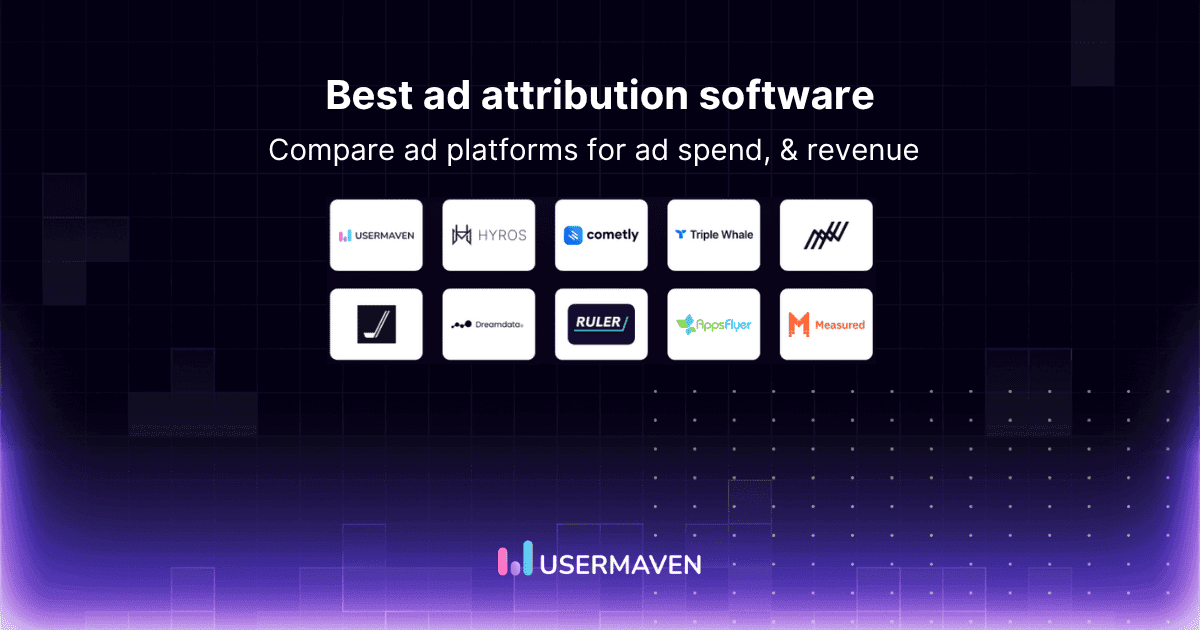
This guide compares ten ad attribution platforms by tracking coverage, attribution depth, customer journey visibility, CRM and revenue connection, business fit, pricing access, and the outcomes each platform is best designed to measure.
Key takeaways
- Different tools solve different jobs: Paid-media, ecommerce, B2B, mobile, and enterprise teams need different attribution workflows.
- Reliability starts with data quality: Accurate reporting depends on campaign data, identity connection, conversion definitions, deduplication, and consistent channel coverage.
- Native ad dashboards are not neutral: Each network evaluates conversions inside its own ecosystem, so platform totals can overlap.
- Revenue matters more than clicks: Strong attribution software can connect campaign spend with qualified pipeline, purchases, customers, and revenue.
- Pricing varies widely: Some products publish self-serve plans while others price by tracked revenue, GMV, traffic, conversions, or custom enterprise scope.
- No universal winner exists: The best ad attribution software depends on the business model, channels, sales cycle, and final outcome being measured.
What is ad attribution software?
Ad attribution software connects advertising interactions with conversions and applies attribution logic to determine how campaigns, channels, ads, and other eligible touchpoints receive credit for an outcome.
Modern ad attribution platforms can combine paid-media data with website visits, customer identities, CRM records, ecommerce purchases, product events, and revenue. That makes them useful for multi touch attribution when a conversion happens after several sessions or across more than one channel.
The primary question is not simply what a visitor did. It is which marketing interactions contributed to the lead, purchase, opportunity, customer, or revenue event being measured.
Understanding attribution in advertising is essential because the platform needs to explain which campaigns and channels contributed to a business outcome, not only what each ad network reported.
Table 1: Best ad attribution software compared
Here’s a quick side-by-side look at each platform’s strengths.
| Software | Best for | Core focus | Pricing access |
| Usermaven | SaaS, B2B, product-led | Cross-channel attribution + analytics | Scale $199/mo |
| Hyros | Direct response, paid traffic | Ad tracking + attribution | Tracked-revenue tiers |
| Cometly | Performance marketing | Paid media + pipeline | Usage / quote based |
| Triple Whale | Shopify and DTC | Ecommerce measurement | GMV / package based |
| Northbeam | High-spend ecommerce | MTA + media measurement | From $1,500/mo |
| HockeyStack | B2B GTM teams | Account + revenue intelligence | Custom / demo led |
| Dreamdata | B2B revenue teams | Account journeys + activation | Free + custom |
| Ruler Analytics | Lead generation | Online + offline revenue | From $400/mo |
| AppsFlyer | Mobile apps | Mobile attribution | Free / usage / custom |
| Measured | Enterprise media teams | Incrementality + MMM | Custom / demo led |
Pricing and packaging can change. The figures and pricing models above reflect the vendors’ current official pages reviewed for this comparison, while custom plans still require a direct quote.
1. Usermaven: Best overall for SaaS and B2B ad attribution

Overview
Usermaven is an AI-powered marketing attribution and analytics platform that connects campaigns with website behavior, product activity, customer journeys, CRM pipeline, revenue, retention, and conversion feedback.
It is designed for teams that want paid-ad attribution without separating acquisition reporting from the behavior and commercial outcomes that happen after the click.
Best for
SaaS, B2B, product-led companies, and marketing teams that need paid and organic attribution connected with website, product, CRM, and revenue data.
Pricing
Scale costs $199 per month on monthly billing and is the attribution-focused self-serve plan. It includes unlimited users, five workspaces, seven years of data history, paid-ad attribution, CRM and revenue attribution, conversion paths, ad integrations, conversion sync, and Maven AI. A 14-day free trial is available.
Key ad attribution capabilities
- Google Ads, Meta Ads, LinkedIn Ads, and Microsoft/Bing Ads connections
- First-touch, last-touch, multi-touch, and conversion-path analysis
- Channel, campaign, content, landing-page, CRM, pipeline, and revenue attribution
- Website and product behavior in the same measurement environment
- Customer-level journeys and contact context
- Conversion syncs and Maven AI
Why it stands out
Attribution reporting ties acquisition to the full customer lifecycle, going beyond the first lead or purchase to show what happens next. User journeys provide the path behind aggregate reports, while Maven AI helps teams investigate attribution and performance questions in natural language.
Verdict
Usermaven is the strongest overall fit in this comparison for SaaS, B2B, and product-led teams that want ad attribution, behavioral analytics, CRM outcomes, and revenue measurement in one self-serve platform.
2. Hyros: Best for direct-response ad tracking

Overview
Hyros is built around paid-ad tracking and attribution for businesses where advertising is the main growth engine. Its positioning emphasizes tracking ad performance across funnels, calls, leads, sales, and recurring revenue.
Best for
Direct-response advertisers, high-ticket funnels, coaching or education businesses, paid-traffic-heavy SaaS, and teams where small attribution changes can influence large ad budgets.
Pricing
Hyros uses tracked-revenue tiers. Its current pricing page shows a low-end tier at $69 per month for up to $5,000 in tracked monthly revenue, with pricing scaling as tracked revenue grows. Usermaven’s Hyros pricing guide provides additional buying context.
Key ad attribution capabilities
- Paid-ad tracking across major advertising networks
- Customer journey and funnel tracking
- Call and lead attribution
- Revenue and recurring-revenue connection
- Server-side measurement and ad optimization feedback
- AI-assisted ad data and reporting
Why it stands out
Hyros has unusually strong category association with direct-response tracking. It is designed for teams that want granular paid-traffic visibility and are comfortable structuring measurement around ad-driven funnels.
Verdict
Hyros belongs on the shortlist when paid traffic attribution is the dominant requirement. Teams comparing that focus with a broader attribution plus website and product analytics stack can review the Hyros alternative comparison.
3. Cometly: Best for paid-media-heavy teams

Overview
Cometly is a marketing attribution platform focused on connecting advertising touchpoints with leads, opportunities, purchases, and revenue. It combines server-side tracking, multi-touch attribution, CRM data, and conversion feedback.
Best for
Performance marketers, agencies, lead-generation teams, and B2B companies running substantial paid acquisition across several advertising platforms.
Pricing
Cometly uses usage-based, quote-driven pricing tied to website sessions and the required data stack rather than one universal public subscription price. Annual billing is promoted with savings. The Cometly pricing article provides more context on the buying model.
Key ad attribution capabilities
- Meta, Google, LinkedIn, TikTok, Microsoft, Reddit, and Snapchat connections
- Server-side tracking and conversion APIs
- Multi-touch attribution
- CRM and warehouse synchronization
- Account journeys and pipeline reporting
- AI-assisted analysis and reporting
Why it stands out
Cometly is tightly oriented around paid-media-to-pipeline measurement. That makes it easy to understand for performance teams whose main question is which campaigns create valuable downstream outcomes.
Verdict
Cometly is a strong choice for paid-media-heavy teams that want server-side tracking and CRM-connected attribution. The Cometly alternative page compares that approach with Usermaven’s broader website, product, journey, and revenue coverage.
4. Triple Whale: Best for Shopify and DTC brands

Overview
Triple Whale is an ecommerce data and measurement platform built around store revenue, ad spend, orders, customer value, product performance, and first-party ecommerce data.
Best for
Shopify and DTC brands that want ad attribution connected directly with orders, products, customer cohorts, profitability, and repeat-purchase economics.
Pricing
Triple Whale prices paid plans using a combination of annual revenue or GMV and the package selected. A free product is available, while paid plans unlock more advanced measurement and AI capabilities. See the dedicated triple whale pricing guide for more context.
Key ad attribution capabilities
- First-party ecommerce attribution through Triple Pixel
- Paid-media spend and order measurement
- Multi-touch attribution
- Custom dashboards and business intelligence
- Customer and product analytics
- Broader MMM and incrementality capabilities in advanced packages
Why it stands out
Triple Whale keeps the measurement model centered on ecommerce economics. That is valuable for teams that want to evaluate ad spend through orders, new-customer revenue, MER, ROAS, products, and lifetime value rather than CRM opportunities.
Verdict
Triple Whale is one of the strongest ad attribution platforms for ecommerce brands. Teams that need attribution beyond Shopify and store-centric workflows can use the Triple Whale alternative comparison to evaluate broader journey and CRM coverage.
5. Northbeam: Best for high-spend ecommerce measurement

Overview
Northbeam is an ecommerce measurement platform for brands with meaningful media investment. It combines first-party multi-touch attribution with media analysis, creative reporting, and broader planning methods.
Best for
Established DTC and ecommerce brands with larger paid-media budgets, dedicated performance teams, and a need for more advanced media measurement and planning.
Pricing
Northbeam Starter currently begins at $1,500 per month. Higher Professional and Enterprise packages use custom pricing and expand the service, data, and measurement scope.
Key ad attribution capabilities
- First-party multi-touch attribution
- Clicks plus deterministic views
- Shopify integration and revenue measurement
- Creative and product analytics
- Correlation analysis
- Media mix modeling options for broader planning
Why it stands out
Northbeam combines day-to-day ecommerce attribution with more strategic media analysis. That gives larger brands a path from campaign measurement toward planning and budget allocation.
Verdict
Northbeam is a strong specialist for scaled ecommerce media programs. The Northbeam alternative page compares that ecommerce specialization with Usermaven’s cross-channel, SaaS, B2B, and product-oriented measurement.
6. HockeyStack: Best for B2B GTM attribution

Overview
HockeyStack is an AI-powered B2B revenue data platform that unifies marketing, product, sales, CRM, intent, and other go-to-market data for attribution and account-level analysis.
Best for
Mid-market and enterprise B2B companies with long sales cycles, several buying stakeholders, complex account structures, and dedicated revenue operations resources.
Pricing
HockeyStack uses a demo-led custom pricing process, with startup pricing available. Plans are shaped around integrations, data complexity, implementation, reporting, and support requirements. Usermaven’s hockeystack pricing review provides additional context.
Key ad attribution capabilities
- Account-level buyer journeys
- Multi-touch attribution and model comparison
- Marketing, sales, CRM, product, intent, and web data
- Pipeline and ROI reporting
- Account scoring and lift views
- AI-assisted GTM analysis
Why it stands out
HockeyStack is designed around B2B accounts and revenue rather than isolated web conversions. It is especially relevant when several people influence an opportunity before it becomes closed-won revenue.
Verdict
HockeyStack is a strong fit for complex B2B revenue intelligence. Teams comparing enterprise GTM depth with self-serve attribution, website analytics, product behavior, and public pricing can review the dedicated HockeyStack alternative page.
7. Dreamdata: Best for B2B account and revenue attribution

Overview
Dreamdata is a B2B attribution and activation platform built around account journeys, buying committees, campaign ROI, pipeline, revenue, audience creation, and conversion feedback.
Best for
B2B SaaS companies, account-based marketing programs, revenue marketers, and organizations where several contacts and channels contribute to the same opportunity.
Pricing
Dreamdata offers a $0 free plan for foundational B2B analytics and activation. Advanced Activation and Attribution uses custom pricing and adds broader attribution, AI, custom reporting, activation, and data controls.
Key ad attribution capabilities
- Anonymous-to-known B2B journey tracking
- Contact-to-account mapping
- Multi-touch and custom attribution models
- Pipeline and revenue attribution
- Audience building and synchronization
- Conversion sync back to ad platforms
Why it stands out
Dreamdata is purpose-built around the B2B buying journey. It can group stakeholders under accounts and evaluate marketing activity against pipeline and revenue rather than treating each form fill as an isolated conversion.
Verdict
Dreamdata is well suited to specialized B2B account attribution. Teams that also need broader website and product analytics in the same daily workflow can compare the platforms on the Dreamdata alternative page.
8. Ruler Analytics: Best for lead generation and offline revenue

Overview
Ruler Analytics is a marketing measurement platform that connects online acquisition with forms, calls, CRM opportunities, offline conversions, pipeline, and revenue.
Best for
Professional services, lead-generation companies, high-value purchases, appointment businesses, and teams whose sales process frequently continues by phone or inside a CRM.
Pricing
Ruler’s Small plan starts at $400 per month for up to 10,000 monthly visits. Higher plans add greater traffic allowances and advanced measurement. Usermaven’s Ruler analytics pricing guide explains the current tiers in more detail.
Key ad attribution capabilities
- First-party data platform
- Multi-touch attribution
- Form, call, and live-chat tracking
- CRM opportunity and revenue connection
- Data-driven and impression attribution on higher tiers
- Marketing mix modeling on advanced plans
Why it stands out
Ruler is particularly useful when the journey leaves the website before the sale closes. Calls, forms, CRM stages, and closed revenue can be connected back to the campaigns and keywords that influenced them.
Verdict
Ruler Analytics is a strong choice for online-to-offline attribution. The Ruler Analytics alternative comparison is useful for teams deciding between offline lead attribution and a broader website, product, and SaaS analytics workflow.
9. AppsFlyer: Best for mobile ad attribution

Overview
AppsFlyer is a mobile measurement and attribution platform designed for app installs, re-engagement, in-app events, cross-platform journeys, deep linking, signal loss, and fraud prevention.
Best for
Mobile-first businesses, app-install campaigns, subscription apps, gaming, ecommerce apps, and teams that need specialized measurement across iOS, Android, web, CTV, and connected-device journeys.
Pricing
AppsFlyer Zero is free for owned-media use and is not intended for paid activities. Growth is pay-as-you-go for paid campaign measurement and includes a 12,000-conversion welcome package for the first year; after that package, conversions are priced at $0.07 each. Enterprise uses custom pricing.
Key ad attribution capabilities
- Mobile attribution and real-time measurement
- Configurable lookback windows and in-app events
- Cross-platform and cross-device attribution
- Conversion path visualization
- Deep linking and re-engagement measurement
- Signal-loss tooling and mobile fraud protection
Why it stands out
AppsFlyer is built around app ecosystems where installs, re-attribution, deep links, SKAN, in-app behavior, and mobile partner networks require specialized infrastructure beyond standard website attribution.
Verdict
AppsFlyer is the clearest fit in this comparison when paid acquisition is primarily driving mobile app installs, re-engagement, and in-app revenue rather than website or B2B pipeline conversions.
10. Measured: Best for enterprise media effectiveness

Overview
Measured is an enterprise marketing effectiveness platform centered on incrementality testing, causal media mix modeling, cross-channel dashboards, planning, and triangulated measurement.
Best for
Enterprise advertisers with large media portfolios, mature analytics teams, and a need to validate whether media spend creates incremental business impact across channels.
Pricing
Measured uses a sales-led, custom pricing model. The platform is designed around enterprise measurement programs rather than a simple self-serve attribution subscription.
Key ad attribution capabilities
- Automated incrementality testing
- Causal media mix modeling calibrated with experiments
- Cross-channel media measurement
- Media plan optimization and scenario modeling
- Business KPI and sales-data integration
- Triangulation of experiments, models, and platform data
Why it stands out
Measured is strongest when the question moves beyond which touchpoint receives credit and toward whether a channel or campaign created incremental revenue. Its system combines experiments with modeling for broader budget decisions.
Verdict
Measured is best suited to sophisticated enterprise media programs where causal validation, MMM, and budget optimization are more important than a lightweight user-level attribution workflow.
How we reviewed the ad attribution platforms
These ad attribution software reviews use the same buying criteria across all ten products. The goal is to compare operational fit rather than rank platforms only by feature count or brand recognition.
- Advertising-channel coverage
- Tracking and data collection
- Customer journey visibility
- Attribution models and reporting logic
- CRM, pipeline, ecommerce, or revenue connection
- First-party and server-side capabilities where relevant
- Reporting usability and AI-assisted analysis
- Pricing transparency and access model
- Business-model fit
Ad attribution software comparison by business model
An ad attribution software comparison is more useful when platforms are grouped by the business model and outcome they are designed to measure. A tool built around Shopify orders is not automatically the best fit for B2B opportunities or mobile installs.
| Business model | Primary measurement need | Strong options |
| SaaS / product-led | Acquisition + product + revenue | Usermaven |
| B2B sales-led | Accounts + pipeline + revenue | Usermaven, HockeyStack, Dreamdata |
| Ecommerce | Orders + ROAS + customer value | Triple Whale, Northbeam |
| Direct response | Paid ads + calls + revenue | Hyros, Cometly |
| Mobile apps | Installs + re-engagement + in-app value | AppsFlyer |
| Enterprise media | Incrementality + MMM + planning | Measured |
Ad tracking software vs. ad attribution software
These terms get used interchangeably, but they solve different problems.
Ad tracking software
Ad tracking software records what happened after an advertising interaction. It typically captures campaign parameters, click IDs, sessions, events, calls, leads, purchases, or other conversions.
Tracking creates the observable data. If campaign identifiers disappear or conversion events are duplicated, the attribution layer starts from a distorted journey.
Ad attribution software
Ad attribution software goes further by deciding how eligible interactions receive credit. It can reconstruct journeys across sessions, compare channels, apply attribution models, connect CRM outcomes, and tie ad spend to revenue.
A team may therefore use ad tracking to collect the journey and attribution software to interpret the journey. Many modern platforms combine both functions in the same product.
What makes ad attribution software reliable?
The most reliable software for ad spend attribution is not the platform that promises perfect visibility. Reliability comes from consistently collecting observable interactions, preserving identity, applying transparent credit rules, and reconciling conversions with real business outcomes.
1. Reliable data collection
Look for durable first party data collection, campaign parameter capture, click-ID handling, deduplication, and server side tracking where it improves delivery and data control. Strong tracking reduces avoidable gaps before attribution begins.
2. Cross-channel coverage
Accurate ad attribution tools should compare major acquisition sources under one framework. cross-platform ad tracking is especially important when customers move between Google, Meta, LinkedIn, Microsoft Ads, email, organic search, and direct visits.
3. Identity and journey connection
Longer buying cycles require more than a session ID. The platform should connect anonymous activity with known leads, users, accounts, or customers when a reliable identifier becomes available.
4. Attribution model transparency
Teams should be able to understand which model is used, which touchpoints are eligible, what attribution window applies, and what outcome receives credit. A sophisticated model is not useful if nobody can explain the rules behind the result.
5. CRM and revenue connection
For SaaS, B2B, and lead-generation teams, reliable attribution should progress from ad to lead to opportunity to customer and revenue. A documented revenue attribution process prevents lead volume from becoming the final measure of campaign quality.
6. Reporting consistency
Two systems can be correctly configured and still disagree because they use different identities, dates, windows, or revenue definitions. Review marketing attribution discrepancies between tools before treating every mismatch as a tracking failure.
7. Auditability
A useful platform should let analysts inspect real customer paths behind aggregate reports. An Attribution checklist can help validate campaigns, events, identities, attribution settings, CRM outcomes, and revenue before budget is moved.
Native ad dashboards vs. independent ad attribution platforms
Native dashboards show platform-reported results. Independent attribution shows cross-channel truth.
Native advertising platforms
Google Ads, Meta Ads Manager, LinkedIn Campaign Manager, and other native systems are essential for campaign optimization, bidding, creative performance, and platform-specific audience decisions.
Their attribution logic is still specific to the data and credit rules available inside that ecosystem. Google’s official guide to Google Ads attribution models notes that Google Ads currently supports data-driven and last-click models, with data-driven attribution the default for most conversion actions.
This is one reason ad platform discrepancies can persist even when every implementation is working as intended. Several networks may legitimately claim overlapping credit for one business conversion.
Independent ad attribution software
Independent attribution creates a common framework for comparing Google, Meta, LinkedIn, Microsoft Ads, email, organic search, referrals, direct traffic, CRM outcomes, and revenue.
The advantage is consistency, not omniscience. A neutral layer can reduce self-attribution bias and make cross-channel comparison easier, but it still depends on the quality and completeness of the data it can observe.
Can ad attribution software provide perfectly accurate attribution?
No platform can perfectly observe every influence behind a purchase. Word of mouth, private communities, offline exposure, cross-device gaps, consent restrictions, and untracked conversations can all affect a decision without producing a clean digital touchpoint.
Browser privacy also changes what can be observed. WebKit tracking prevention documents default protections including full third-party cookie blocking in Intelligent Tracking Prevention, reinforcing why modern measurement increasingly depends on consented first-party data and transparent modeling.
Accurate ad attribution tools can still reduce avoidable errors caused by missing campaign data, duplicate conversions, identity fragmentation, disconnected CRM outcomes, and inconsistent credit rules. The guide to ad attribution problems covers those failure points in detail.
How to choose the best ad attribution software
The right platform depends on your priorities. Here’s what actually matters when evaluating options.
1. Start with the final business outcome
Decide whether the software needs to optimize for a lead, qualified lead, purchase, opportunity, customer, revenue, retained account, or lifetime value. The final outcome determines which integrations and reporting depth actually matter.

2. Map the advertising channels
List every channel that contributes meaningful spend, including Google, Meta, LinkedIn, TikTok, Microsoft Ads, affiliates, CTV, marketplaces, and offline media. A platform that misses a major channel cannot provide a complete cross-channel view.
3. Decide how much journey visibility is needed
Short ecommerce journeys may need session and purchase context. B2B and SaaS teams often need cross-session, account, product, CRM, and revenue visibility across weeks or months.
4. Compare attribution methods
Evaluate whether the platform supports the models required for discovery, closing, multi-touch, data-driven, incrementality, or MMM decisions. The right model should match the question rather than become a permanent default for every report.
5. Test CRM and revenue integration
For longer sales cycles, verify that campaign history can reconnect with qualification, opportunities, closed-won revenue, refunds, subscriptions, and expansion. Otherwise the software may optimize lead volume rather than customer quality.
6. Evaluate data quality
Check campaign naming, UTM parameters, click IDs, identity connection, event deduplication, server-side events, and cross-domain journeys. Attribution cannot compensate for incorrect conversion data.
7. Compare total cost
Look beyond the advertised entry price. Event volume, monthly traffic, tracked revenue, GMV, media spend, connectors, implementation, seats, support, and data retention can change the real cost. The Marketing Attribution Software Cost guide explains the common pricing models.
How much does ad attribution software cost?
Ad attribution software ranges from free entry plans to enterprise programs that require custom proposals. The pricing model is often as important as the starting price because costs can scale with the same growth the software is helping measure.
- Flat monthly pricing: Common in self-serve products and easier to forecast when event volume stays within plan limits.
- Traffic or session pricing: Costs increase as measured website volume grows.
- Tracked-revenue pricing: Fees scale with the amount of revenue the platform attributes or tracks.
- GMV-based pricing: Common in ecommerce products where store revenue determines plan cost.
- Conversion pricing: Mobile platforms may charge for attributed installs, re-engagement, or other measured actions.
- Enterprise custom pricing: Scope can depend on integrations, data volume, modeling, implementation, support, and service levels.
The best comparison is the cost of the plan that includes the required attribution capabilities, not the cheapest plan shown on a pricing page.
See Usermaven in action
Book a free demo and discover how powerful analytics can grow your business.
Which ad attribution platform fits each type of team?
The best fit depends on the channels being measured, the length of the buying journey, and the business outcome that ultimately matters. SaaS, B2B, ecommerce, agency, mobile, and enterprise teams often need different attribution depth, integrations, and reporting workflows.
SaaS and product-led teams
Usermaven is the strongest fit when acquisition needs to be evaluated through activation, product usage, CRM outcomes, revenue, and retention. Teams comparing more B2B-focused options can also review saas marketing attribution tools.
B2B sales-led teams
Usermaven, HockeyStack, and Dreamdata are the strongest fits in this list. Teams comparing those approaches can use the guide to b2b marketing attribution to decide whether they need a broader self-serve attribution and product analytics environment or a more specialized enterprise GTM and account intelligence workflow.
Ecommerce teams
Triple Whale and Northbeam are built around store revenue and paid-media economics. Usermaven is relevant when ecommerce sits alongside broader web, SaaS, or product journeys. The ecommerce attribution guide goes deeper into the category.
Agencies
The best tool depends on the client mix. Agencies serving B2B SaaS, ecommerce, lead generation, and mobile clients may need different measurement approaches. See the guide to agency marketing attribution tools for a broader agency comparison.
Mobile teams
AppsFlyer is the strongest specialist in this list for install attribution, re-engagement, deep linking, in-app events, cross-device journeys, and mobile privacy frameworks.
Enterprise media teams
Measured is the clearest fit when measurement requires causal experiments, MMM, cross-channel planning, and budget optimization across a large media portfolio.
Why Usermaven fits cross-channel ad attribution

One attribution layer across paid and organic
Usermaven can compare paid campaigns with organic search, email, referrals, direct traffic, content, and other acquisition sources under one reporting framework. That reduces the need to add self-reported platform totals together.
Customer-level journeys
Customer journeys preserve the sequence behind the final conversion so teams can inspect how acquisition sources, pages, return sessions, product events, and conversions connect over time.
CRM and revenue attribution
Campaigns can be evaluated through leads, opportunities, pipeline, closed revenue, and retention rather than stopping at the first form submission or signup.
Website and product context
Website analytics shows what happens before conversion, while product analytics adds activation, feature adoption, funnels, retention, and post-acquisition behavior.
Conversion feedback
Conversion syncs can return verified first-party outcomes to advertising platforms so bidding and optimization can learn from qualified leads, purchases, customers, or other meaningful events.
AI-assisted analysis
Maven AI gives marketers a faster way to ask questions across attribution, journeys, funnels, campaigns, and connected behavioral data without building every report manually. It can also save AI-generated funnel, retention, and journey previews directly as reports, making analysis easier to turn into reusable reporting.
Final verdict
There is no universal best ad attribution platform because direct-response, ecommerce, B2B, mobile, and enterprise advertisers measure fundamentally different outcomes.
Usermaven is the strongest overall fit for SaaS, B2B, and product-led teams that need advertising attribution connected with website behavior, product activity, customer journeys, CRM pipeline, revenue, and retention. Ecommerce, mobile, and enterprise media teams may prefer specialist platforms built around those environments.
Ready to see Usermaven in action? Explore the platform or book a demo for a closer look.
Unlock insights that drive growth
FAQs
1. What is ad attribution software?
Ad attribution software connects advertising interactions with conversions and applies rules or models to determine how channels, campaigns, and ads receive credit. More advanced platforms can also connect attribution with CRM pipeline, purchases, revenue, and customer journeys.
2. What is the best ad attribution software?
The best platform depends on the business model. Usermaven is a strong overall fit for SaaS, B2B, and product-led teams; Triple Whale and Northbeam specialize in ecommerce; AppsFlyer specializes in mobile; and Measured focuses on enterprise media effectiveness.
3. What is the most reliable software for ad spend attribution?
Reliable software should combine strong data collection, cross-channel coverage, identity connection, transparent attribution rules, CRM or revenue integration, and auditable customer journeys. Reliability should be judged by data consistency and business fit rather than a promise of perfect tracking.
4. What is the best paid ad attribution software?
For SaaS and B2B teams, Usermaven provides paid-ad attribution alongside website, product, CRM, and revenue analytics. Hyros and Cometly are strong paid-media-focused options, while ecommerce advertisers may prefer Triple Whale or Northbeam.
5. What are the top ad attribution platforms?
Leading options in this comparison include Usermaven, Hyros, Cometly, Triple Whale, Northbeam, HockeyStack, Dreamdata, Ruler Analytics, AppsFlyer, and Measured. They serve different use cases rather than one identical category.
6. How accurate are ad attribution tools?
No tool can observe every influence perfectly. Accurate ad attribution tools can reduce avoidable errors by preserving campaign data, connecting identities, deduplicating conversions, applying consistent models, and reconciling outcomes with CRM or revenue systems.
Updated

Written by
Ryan Mitchell
Marketing Analytics Strategist
Ryan Mitchell is a marketing analytics strategist specializing in campaign measurement, customer journeys, and marketing performance. He writes about analytics, reporting, and data-driven marketing strategies, helping SaaS and B2B teams measure what matters across every stage of the customer journey.
All articles by Ryan →