For years, organic visibility meant ranking high and earning clicks. Today, that formula is breaking down.
With AI-generated summaries appearing at the top of search results, users often get complete answers without visiting a website. This shift toward zero-click search is redefining how content is discovered and how it’s credited. At the center of this transformation is AI overview attribution.
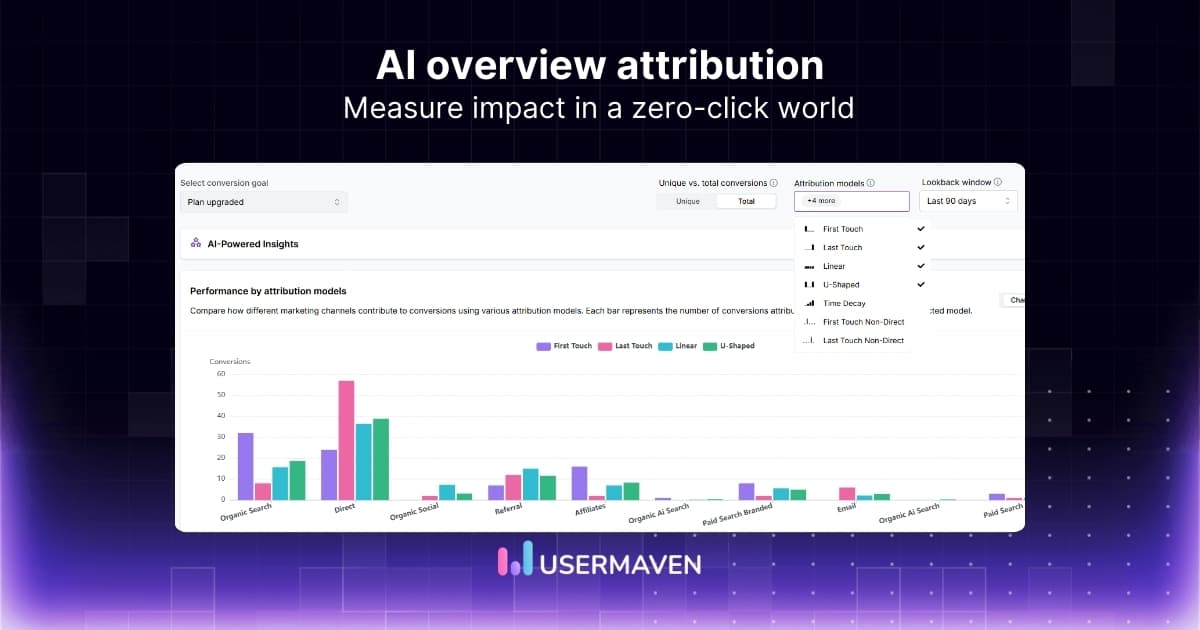
Instead of competing for blue links, brands now compete to become cited sources inside AI responses. That requires a different approach to content structure, authority, and clarity.
In this article, we’ll explore how AI overview attribution works and what strategies can help you win AI search visibility.
What “attribution” means in the era of AI search
To understand AI overview attribution, we need to redefine what attribution means in search.
In traditional organic search, attribution was straightforward. A page ranked in search results. A user clicked that link. Analytics platforms recorded the visit, the source, and any resulting action. Visibility translates directly into measurable traffic.
AI-driven search disrupts that connection.
Instead of displaying only ranked links, search engines now generate AI-powered summaries at the top of the results page. These summaries synthesize information from selected sources and present a consolidated answer. Users often get what they need immediately, without clicking through to any website.
In this environment, attribution shifts from ranking position to content inclusion.
AI overview attribution refers to whether your content is chosen as a source inside an AI-generated response. It determines if your brand, page, or insights are incorporated into the summary that users see first. Visibility is no longer defined by where you appear in a list of links. It is defined by whether the AI system considers your content clear, trustworthy, and extractable enough to cite.
This distinction matters. A page can rank well and still be absent from the Google AI overview. Conversely, a page that is not in the top traditional positions may still gain exposure if it is selected as a cited source.
Maximize your ROI
with accurate attribution
How attribution differs from rankings in AI-generated search
From a traditional search engine’s perspective, ranking is straightforward: order results by authority and relevance, then let users choose. Discovery depended on position in search engine results pages, and business success was measured through clicks, sessions, and conversions. Most SEO attribution models were built around this structure, assigning value to the organic click as the starting point of the journey.
AI SEO changes that system.
The emerging AI overview attribution model does not focus on ranking competitive pages or driving immediate clicks. It creates zero-click visibility, where users discover information directly within a generated answer or voice response.
Instead of ranking results, AI synthesizes answers from a limited range of information (sources) that it finds clear, relevant, exhaustive, and authoritative.
At the core of this evaluation are entities, identifiable concepts such as:
- People
- Brands
- Products
- Services
- Locations
As SEO continues to evolve toward GEO and AEO models, tools like Analytify help illustrate how measurement is shifting from rankings to engagement and visibility signals. The trends are clear: voice and visual search optimization, as well as attention and experiences, are becoming the new paradigms in organic visibility.
Why this shift matters for measurement and visibility
Zero-click search does not eliminate attribution. It complicates it.
When users interact with AI-generated answers instead of visiting a website, traditional SEO metrics like sessions and click-through rate may decline. That does not necessarily mean visibility has dropped. It may mean discovery is happening earlier in the user journey.
This shift introduces new measurement questions:
- Are branded searches increasing after being cited in AI overviews?
- Is direct traffic rising as users return later?
- Are assisted conversions shifting across channels?
- How are top-of-funnel impressions influencing downstream conversions?
- Are referral signals from authoritative mentions behaving differently than paid or artificial link-building efforts, such as backlinks for sale?
For SaaS and product teams, this is where analytics becomes critical. Understanding how AI overview attribution translates into user behavior requires more than ranking reports. It requires:
- Event tracking to measure meaningful interactions
- Behavioral analytics to understand engagement quality
- Multi-touch attribution models to capture indirect influence
- Funnel analysis to identify delayed conversions
When visibility shifts from clicks to influence, measurement frameworks must adapt. Usermaven helps teams track user journeys, funnel progression, and conversion paths, making it easier to interpret the real impact of AI overview attribution.
Rather than focusing solely on traffic volume, teams should evaluate visibility impact across engagement, retention, and conversion metrics. In the zero-click SERPs, influence may be invisible at first glance, but it can still drive measurable growth when properly tracked.
How AI systems select and attribute organic sources
AI overview attribution depends on how AI systems evaluate and select content for inclusion in generated answers.
Artificial intelligence does not rank pages in the traditional sense. Instead, it assesses whether a piece of content can reliably support a direct answer. The goal is not position. The goal is extractability and confidence.
To determine which sources to cite, AI systems analyze several layers of signals.
1. Analyze content signals that influence AI overview visibility
When evaluating content, AI systems focus on informational suitability rather than positional strength.
They look for:
- Semantic clarity: Content should define concepts clearly and use consistent terminology. Ambiguous language makes extraction difficult.
- Informational completeness: A single page should provide enough context to answer a question without requiring multiple fragmented sources.
- Logical structure: Clear headings, structured sections, and focused paragraphs help AI identify key ideas quickly.
- Intent alignment: The content must directly match the query intent, whether informational, commercial, or transactional.
- Extractability: Core ideas should be easy to isolate without losing meaning. Concise explanations and direct answers improve AI citation signals.
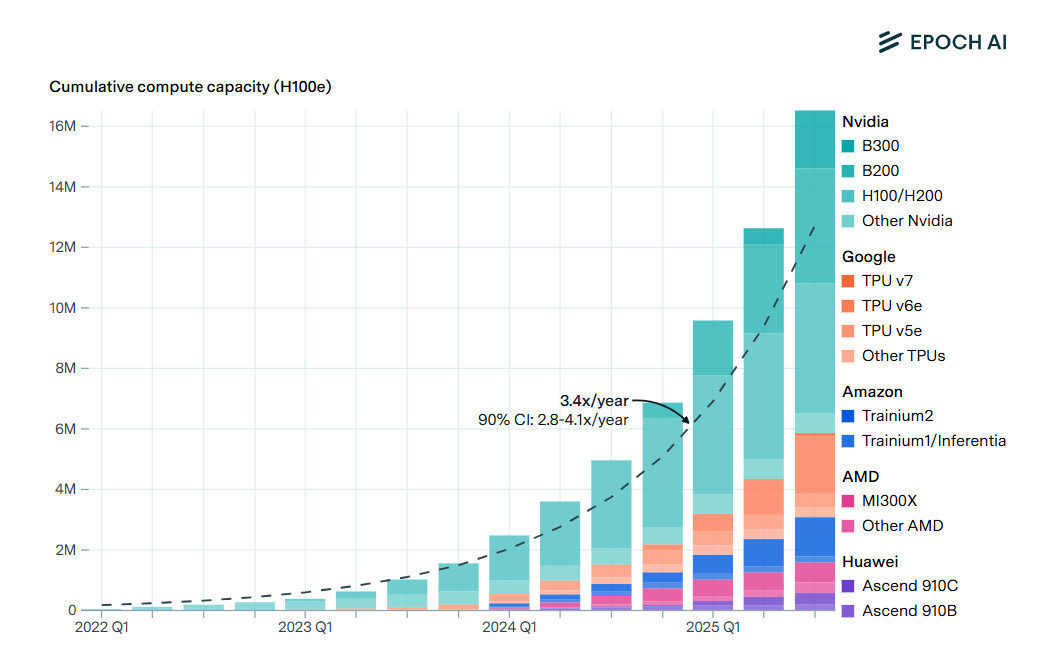
These signals help AI systems determine whether your content can be safely synthesized into a response. As models continue to evolve and reportedly double its computing capacity over time, their ability to analyze structure and context becomes more sophisticated. That increases the importance of precision and clarity.
2. Evaluate authority, freshness, and topical relevance
AI overview attribution also depends on broader trust signals.
- Authority: Authority reflects topical consistency and external validation. It is built through sustained coverage of a subject, credible references, and engagement patterns. Authority is not only about brand size. Smaller sites with focused expertise can be cited if their content provides strong informational value.
- Freshness: Outdated information reduces confidence. Technical and product-related topics require regular updates to maintain eligibility for citation.
- Topical relevance: Content must stay aligned with the original query. Drifting into loosely related themes weakens contextual strength and can reduce your visibility in AI-generated responses.
These factors are evaluated together rather than as isolated metrics. AI systems aim to cite sources that appear knowledgeable, current, and contextually aligned.
3. Assess engagement and behavioral validation signals
Beyond content quality and authority, AI systems increasingly consider real-world engagement patterns.
While they may not directly rely on analytics dashboards, AI models are trained on large-scale interaction data that reflects how users respond to content across the web. Signals such as consistent engagement, citation frequency, and cross-platform references can reinforce perceived credibility.
This is where measurement becomes strategically important.
If AI overview attribution increases exposure but reduces immediate clicks, teams should monitor:
- Branded search growth
- Direct traffic trends
- Assisted conversions
- On-site engagement quality
- Funnel progression after first exposure
Behavioral analytics and multi-touch attribution models help determine whether AI-driven visibility influences downstream outcomes.
For SaaS and product teams, tracking these patterns through structured event tracking and attribution modeling ensures that changes in search behavior do not distort performance evaluation.
Maximize your ROI
with accurate attribution
Best practices to improve attribution in AI overviews
Improving AI overview attribution requires more than traditional SEO optimization. Ranking alone is no longer enough. To win visibility in AI-powered search results, your content must be structured for extraction, aligned with intent, and supported by consistent authority signals.
The following best practices align with modern SEO, AEO, and GEO strategies while keeping AI overview visibility as the primary objective.
1. Structure content for AI readability and extraction
AI systems prioritize content that is easy to interpret and synthesize. As AI-driven discovery evolves, many brands are now working with an SEO strategy agency to improve visibility across both search engines and AI-generated answers.
Strong structure is foundational to AI overview attribution.
Focus on:
- Clear hierarchy: Use descriptive headings and logical subheadings. Organize ideas into clearly defined sections.
- Informational clarity: Limit each paragraph to one core idea. Avoid mixing definitions, examples, and commentary in the same block.
- Explicit definitions: Define technical terms and concepts clearly. This supports AEO strategies where direct answers are favored.
- Self-contained sections: Each section should provide enough context to stand alone. This increases the likelihood that AI systems can extract and cite it accurately.
Well-structured content, often shaped with guidance from AI SEO agencies specializing in GEO, can improve traditional SEO performance while making it easier for AI systems to extract and surface information under GEO and AEO frameworks.
2. Optimize entities, semantics, and contextual signals
AI overview attribution depends heavily on how clearly your content defines and connects entities.
Unlike legacy SEO models that focused primarily on keywords, modern AI-driven search systems rely on entity relationships and contextual understanding.
To strengthen semantic depth:
- Clarify entity relationships: Explain how people, products, services, and concepts relate to one another.
- Reinforce related concepts: Embed supporting terminology naturally within explanations instead of isolating keywords.
- Maintain consistent entity references: Use consistent naming conventions across your site. This improves topical cohesion and strengthens perceived authority.
These practices support both Generative search optimization and answer engine optimization by helping AI systems understand context rather than just match phrases.
3. Align content with evolving user intent
AI-generated search results and generative engine experiences are conversational. User intent can evolve through query reformulations and follow-up prompts.
AI overview attribution favors content that anticipates these shifts.
To improve intent alignment:
- Address primary and adjacent questions within the same piece
- Cover multiple perspectives when relevant
- Distinguish clearly between informational and commercial explanations
- Anticipate related follow-up queries
Content that adapts to different intent layers performs better under both SEO and AEO models.
4. Strengthen source trust through consistent topical coverage
Authority remains critical, but its definition has expanded.
AI systems evaluate whether a site consistently demonstrates expertise within a specific subject area. Publishing isolated articles is less effective than building sustained topical depth.
To reinforce authority:
- Publish regularly within your niche
- Update older content to maintain freshness
- Maintain internal linking between related articles
- Track engagement signals over time
Monitoring metrics such as engagement rate, assisted conversions, and content-driven funnel progression can help evaluate whether topical authority is influencing performance beyond rankings.
Consistent coverage strengthens your eligibility for AI overview attribution and improves long-term organic visibility in AI search.
5. Use clear answer patterns to increase citation likelihood
AI systems are designed to generate concise, direct answers.
Content that mirrors this format is easier to extract and synthesize.
To improve citation potential:
- Start sections with direct answers before expanding
- Use short, clear explanatory blocks
- Place key takeaways early in each section
- Avoid burying definitions under long introductions
This approach aligns closely with answer engine optimization while still supporting traditional SEO performance.
When combined with strong structure and topical authority, clear answer formatting increases the probability of inclusion in AI-generated summaries.
The bottom line
AI overview attribution represents a structural shift in how organic visibility works.
Search is moving from ranked links to synthesized answers. That changes what it means to compete. Success is no longer defined only by position or click-through rate. It is defined by whether your content is selected, trusted, and incorporated into AI-generated responses.
Adapting to this shift requires more than traditional SEO adjustments. It demands stronger entity clarity, tighter structure, consistent topical authority, and alignment with evolving user intent across SEO, AEO, and GEO strategies.
At the same time, visibility without measurement is incomplete.
As zero-click search grows, tracking branded search lift, assisted conversions, and multi-touch journeys becomes essential. This is where Usermaven stands out as the best marketing attribution software for modern teams. It connects visibility to measurable outcomes through advanced event tracking, funnel analysis, and clear attribution paths.
Want to see how AI-driven visibility impacts your growth?
Book a demo with Usermaven and see how our advanced attribution connects AI visibility to real growth.
FAQ
1. What is AI overview attribution?
AI overview attribution refers to the process by which search engines select and cite sources inside AI-generated summaries. Instead of ranking pages by position alone, AI systems synthesize information from trusted content and attribute it within a generated response. Visibility depends on inclusion, not just ranking.
2. How does AI overview attribution differ from traditional SEO rankings?
Traditional SEO rankings focus on ordering web pages based on authority and relevance. AI overview attribution shifts the focus from position to citation. Instead of competing for clicks, content competes to be included and referenced in AI-generated answers at the top of search results.
3. How do Google AI Overviews select and cite sources?
Google AI Overviews evaluate content based on semantic clarity, structure, topical relevance, authority, and extractability. AI systems analyze whether a source can reliably support a concise answer. Pages that provide clear definitions, structured explanations, and strong entity relationships are more likely to be cited.
4. What content signals improve AI overview visibility?
Content signals that improve AI overview visibility include logical structure, clear headings, defined concepts, intent alignment, semantic consistency, and informational completeness. AI systems prioritize content that can be easily extracted and synthesized into direct answers without losing context or accuracy.
5. How can you optimize content for AI overview attribution?
To optimize for AI overview attribution, structure content with clear sections, define entities explicitly, align with user intent, maintain topical authority, and use direct answer formats. Combining SEO, AEO, and GEO strategies improves the likelihood of being cited in AI-generated search summaries.
Updated

Written by
Imrana Essa
SaaS Marketing Lead
Imrana Essa is a marketing lead and content strategist with 8+ years of experience creating and leading content for B2B and SaaS brands. She specializes in marketing analytics, attribution, content strategy, and organic growth, translating complex marketing concepts into clear, actionable insights. Her work focuses on helping marketers understand performance, make data-informed decisions, and build strategies that contribute to sustainable growth.
All articles by Imrana →