Ever wonder how your SEO efforts are actually paying off?
SEO attribution models are here to give you the answer. Instead of just throwing a bunch of strategies out there and crossing your fingers, these models help you see exactly which parts of your SEO are leading to conversions.
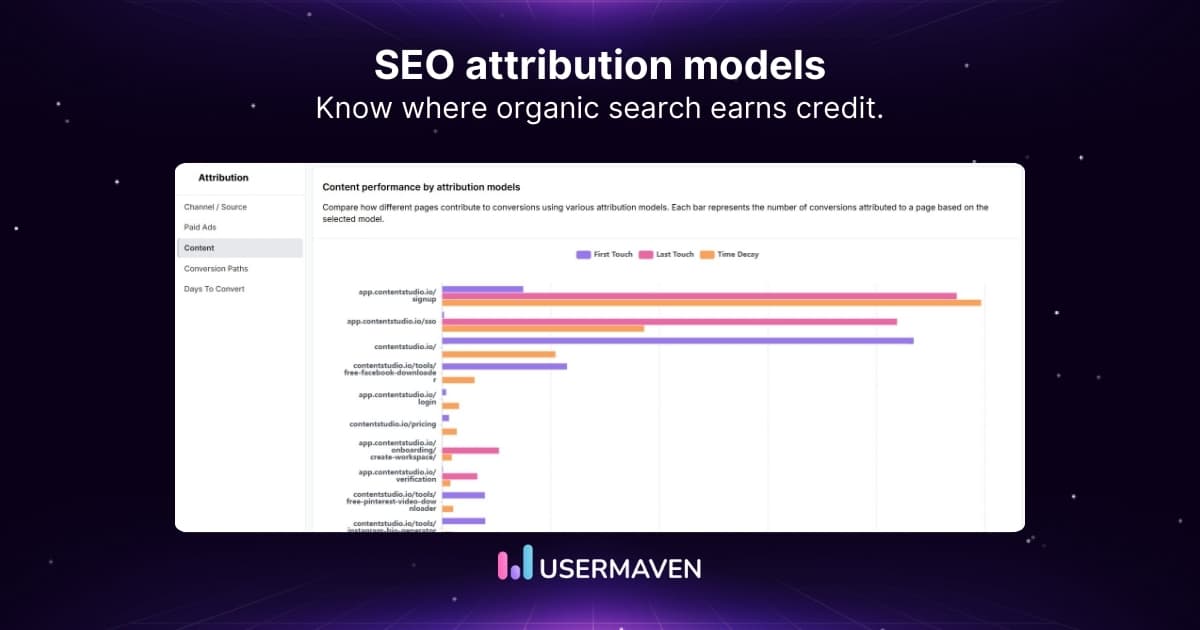
Think of it as finding out which step of the process actually made someone hit ‘buy’ or ‘sign up.’ Pretty useful, right?
Let’s take a look at how these models work and what they can tell you about your own strategy.
What are SEO attribution models?
An SEO attribution model is the framework that lets you assign real credit to every organic touchpoint in a customer’s journey, from that first random search that sparks interest to the final conversion.
In real life, buyers don’t land on one page and immediately take action. They arrive on a guide, come back for a comparison, check pricing later, and convert when the timing is right.
That usually means undervaluing everything SEO did earlier and over-indexing on SEO KPIs that were never meant to explain conversion impact.
A simple way to think about it is this: SEO attribution models connect the pieces that often sit in separate reports.
- The search query that brought someone in.
- The page they landed on and the pages they visited next.
- The conversion that happened later, even if it didn’t happen in the same session.
Quick example
Let’s say a buyer finds you through a Google search for a practical how-to. They read one post and leave.
A few days later, they search for alternatives in your category and click your comparison page. They spend more time checking a couple of key sections, then move on.
The week after that, they search for pricing, come back, and book a demo.
If you only track the final click, the pricing page gets all the credit. The earlier SEO touches disappear from the story.
This is where marketing attribution matters. With attribution models, credit is shared across the journey. You can see which pages introduced the buyer, which ones built intent, and which ones showed up right before revenue.
Maximize your ROI
with accurate attribution
Why SEO attribution models actually matter
Now, let’s dive into why SEO attribution models are worth using.
Measure ROI more accurately
A lot of SEO impact happens before the conversion. Good attribution makes content analytics far more reliable, since you can connect early organic visits to revenue instead of judging pages only by surface-level engagement.
What you can do with that:
- Connect organic touchpoints to revenue that closes later.
- Compare SEO ROI against paid and outbound using the same lens.
- Spot pages that consistently assist high-value conversions.
Make decisions with real journey data
When SEO gets measured properly, planning gets easier. You can point to real journey data and make calls that hold up in a room full of opinions.
This supports data-driven marketing by helping you:
- Prioritize work based on what actually influences conversions.
- Align on what “success” looks like across marketing and sales.
- Reduce channel credit debates by adopting a single, consistent method.
Focus on the entry points that lead to revenue
Growing organic traffic is great. Growing the right organic traffic is better.
SEO attribution models show which landing pages start journeys that lead to demos, trials, or revenue, even if the last click comes from another channel.
Once you can see that pattern, you can treat those pages like assets. Keep them current, build backlinks to strengthen their authority, tighten the path to the next step, and expand the topics that consistently bring in buyers with real intent.
Spend time and budget where it pays back
SEO work adds up: content, updates, dev support, tools, reviews.
This is especially useful for businesses investing in SEO services, because attribution helps separate activity from impact.
Instead of only asking how many pages were published or how much traffic increased, teams can see which SEO efforts actually influenced demos, trials, sign-ups, or revenue.
SEO attribution models help with resource optimization by showing what’s earning its spot on the roadmap.
This makes it easier to:
- Choose high-impact updates over endless new pages.
- Pause low-return work without guessing.
- Allocate effort based on contribution, not assumptions.
Mapping the “invisible” user journey
Some of your best users never click an ad. They find you, leave, come back through a different search, and eventually convert. SEO attribution models let you see these “dark” paths.
Instead of making moves based on a single session, you’re making decisions based on how humans actually browse the internet.
Aligning your product and marketing roadmaps
When you see exactly which technical queries lead to the highest-value customers, you know what features to build next.
If people are finding you via searches for “website analytics,” and those users have the highest retention, you’ve just found what to prioritise. It turns SEO data into a product discovery tool.
Types of SEO attribution models
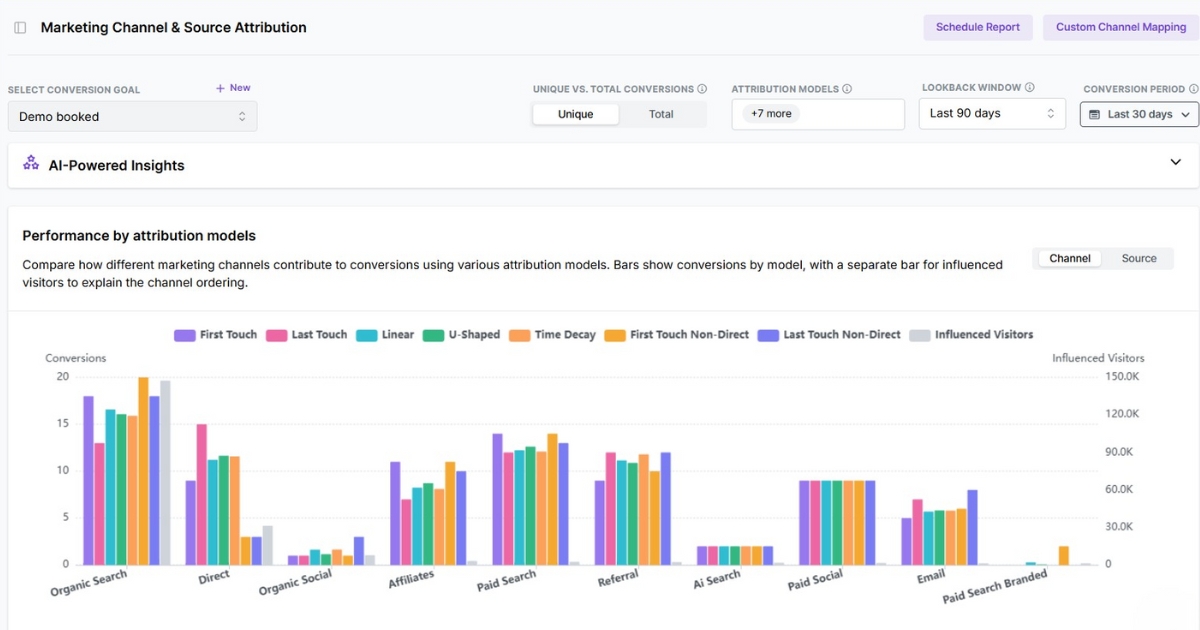
Here comes the practical part. Different attribution models will tell you different stories from the exact same set of visits.
So instead of hunting for “the best” one, pick the one that best fits what you want to learn.
First touch attribution
First touch attribution assigns all credit to the first interaction a user has with your content.
It’s great for understanding which pages and keywords introduce you to the right people. The tradeoff is that everything that happens after that first visit gets ignored.
Last touch attribution
In last touch attribution, all credit goes to the final touchpoint before conversion.
It’s straightforward, and it highlights the pages that push someone to act. It also tends to hide the earlier SEO content that influenced the decision.
Linear attribution
Linear attribution splits credit evenly across every touchpoint in the journey.
It’s a solid way to respect the full path, especially in B2B, where buyers come back multiple times. The trade-off is that it treats a quick skim and a high-intent visit as equally important.
U-shaped attribution
U-shaped attribution gives the most credit to the first touch and the key conversion moment, with the rest shared across the middle.
It’s a good fit when you care about both ends of the journey. What introduced the buyer, and what turned interest into a signup, demo, or purchase.
Time-decay attribution
Time-decay attribution gives more credit to touchpoints that happen closer to the conversion.
If your buyers do a lot of research and then make a decision in a short burst, this model often fits well. It will naturally highlight pricing pages, comparisons, and return visits that happen right before the conversion.
First touch non-direct attribution
Credit goes to the first non-direct touchpoint. If the first visit is direct, it gets skipped.
Use it when journeys often appear to start with direct because of bookmarks, copied links, or untracked shares. It helps you find the first real source that introduced the buyer.
Last touch non-direct attribution
Credit goes to the last non-direct touchpoint. Direct visits do not receive credit.
This is handy when direct traffic is mostly repeat visitors who already found you elsewhere. It keeps “direct” from claiming the credit just because it was the final stop.
How to get reliable results from your SEO attribution model
An attribution model is a lens. If the lens is smudged, every “insight” you pull from it will be slightly off.
Here’s how to keep it useful.
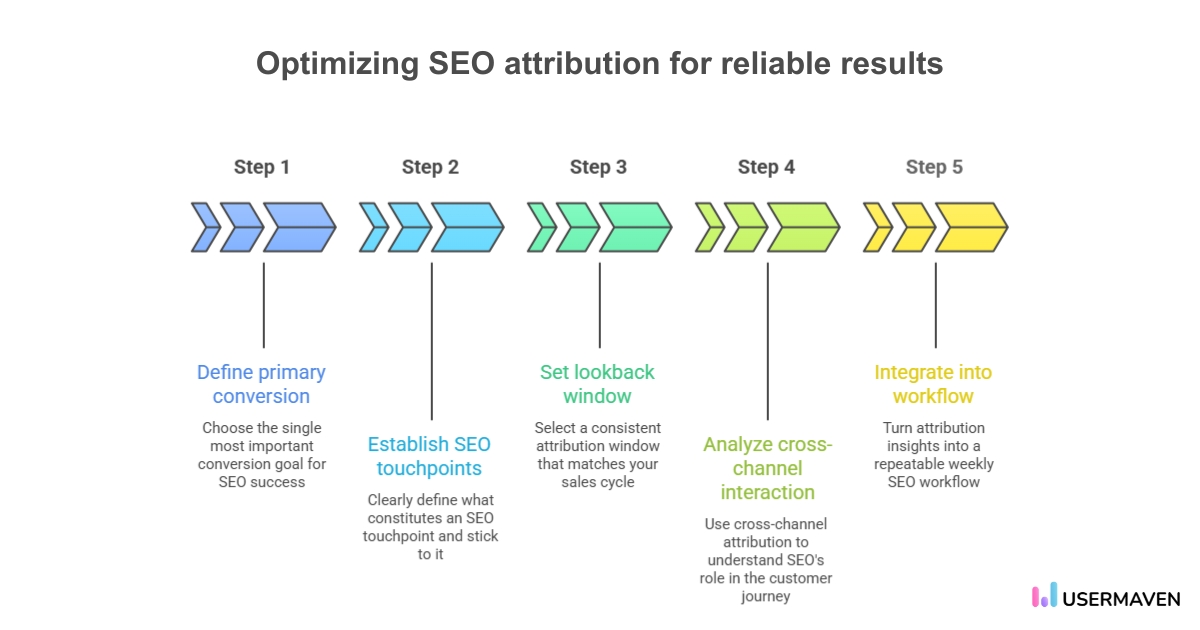
Step 1: Pick one conversion that matters most
Start by setting clear conversion goals, and choose the one that best represents success for your SEO efforts.
Demo request. Trial start. Purchase. Whatever your business actually counts.
If you track five different goals at once, you’ll end up with five different stories, and none of them will be clear.
Step 2: Decide what counts as an SEO touchpoint
Be explicit about what you are crediting.
A blog visit. A comparison page. A feature page reached from Google.
Then stick to it. If your rules change midstream, your “top pages” will change for reasons unrelated to performance.
And with answer engine optimization, not every meaningful touchpoint comes with a click. So define what you can track as a touch and keep that definition consistent.
Step 3: Set a sensible lookback window
Attribution window matters because it must match your sales cycle. Too short and you miss the early SEO touches. Too long, and you start crediting pages that had nothing to do with the decision.
Pick a window you can explain, then keep it consistent so month-to-month comparisons actually mean something.
Step 4: Look at how SEO interacts with other channels
SEO often introduces and educates, then paid, email, or sales capture the conversion later. That’s not a loss. That’s how journeys work.
Use cross-channel attribution to clearly see those handoffs. It helps you spot cross-channel interaction patterns, such as SEO starting the journey, retargeting bringing them back, and direct closing the loop.
Step 5: Turn insights into a repeatable workflow
Attribution gets ignored when it only produces slides. Make it part of how you run SEO on a weekly basis.
A simple rhythm works:
- Identify pages that frequently start converting journeys.
- Identify pages that frequently assist late-stage intent.
- Choose one update for each and ship it.
That’s how an SEO attribution model becomes a decision tool, not just a reporting feature.
Putting SEO attribution into practice with Usermaven
If SEO attribution matters to you, you need a tool that treats it like a first-class workflow, not a side report.
Usermaven is built for that. It keeps the full organic journey visible and makes the outputs easy to compare and act on.
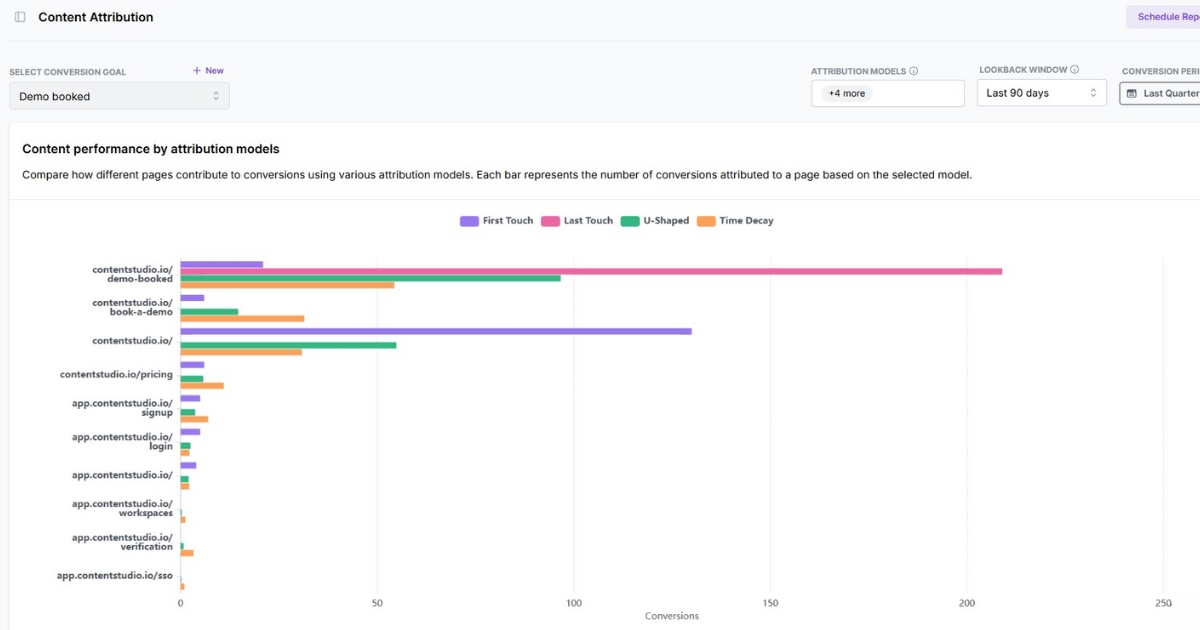
The real win is that Usermaven’s advanced attribution software matches how SEO actually works: multiple sessions, multiple pages, and conversions that happen after the “first visit” moment is long gone.
Here’s what you get with Usermaven for SEO attribution:
- Seven attribution models to answer different questions. Measure the same conversions across seven models, including multi-touch attribution that shares credit across key steps. You can see whether SEO is mainly introducing buyers, supporting the middle, or showing up right before conversion.
- Side-by-side comparisons without extra setup. Flip models in seconds and compare the outputs without rebuilding anything. It’s a quick way to validate what’s true across perspectives, not just what looks good in one model.
- A 365-day attribution window for long journeys. If your sales cycle is longer than a few weeks, short windows quietly erase SEO’s early influence. A full-year window keeps those earlier touches in the picture where they belong.
- Content attribution with page-level impact. You can see which specific URLs influenced conversions, along with the conversion value tied to each path.
- Conversion paths that keep the story intact. Get the sequence of touchpoints that led to a conversion, including the cross-channel handoffs. You can finally point out how SEO starts, supports, or ends the path, instead of guessing based on the last click.
- Days to convert, so your timing matches reality. See how long it typically takes for organic visitors to convert. That makes your SEO expectations more realistic and your reporting less reactive.
- AI-powered insights that translate data into next steps. Instead of digging through reports, you get summaries of what’s changing, what’s driving results, and where there’s room to grow. It also surfaces optimization recommendations, so you have something concrete to test.
To sum it up
SEO attribution models are how you stop guessing what “good SEO” looks like. You get a clearer read on what actually influences conversions, and you can invest in the work that keeps showing up in winning journeys.
And as a powerful marketing attribution tool, Usermaven makes that clarity practical, not theoretical. It’s where your SEO attribution models turn into a repeatable way to measure impact, defend priorities, and keep improving the parts of the journey that matter.
Ready to see Usermaven in action? Explore the platform or book a demo for a closer look.
FAQs about SEO attribution models
1. How can SEO attribution models improve my content strategy?
SEO attribution models help you see which pages start converting journeys, which pages assist, and which pages show up near conversion. That makes it easier to decide what to refresh, what to expand, and what to stop publishing.
2. What types of businesses benefit most from SEO attribution models?
Businesses with longer or multi-step journeys benefit most, because organic search often shows up early and mid-journey. B2B SaaS, agencies, marketplaces, and any company where buyers research before converting tend to get the most value.
3. What’s the biggest mistake people make when comparing SEO attribution models?
Treating one model as “truth.” The useful insight usually comes from the gap between models, because it shows whether SEO is acting as discovery, assist, or close.
4. Can SEO attribution models help with content pruning decisions?
Yes, because they show whether a page quietly assists conversions even if it never gets last-click credit. That keeps you from deleting “non-converting” pages that are actually doing mid-journey work.
5. What’s the easiest way to implement SEO attribution models in one place?
Use Usermaven. It’s built to apply SEO attribution models without stitching together tools, making it easy to compare models, see page-level impact, and evaluate real conversion paths in one workflow.
Updated

Written by
Ryan Mitchell
Marketing Analytics Strategist
Ryan Mitchell is a marketing analytics strategist specializing in campaign measurement, customer journeys, and marketing performance. He writes about analytics, reporting, and data-driven marketing strategies, helping SaaS and B2B teams measure what matters across every stage of the customer journey.
All articles by Ryan →