Managing your website and product side by side is a lot of work, and all SaaS product owners can agree.
You question daily,
Which pages drive the most signups?
What content encourages ebook downloads?
Where do your app users get stuck before buying?
Here is your answer!
With Usermaven, you can,
Define clear conversion goals for your website or app.
Track user behavior and see what’s working (and what’s not).
Optimize your content and features for better results.
Let’s dig into it!
Why use Conversion Goals?
Conversion goals are essential for tracking the success of your website or app and optimizing your digital marketing campaigns.
They provide valuable insights into what’s working, what’s not, and the effectiveness of your marketing efforts. Here are some key reasons why conversion goals are important:
- Insights into user behavior: Conversion goals help you understand if users are engaging with your calls to action and which pages are driving the most conversions.
- Identifying issues: They allow you to identify issues such as users abandoning the checkout process or certain features going unused.
- Marketing campaign effectiveness: By tracking conversion goals, you can determine which marketing channels are bringing in the most engaged users, and a clean conversion tracking sync makes that reporting much more reliable.
To make the most of conversion goals, it’s important to ensure that they are clear, measurable, achievable, relevant, and time-bound (SMART criteria).
Additionally, utilizing data-driven insights to inform your conversion goals is a best practice in digital marketing.
Understanding Conversion Goals
Establishing clear and measurable conversion goals is essential for optimizing user engagement. By defining specific actions or segments, businesses can tailor their strategies effectively. This understanding serves as a crucial foundation for refining campaigns and enhancing overall performance.
Types of Conversion Goals in Usermaven
There are two main types of conversion goals in Usermaven:
- Event-based goals: These goals are based on events that your customers trigger, such as making a purchase or signing up for a newsletter.
- Segment-based goals: These goals are based on whether a customer belongs to a specific segment in Usermaven.
Purpose of Conversion Goals
Conversion goals serve as a powerful tool for monitoring page statistics, analyzing custom metrics, and tracking events. They vary from simple actions like CTA clicks to more complex objectives like completed sales.
To know how funnel analysis can help understand user behavior, read Funnel Analysion and Conversion Goals
Static vs. Dynamic Conversion Goal Value
Understanding the difference between static and dynamic conversion goal values is crucial. Static values are fixed, while dynamic values allow flexibility, which is particularly useful when events involve varying amounts.
Setting Up Conversion Goals in Usermaven
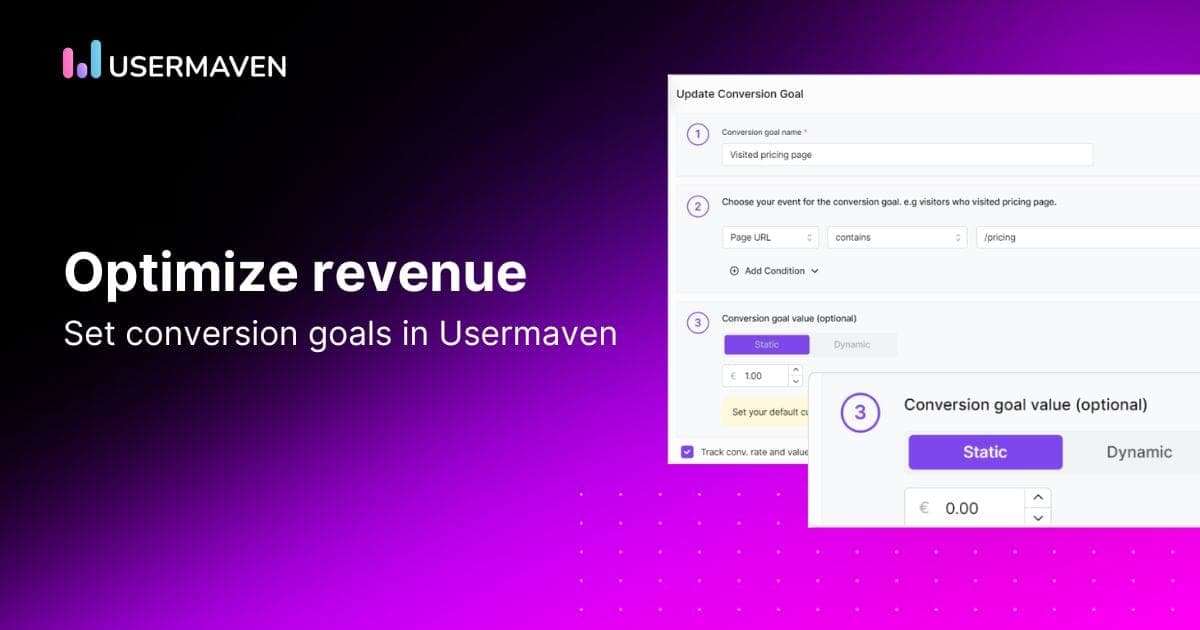
Usermaven makes setting up conversion goals a breeze. Here’s a step-by-step guide:
- Head to the “Conversion Goals” tab on your Usermaven dashboard.
- Click “New Goal”.

- Give your goal a clear and concise name. This will help you remember what you’re tracking.

- Select the event you want to track. This could be a page view, a button click, or a custom event you’ve created.
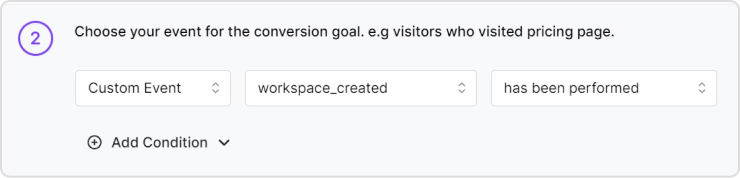
- (Optional) Set a value for your goal. This could be a fixed amount, like $10 for each purchase, or a dynamic value based on a custom parameter.

- Choose whether to track unique conversions. This helps avoid counting the same user’s conversion multiple times.
- Click “Create Goal” to save your goal.

You’re now tracking your conversion goals. Usermaven will provide you with valuable data and insights to help you optimize your website or app for success.
Related: Guide to Track Website Visitors
Insights from Conversion Goals
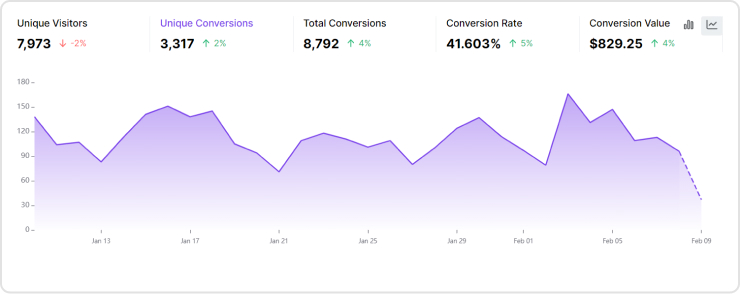
Usermaven allows you to monitor and check insights into the conversion goal that you have created so that you are aware of what is happening and whether it aligns with your expected goals.
1. Conversion goals panel
Goals are conveniently displayed on the Usermaven dashboard, offering easy access to insights. Clicking on a specific goal allows for a deeper analysis of user actions and campaign effectiveness.

2. Metrics and columns
Columns such as Activity, Uniques, Total, Conversion Rate (CR), and Value provide detailed information. These metrics help understand user behavior, identify issues, assess marketing campaigns, and measure overall impact.
Editing and deleting conversion goals
1. Editing goals
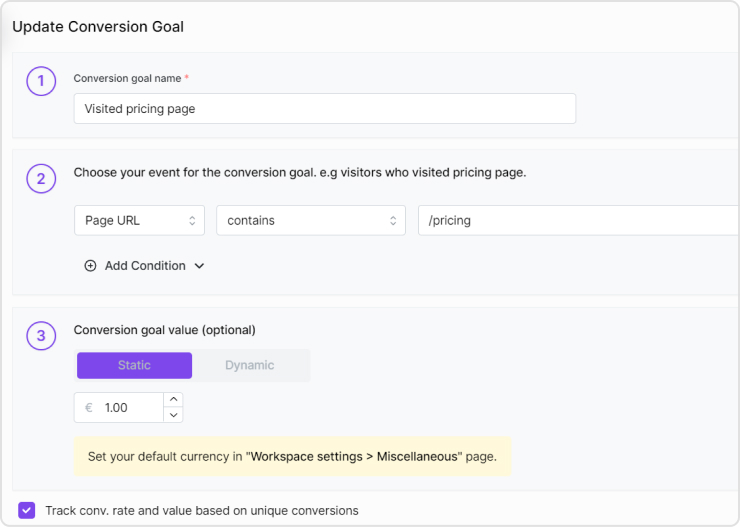
Adjusting existing conversion goals is a simple process. The Usermaven dashboard allows you to click on the pencil icon next to a goal, make necessary modifications, and save changes promptly.
2. Deleting goals
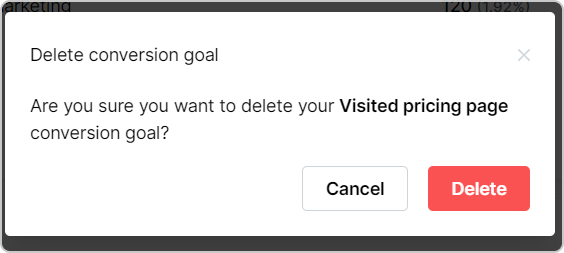
If the need arises to remove a conversion goal, Usermaven ensures a straightforward process. By clicking the delete icon, confirming your decision, and streamlining your goal management, you can efficiently manage your goals.
Tips for Effective Conversion Goals
Setting effective conversion goals is crucial for any marketing campaign or business strategy. Here are some tips to help you get started:
Clarity and specificity
- Define exactly what you want your audience to do: Do you want them to sign up for a newsletter, download an ebook, make a purchase, or something else? Be specific about the desired action.
- Make your goals measurable: Use numbers to track your progress. For example, instead of aiming for “more email signups,” aim for “a 20% increase in email signups within the next month.”
Alignment and value
- Ensure your goals align with your overall business objectives: What are you trying to achieve in the long run? How do conversions contribute to that goal?
- Focus on offering value to your audience: What problem are you solving for them? Why should they take the desired action?
Examples of effective conversion goals
- Increase website traffic by 15% within the next quarter.
- Generate 100 new leads from this campaign.
- Boost online sales by 20% during the holiday season.
- Achieve a 5% conversion rate for newsletter signups.
End-note
By setting up conversion goals and using the data Usermaven provides, you can gain valuable insights to optimize your website or app and achieve your goals.
Remember, the key is to be strategic, data-driven and focused on creating a positive user experience.
Ready to see Usermaven in action? Explore the platform or book a demo for a closer look.
Updated

Written by
Adeel Khan
Growth Marketing Expert
Adeel Khan is a full-stack SaaS marketer with 10+ years of experience in content marketing, paid advertising, analytics, and conversion rate optimization. He shares practical insights and strategies drawn from hands-on experience, helping B2B SaaS marketers improve performance and make better marketing decisions.
All articles by Adeel →