Did you know most customers form an opinion about your brand long before they ever talk to you?
That happens through customer journey touchpoints. These touchpoints can be something small, like a social media post, or something big, like a product demo or support call.
Every interaction adds up. Some build trust, some create doubt, and some determine whether customers move forward or leave.
Understanding your customer journey touchpoints helps you see what works, what confuses people, and where you can make smarter improvements. This article takes a closer look at these touchpoints, how they differ from the full customer journey, and how brands can optimize them for better engagement and conversions.
Visualize & optimize
user journeys with Usermaven
What are customer journey touchpoints?
Customer journey touchpoints are the specific interactions or moments where a customer engages with your brand. These interactions can happen online or offline and include anything from visiting your website to talking to customer support.
Touchpoints are not limited to a single department. They can occur through marketing, sales, customer service, product usage, and even post-purchase interactions.
Every touchpoint plays a role in shaping a customer’s perception and influences whether they move forward or drop off.
Simple examples of customer touchpoints include:
- Seeing a paid advertisement
- Reading a blog post
- Browsing your website
- Receiving a welcome email
- Talking to a sales representative
- Using your product
- Contacting support
If an interaction helps customers discover your brand, evaluate it, make a purchase, or stay loyal, it qualifies as a touchpoint.
What is a customer journey?
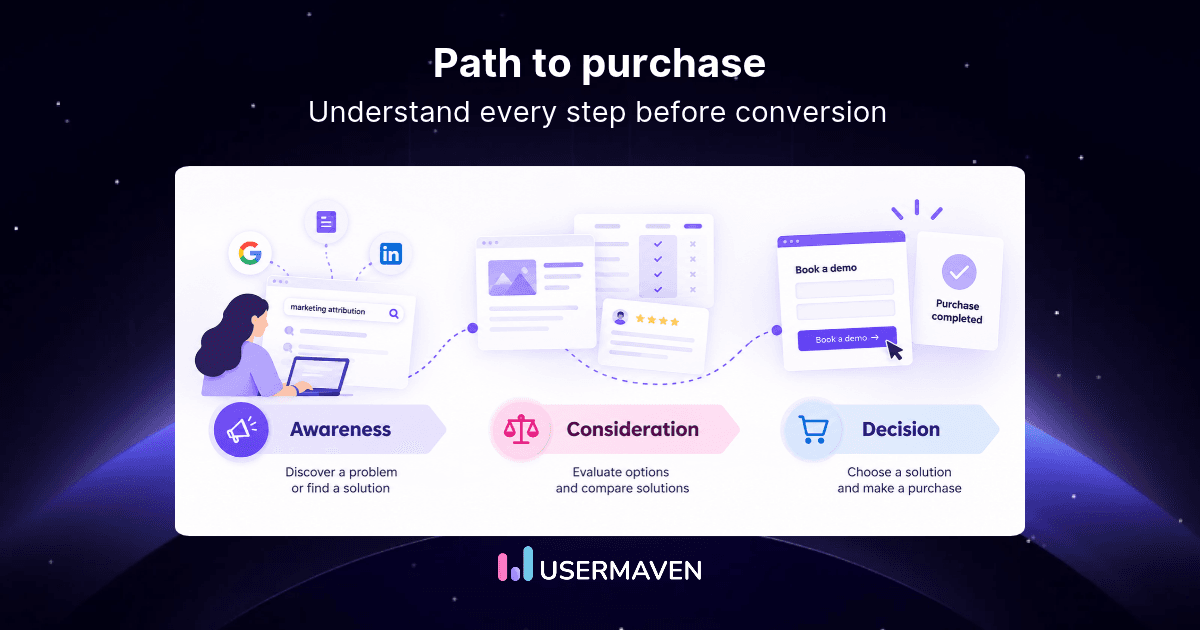
A customer journey is the complete path a customer takes from becoming aware of a problem to choosing your solution and remaining connected afterward. It includes all the phases a customer goes through, such as awareness, consideration, decision, onboarding, retention, and advocacy.
Think of the journey as the full story and touchpoints as the individual moments that make up that story.
Here is a quick look at how the customer journey compares to customer touchpoints.
| Concept | What it means | Scope | Example |
| Customer journey | The complete path a customer takes from awareness to loyalty. | Big picture | Discover → Compare → Purchase → Use → Renew |
| Customer touchpoints | The individual interactions a customer has with your brand. | Specific moments | Seeing an ad, reading a review, talking to support |
Why understanding customer touchpoints is important
Touchpoints are not just interactions. They are opportunities to guide customers forward and shape their overall experience. Here is why they matter.
- They influence decisions. Every touchpoint affects how customers feel about your brand and whether they move forward or drop off.
- They create consistency. Customers expect the same quality and tone across every channel they use.
- They uncover friction. Touchpoints reveal where people get stuck, confused, or leave the journey.
- They increase retention. Smooth and positive interactions keep customers happy and coming back.
- They drive smarter decisions. Tracking touchpoints helps you improve based on real behavior instead of guesswork.
20 customer journey touchpoints and how to optimize them
Customer journey touchpoints appear at every stage of the buying process. When you understand and improve these moments, you make the entire experience smoother and more meaningful for your customers.
Below are 20 essential touchpoints, explained clearly with examples and optimization tips.
Awareness stage touchpoints
These touchpoints introduce customers to your brand for the first time.
1. Online advertisements
Online ads help your brand show up in front of people who may not know you yet. This includes search ads, social media ads, display ads, and video ads. Good ads spark curiosity and make people want to learn more.
Tip: Use targeted ads that match customer interests and add a clear and simple call to action.
2. Content marketing
Blog posts, guides, ebooks, and whitepapers help customers understand their problems and discover solutions. Helpful content builds trust and positions your brand as an authority in your space.
Tip: Create content that matches what people are actually searching for. Answer their questions in simple and useful ways.
3. Social media presence
Customers often discover brands through social channels like LinkedIn, Instagram, X, or TikTok. Social media helps you share your brand personality and start conversations.
Tip: Post consistently, share helpful insights, and respond to comments to build engagement.
4. Public relations
Press releases, interviews, podcast features, and media coverage help establish credibility. When customers see your brand mentioned in trusted sources, it boosts confidence.
Tip: Share meaningful updates such as product launches, company news, or industry insights.
Consideration stage touchpoints
These touchpoints help customers compare options and decide whether they should explore your product further.
5. Website experience
Your website is often the first place customers go after discovering your brand. If the site is slow, confusing, or hard to navigate, customers leave quickly. A clean and fast website builds trust instantly.
Tip: Make sure your site loads quickly, works well on mobile, and has simple navigation.
6. Customer reviews
People rely on real experiences before they make decisions. Good reviews, ratings, and testimonials help customers feel confident that your product works.
Tip: Display testimonials on product pages and highlight reviews in emails or landing pages.
7. Email nurturing campaigns
Nurture emails help guide customers from interest to consideration. They can include educational content, case studies, product benefits, or invitations to demos.
Tip: Personalize your emails based on past behavior, such as what content they read or which features they viewed.
8. Webinars and demos
Live interactions give customers a chance to see the product in action. Interactive product demos help them ask questions, explore real scenarios, and understand how your solution fits their needs. This type of hands-on experience is especially important in B2B journeys, where buyers want clarity and proof before they commit.
Tip: Keep the session interactive and show real use cases, not just features.
Decision stage touchpoints
These touchpoints help customers decide whether to buy from you or not.
9. Free trials
A free trial removes risk and lets customers experience the product firsthand. If the trial is easy to start and helpful to use, it increases conversions.
Tip: Make signup simple and guide users through the first few steps with onboarding prompts.
10. Pricing pages
This is often the most visited page before a purchase. Clear and honest pricing helps customers understand what they get and how each plan fits their needs.
Tip: Use simple language, include FAQs, and show the value of each plan.
11. Sales consultations
Some products, especially in B2B, require a conversation with sales. During a call, customers want clarity, reassurance, and personalized answers.
Tip: Train sales reps to listen first and focus on solving problems rather than pushing hard sales.
12. Comparison charts
Customers compare you with competitors before deciding. A side-by-side comparison makes it easy to see why your product is a better fit.
Tip: Highlight differentiators honestly and avoid calling out competitors directly.
Retention stage touchpoints
These touchpoints help customers stay longer, use your product more, and feel supported.
13. Onboarding
A strong onboarding experience helps customers understand your product quickly. It reduces confusion and motivates them to explore features that matter.
Tip: Use step-by-step tutorials, checklists, tooltips, and helpful emails to guide new users.
14. Customer support
When customers run into issues, they expect fast and friendly help. Good support can turn a frustrating moment into a positive one.
Tip: Offer multiple support options such as live chat, a help center, and email support. Keep response times short.
For phone support, an agentic AI contact centre like Natterbox can answer every call instantly, resolve routine requests end to end, and pass complex issues to an agent with full context.
15. Loyalty programs
Rewarding customers for sticking with your brand encourages long-term engagement. Rewards can include discounts, special offers, early access, or points.
Tip: Make your loyalty program simple and easy to understand.
16. Product updates
Regular updates show customers that your product is improving. It keeps the experience fresh and adds value over time.
Tip: Announce updates clearly and explain how they benefit users.
Advocacy stage touchpoints
These touchpoints turn happy customers into brand advocates.
17. Referral programs
Satisfied customers are your strongest promoters. A referral program motivates them to invite others using rewards or benefits.
Tip: Make it easy to share referral links and keep the rewards meaningful.
18. Feedback surveys
Surveys help you understand customer opinions and identify areas of improvement. They show customers that their voice matters.
Tip: Keep surveys short and ask only essential questions.
19. Community groups
Communities give customers a space to connect, ask questions, and share insights. This builds deeper loyalty and encourages long-term engagement.
Tip: Create friendly, safe spaces led by community managers to guide discussions.
20. Case studies
Real success stories show potential customers how your product solves real problems. Case studies build trust and credibility.
Tip: Use data, quotes, and real outcomes to tell a strong story.
Key channels and devices in the customer journey
Today’s customers interact with brands in many different places. They switch between channels and devices without thinking about it, and every one of those interactions becomes a customer journey touchpoint.
Here is a simple breakdown of where these interactions happen.
Customer channels
These are the main places where customers interact with your brand. Each one becomes a touchpoint the moment a customer sees, clicks, or engages with it.
- Social media
- Paid ads
- Your website or app
- Chatbots
- Support centers
- Phone calls
- Webinars or events
Customers expect these channels to feel connected, consistent, and easy to navigate.
Customer devices
Touchpoints also happen across different devices. A customer may start on one device and continue on another.
- Mobile
- Tablet
- Laptop
- Desktop
- Public kiosk
- Voice assistants
If your experience is not optimized for each device, customers can get stuck or leave the journey.
Brand systems that support these interactions
These internal tools power the channels and devices customers interact with. They create the ecosystem where your touchpoints live.
- Website
- Mobile app
- CRM
- Email platform
- Ad tools
- Support software
These systems must work together so customers get a smooth experience across every channel and device.
Visualize & optimize
user journeys with Usermaven
How to identify your customer touchpoints
To improve your customer journey, you first need to identify all the touchpoints your customers experience.
Here is a simple framework.
- List every interaction point
Start with common phases: before purchase, during purchase, and after purchase. Then list all the possible interactions in each phase.
- Review customer behavior
Look at analytics to see how customers move through your website, product, or communications.
- Talk to customer-facing teams
Your support, sales, and marketing teams know what customers ask, complain about, or struggle with.
- Check your competitors
Observe how competitors interact with customers and see if you are missing opportunities.
- Follow the customer path yourself
Go through your website, forms, checkout flow, demo process, or onboarding from the customer’s perspective.
Relevant: Best customer journey management software
How customer touchpoints work
Touchpoints are not isolated moments. They influence each other and create momentum throughout the journey.
Here is how they work.
1. Touchpoints shape perceptions: A single bad interaction can override several good ones. That is why consistency matters.
2. Touchpoints influence emotions: Excitement, frustration, trust, and confusion all come from touchpoints.
3. Touchpoints guide customer decisions: Each interaction encourages a customer to move forward or drop off.
4. Touchpoints create the experience: The collection of touchpoints defines the entire customer experience and dictates success.
Customer touchpoint examples
Below are grouped examples of common customer touchpoints, based on what customers experience before, during, and after a purchase.
| Before purchase | During purchase | After purchase |
| Discovering your brand through a search result | Comparing features or pricing | Receiving a welcome email |
| Reading a helpful blog post | Watching a product demo | Following an onboarding checklist |
| Seeing a social media mention or recommendation | Asking questions through live chat | Contacting customer support |
| Hearing about your brand from a friend or colleague | Reviewing FAQs or documentation | Getting invited to a user community |
| Visiting your homepage for the first time | Signing up for a trial or consultation | Receiving product updates or newsletters |
Fixing customer touchpoints: what to improve and where
Fixing touchpoints is not about guessing. It is about identifying friction, optimizing experiences, and making the journey smoother.
Here is how to determine what to improve.
1. Look for bottlenecks
For example:
- High bounce rate on the homepage
- Low open rates on emails
- Drop-offs on the checkout page
These signals show where the journey breaks.
2. Gather customer feedback
Surveys, interviews, and reviews can highlight common issues.
3. Use analytics
Tools like Usermaven help identify:
- Funnels
- Drop-off stages
- Product usage patterns
- Attribution
- High-performing touchpoints
4. Prioritize improvements
Start with touchpoints that affect revenue, such as pricing pages or onboarding.
5. Test and refine
A/B testing lets you experiment with improvements and measure results.
How Usermaven helps improve customer journey touchpoints
Understanding and improving customer touchpoints becomes much easier when you have the right insights. This is where Usermaven plays a helpful role. It gives you clear data on how people interact with your website and product, so you can see what works and what needs fixing.
Here is how its features support better digital customer experiences across the journey.
Website and product analytics
Usermaven’s product analytics and website analytics provide deep insights into user behavior. You can see which pages keep people engaged, where they drop off, and which features they use the most. This helps you refine touchpoints that may be slowing customers down.
Funnels and user journeys
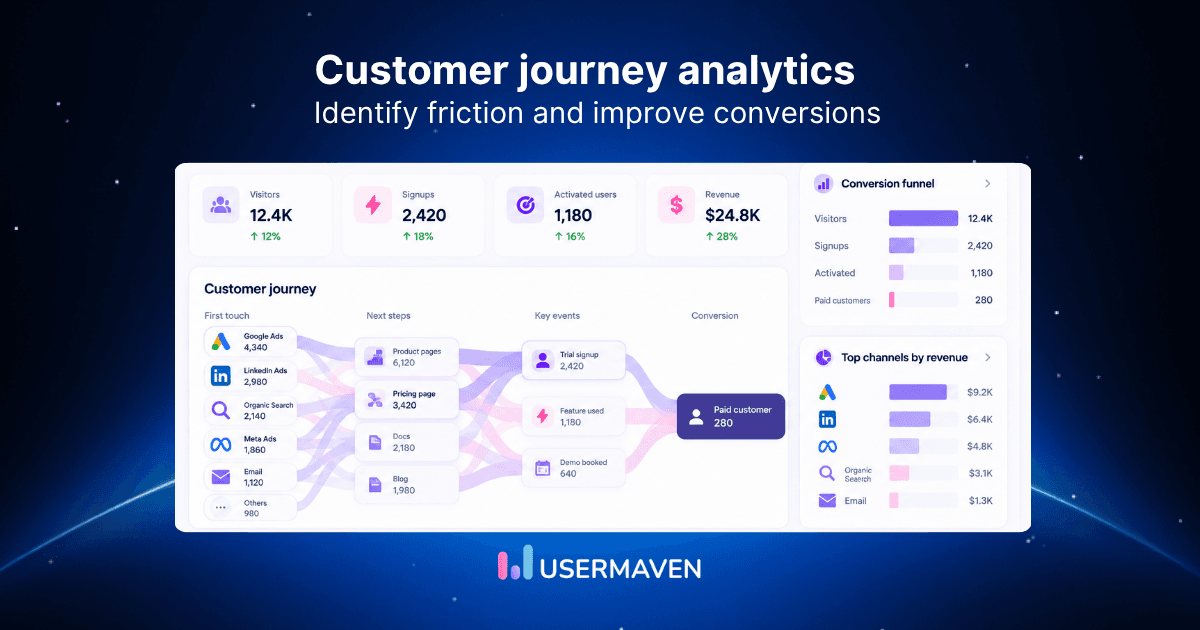
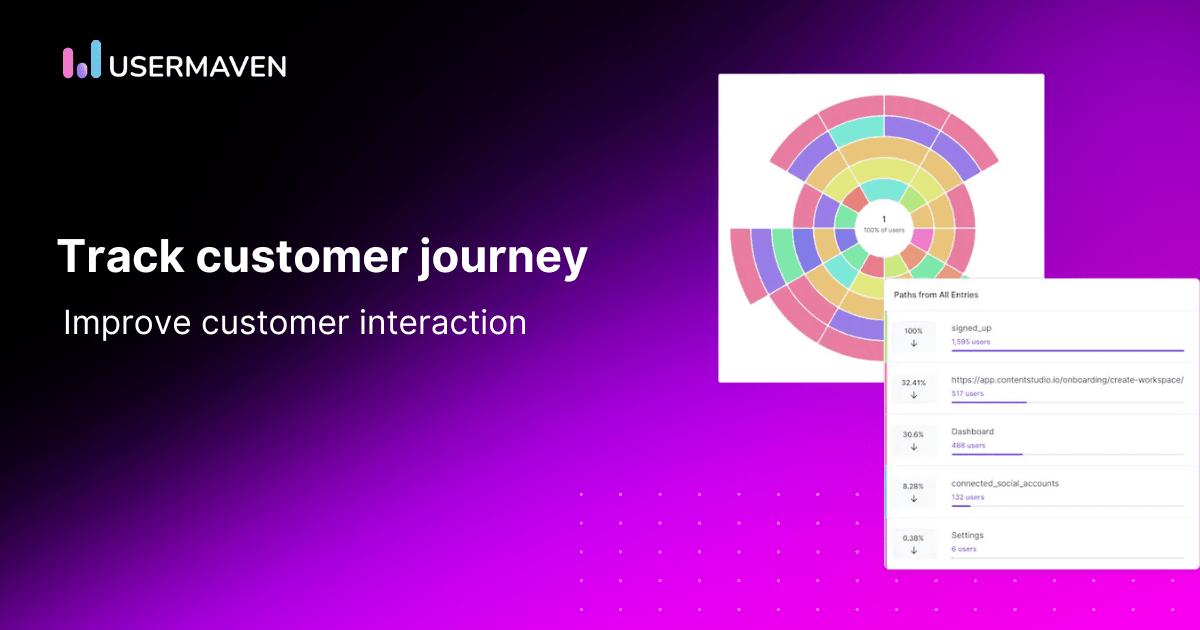
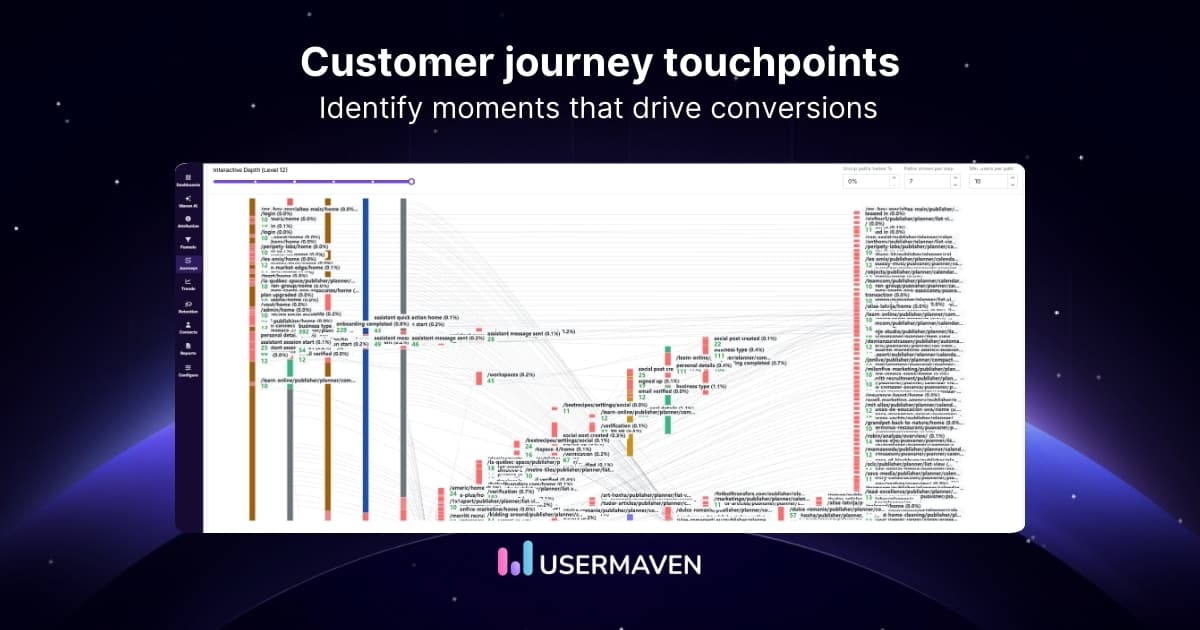
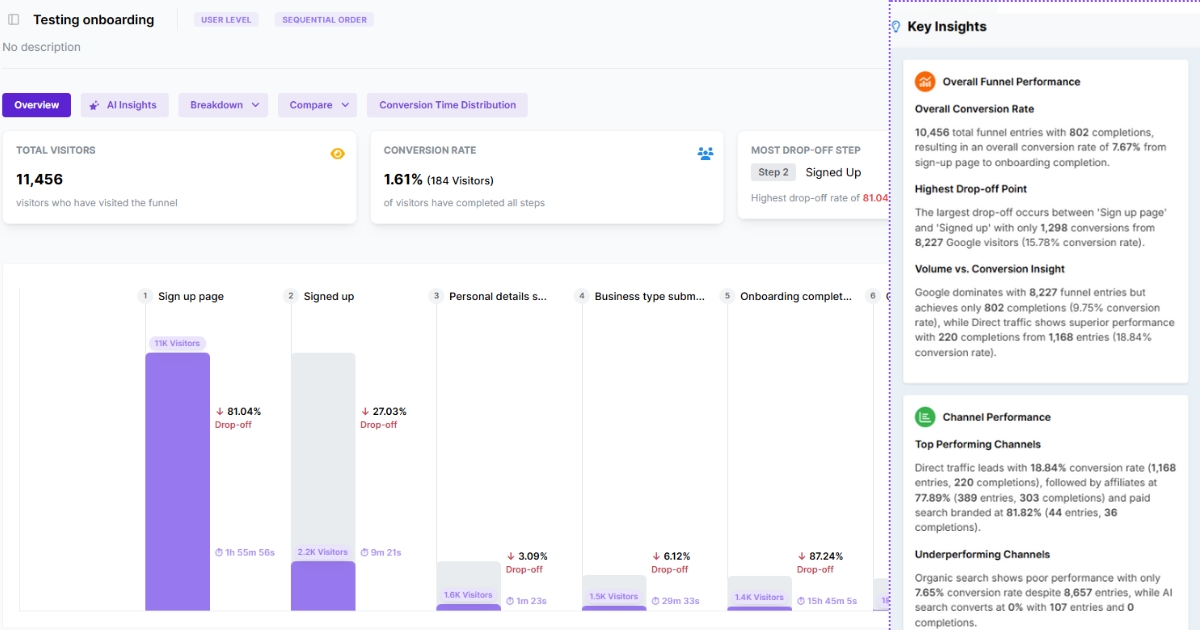
Funnels help you understand the exact steps customers take before converting. User journey analytics show how they move between touchpoints. When you can see where they stop, hesitate, or get confused, it becomes easier to fix those issues and guide them forward.
Attribution and trend analysis
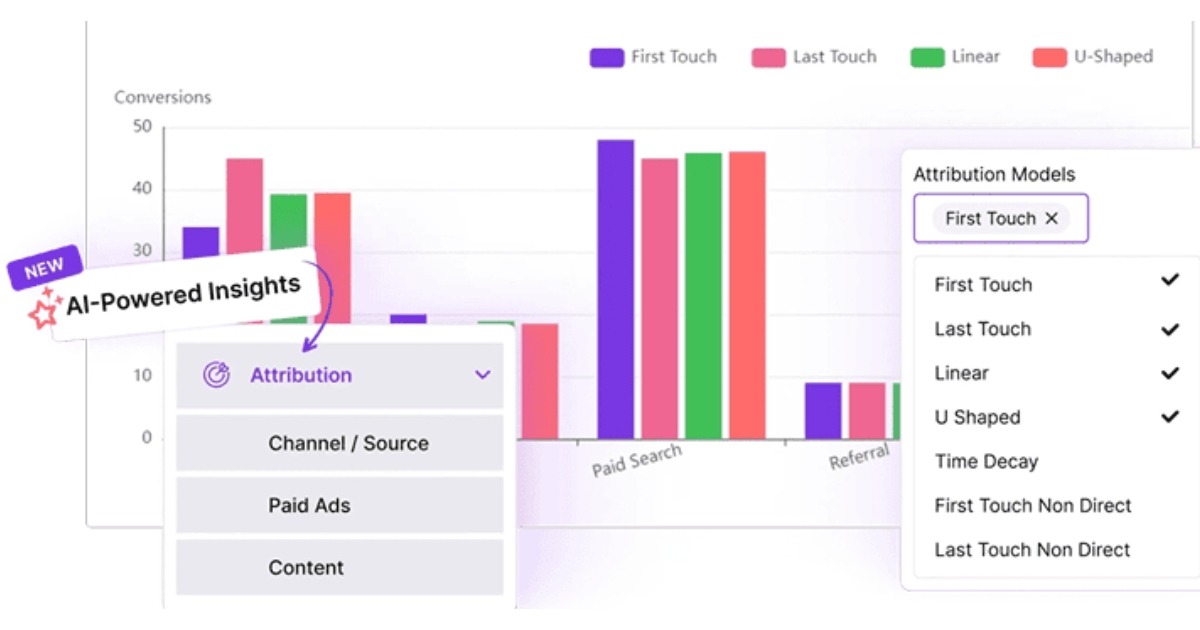
Digital marketing attribution software shows you which channels create the strongest touchpoints, such as ads, email, or organic search. Trend reports reveal how customer behavior changes over time. This helps you invest in the touchpoints that create the most value.
Segments and contacts hub
Not every customer behaves the same way. With Usermaven’s segmentation tools, you can group users by behavior or characteristics. This allows you to personalize touchpoints, send more relevant messages, and improve engagement across the journey.
Dashboards and AI insights
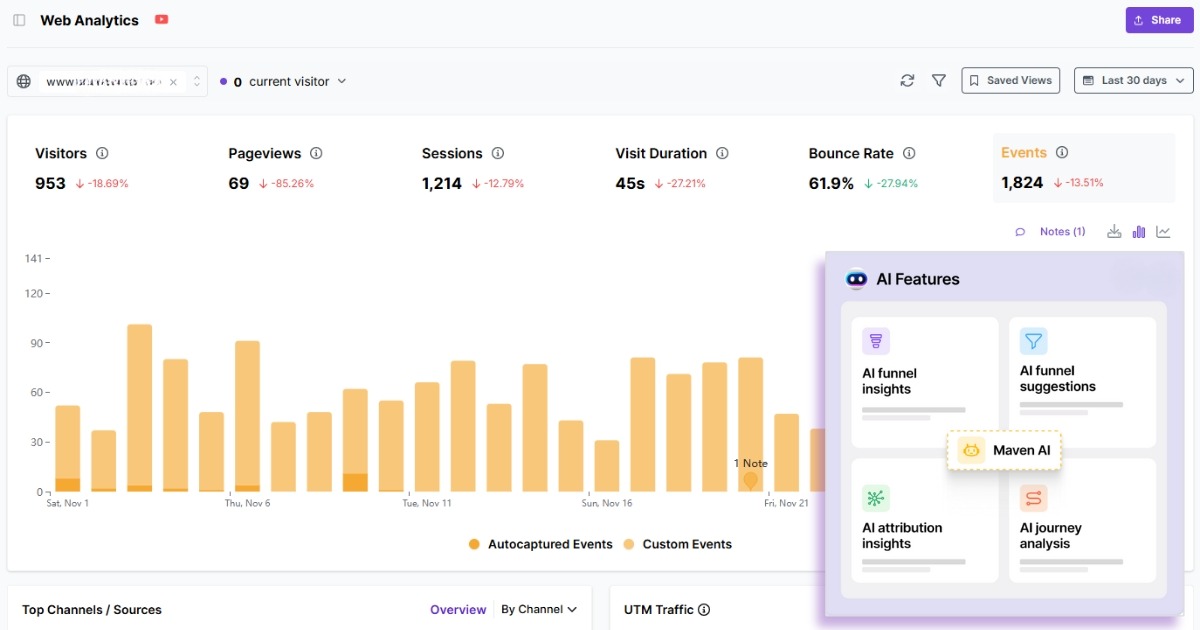
Dashboards bring your key metrics into one place. AI insights highlight issues you might miss on your own and offer suggestions to improve the customer journey. This makes it easier to optimize touchpoints without digging through complex data.
With these amazing features, Usermaven helps you track, analyze, and improve every interaction customers have with your brand. Clear insights lead to better decisions, stronger engagement, and a smoother journey from start to finish.
To wrap it up,
Customer journey touchpoints shape how people see, trust, and connect with your brand. When you understand and optimize these moments, you give customers a smoother experience from the first interaction to long-term loyalty. Strong touchpoints help customers find answers faster, feel supported at every step, and stay confident in their decisions.
If you want clearer visibility into how these touchpoints perform and where improvements are needed, using the best website analytics tool becomes essential. Usermaven helps you spot friction, understand behavior, and make smarter, data-driven decisions that strengthen your entire customer journey.
Ready to see Usermaven in action? Explore the platform or book a demo for a closer look.
Visualize & optimize
user journeys with Usermaven
FAQs
1. How do I identify weak touchpoints in my customer journey?
Use analytics tools like Usermaven to track engagement, drop-off rates, and customer behavior at different stages.
2. What’s the best way to personalize touchpoints without being intrusive?
Use analytics tools like Usermaven to track engagement, drop-off rates, and customer behavior at different stages.
3. How can I measure the impact of optimizations on customer touchpoints?
Track key metrics like conversion rates, retention, and attribution trends using real-time analytics dashboards.
4. How does automatic event tracking improve touchpoint analysis?
Automatic event tracking, like that offered by Usermaven, captures user interactions without coding, enabling businesses to analyze touchpoints in real-time and make data-driven decisions.
5. How can personalized content improve touchpoints?
By tailoring content to different decision-makers and customer segments, businesses can address specific concerns, making their touchpoints more relevant and effective.
6. How does attribution modeling help in touchpoint optimization?
Attribution models reveal how different touchpoints contribute to conversions, allowing businesses to allocate resources strategically and focus on the most impactful interactions.
Updated

Written by
Imrana Essa
SaaS Marketing Lead
Imrana Essa is a marketing lead and content strategist with 8+ years of experience creating and leading content for B2B and SaaS brands. She specializes in marketing analytics, attribution, content strategy, and organic growth, translating complex marketing concepts into clear, actionable insights. Her work focuses on helping marketers understand performance, make data-informed decisions, and build strategies that contribute to sustainable growth.
All articles by Imrana →