If you were to concisely describe how paid users of a service behave, compared to how free users behave, it would be this: the free user clicks around; the paid user gets things done.
And this has nothing to do with the fact that the free user doesn’t need the product. Once a free user converts to a paying one, the product usage skyrockets.
Basically, before they make a payment, a user will test limits.
They might explore features just out of curiosity, but once money’s on the line, things change. Users will start acting with purpose, looking for shortcuts, and any friction they hit will feel way more annoying than it did before.
What they could tolerate as a free user isn’t going to fly once they’re paying. The challenge is that dashboards treat free and paid users the same, but the intent behind their clicks is different, and that’s something to keep in mind.
How user intent shifts once payment is made
In order to build a better product, you need to first know how users behave, and that first payment changes everything. Before that moment, you’re just trying something out.
You’re playing around, clicking on whatever, testing limits, and seeing what the product could do. You don’t have to be efficient because your time still doesn’t have a price tag attached to it.
Once you pay, though, that shifts instantly. Your mindset shifts from testing to execution, and you’re no longer interested in what that particular feature does, but in whether it can help you get results.
Free users are all about discovery; that’s what drives their actions.
They wander and experiment. They’ll use a feature just because it’s there, never mind if they need it or not. But paid users have specific goals in mind, and they want results.
That change has an effect on focus and attention, which becomes more narrow and directed. It also does something in terms of patience.
If there’s friction or steps that are unclear, nobody will tolerate it and wait for fixes. You’ll see all this in daily behavior. Paid users log in because they have something to do, not because there’s a new button added and they want to mess with it just for funsies.
They go through tasks faster because they already know what they need to do, and they expect every session to provide more value because each of them now has a price.
The change in usage patterns after payment
Once a user becomes a paid subscriber, their behavior changes significantly.
Free users tend to spend more time exploring the product, jumping between features and menus. In contrast, paid users have shorter, more focused sessions because they know what they need and get straight to it. This is why a reliable processing infrastructure is essential; paid users expect smooth, uninterrupted performance to complete tasks efficiently.
While free users experiment with various tools, paid users focus on a select set of features that provide the most value, using them more intensively.
This shift leads to faster task completion and repeated workflows that directly solve their problems, indicating stronger product-market fit. Fewer actions, in this case, demonstrate greater efficiency.
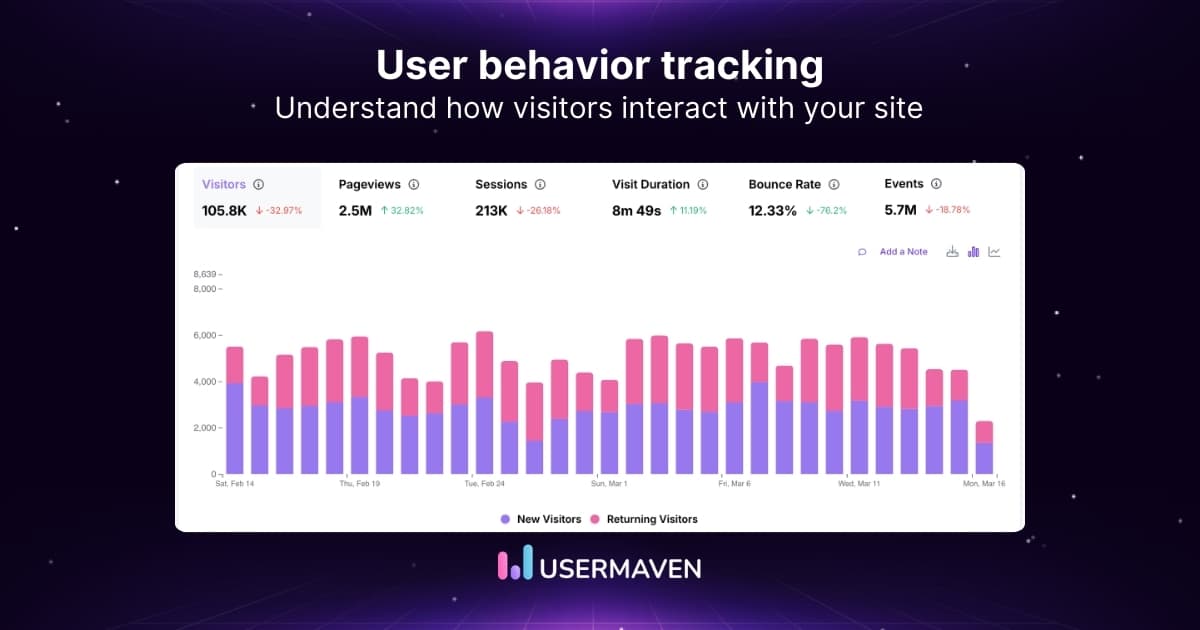
Vanity metrics like clicks and pageviews lose significance once payment is involved, as they often reflect exploration rather than meaningful engagement. It’s crucial to separate free and paid user data for accurate insights. Mixing the two can distort the actual performance of the product.
Behavioral patterns that point to long-term retention
You won’t see this as one big moment. Long-term retention almost always builds up slowly, with repeatable behaviors (e.g., loyalty, task completion, consistent usage, focused usage, team expansion, etc.) that get stronger over time.
Paid users who stick around tend to leave behind clear patterns in how they use a product.
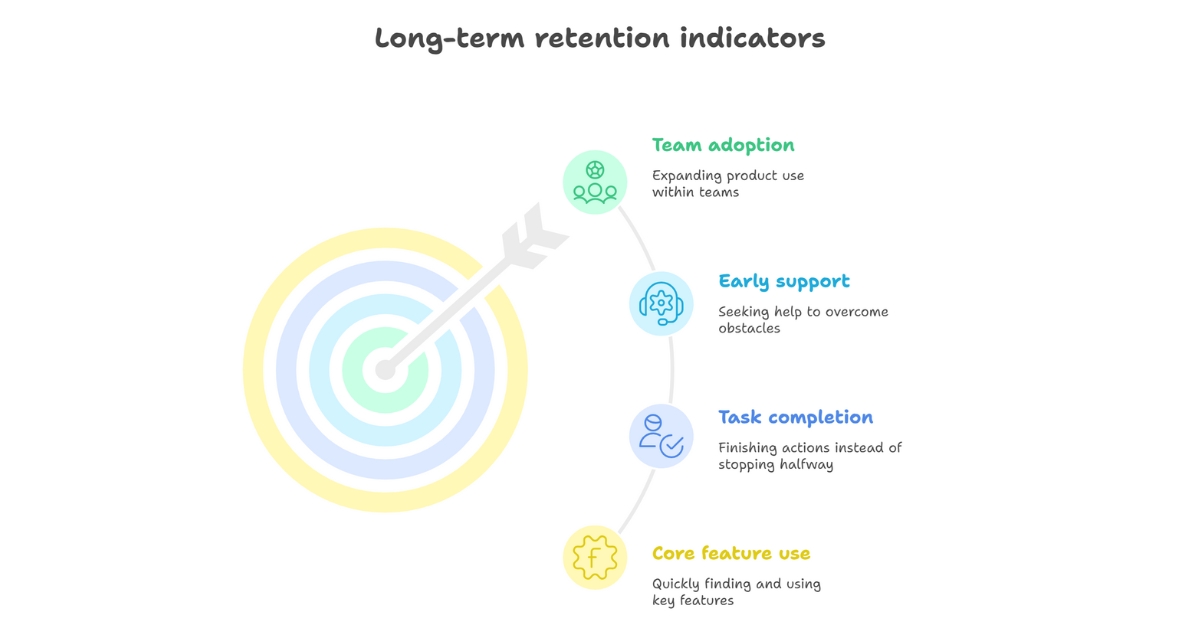
Paid users find their core feature quickly
Paid users find their aha moment early. They know exactly why they’re using a specific product or service.
That one reason is likely the main reason they became paid users in the first place. The fact that paid users know which feature keeps them as ‘paid’ users is one of the strongest signs of long-term retention.
They don’t jump around between multiple features but settle into that one part of the product that actually makes a noticeable difference.
Psychological factors (e.g., commitment, perceived value, habit formation, etc.) are the dominant drivers when it comes to retention of subscription-based products/services.
– Advances in Consumer Research
If they use that same feature every day, that’s a sign of value.
And if this happens early, all the better because long-term stability is much more likely in that case.
But if it never happens, retention is likely to be a lost cause.
Finishing tasks instead of stopping halfway
There’s a big difference between starting something and seeing it through.
Paid users who (for the most part) complete important actions are far more likely to stay than those who keep dropping everything in the middle. If a user is repeatedly stopping halfway through key workflows, something’s probably getting in the way.
It could be due to various factors, such as confusion, friction, or weak payoff. Whatever the reason, these patterns are a clear sign that churn is likely to follow, and reducing churn should be a top priority for any business.
Early support questions
When users reach out for help early, it usually means they want to get things right. It could also indicate that a feature isn’t working as expected, and they’re trying to learn more because they still need or want the product. They’d rather push through the obstacle than churn and switch to another product.
Their desire to move forward, not give up, is a strong positive sign.
The questions are usually about setup or best practices, which change later on. Questions that come later are mostly about things that don’t work as expected.
Reliable SaaS merchant account payment processing solutions can sometimes impress users, making them feel that the entire product is outstanding, not just one feature. The timing of support plays a crucial role in revealing whether a user is gaining momentum or losing patience.
Turning one user into a full-pledged team
When a single user starts to bring others in, that’s a very strong sign of long-term confidence.
Inviting members or changing permissions shows that the product is becoming a core part of someone’s work strategy.
A user has to trust the product enough to build ‘actual’ work around it.
Once that happens, retention is much more durable.
How analytics needs to change for paying users
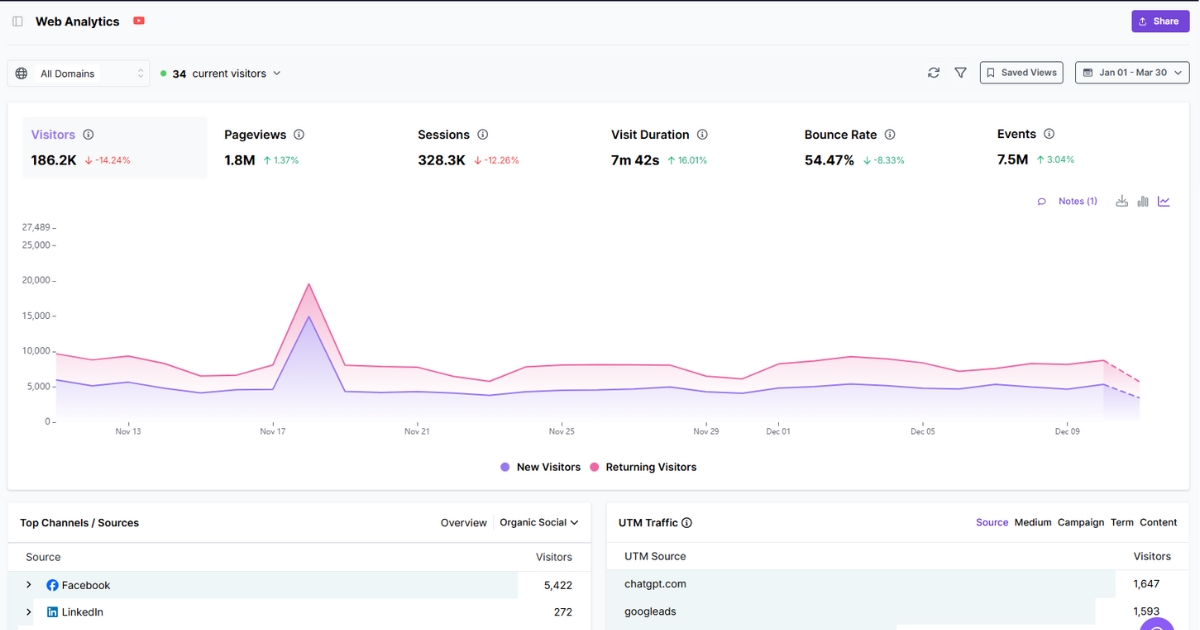
Once users start paying, the way you read analytics must change. Free users create a lot of activity, but much of it is exploratory. Paid users, on the other hand, are more goal-oriented, and their actions are more meaningful in terms of achieving business objectives.
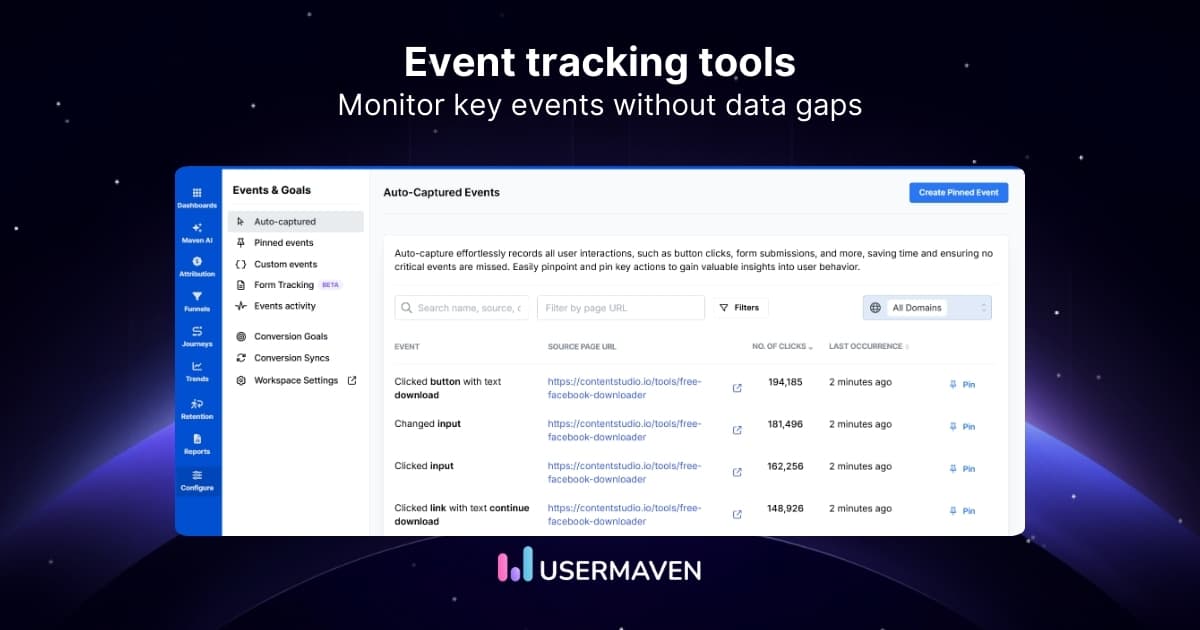
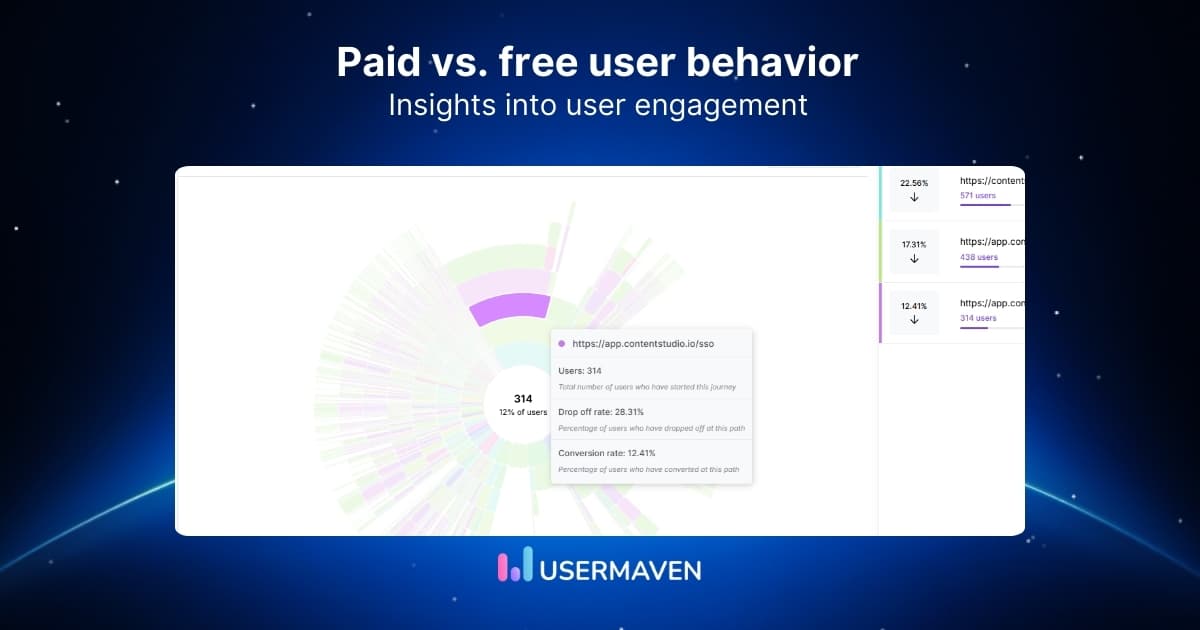
Usermaven helps you identify these behavior shifts by offering detailed insights into user journeys and actions, allowing you to track conversion funnels and monitor user progression from exploration to execution.
When analyzing paid users, consider the following.
Action sequence over volume
It’s more helpful to look at how users move from one feature to the next and whether they complete the tasks they came for. Customer journey becomes more important than the number of actions taken. Tracking conversion funnels and events helps you understand your product’s efficiency and pinpoint areas for improvement.
Time matters differently
What matters now is how quickly users return to the same result again, not how long they spend exploring. Repeated value delivery is a stronger indicator of product-market fit than engagement metrics like page views. Usermaven’s behavioral analytics can help measure the impact of these quicker actions and track retention rates.
Behavior segmentation by revenue
The value of actions varies by revenue. When a high-value account takes a specific action, it usually signals greater intent or satisfaction than when a free user does the same. For SaaS teams, Usermaven works as SaaS attribution software that connects revenue attribution, product behavior, and retention signals. Usermaven’s segments allow you to group users by behavior and monetization tier, giving a clearer picture of what drives long-term retention.
Account growth
Growth no longer only comes from new signups. The focus should shift toward understanding whether existing accounts are expanding, shrinking, or staying the same. This shift from user acquisition to retention and churn analysis is crucial for long-term SaaS growth. Usermaven’s cohort analysis helps track key behavioral patterns and identify early signs of churn, so you can proactively address user drop-off.
Conclusion
Once users start paying, the product becomes a core part of their workflow, no longer something to simply explore. Even in the most seamless experiences, some users will still churn. Usermaven helps teams understand those shifts by connecting paid-user behavior, product usage, segmentation, and retention signals in one clear view.
It gives you the power to track every user action, uncover retention drivers, and spot the early signs of churn. With the right insights, growth isn’t just possible; it’s inevitable.
Drive business growth
with AI-powered analytics
FAQs
1. What role does user intent play in the behavior of paid vs free users?
User intent shifts significantly once users pay. Free users are often in discovery mode, while paid users have a focused, goal-driven approach, seeking efficiency and results.
2. Why is it important to analyze paid and free user behaviors separately?
Analyzing them together can lead to misleading conclusions, as the behavior of free users (exploratory and casual) differs greatly from that of paid users (focused and goal-oriented).
3. How can segmentation help in differentiating paid and free user behavior?
Segmentation allows you to group users based on their payment status, helping to isolate the specific actions of paid vs. free users. This differentiation helps uncover patterns in engagement, retention, and friction points unique to each group.
Updated

Written by
Lauren Brooks
Lifecycle Marketing Strategist
Lauren Brooks is a lifecycle marketing strategist with 4+ years of experience helping SaaS businesses create meaningful customer experiences. She specializes in user engagement, retention, and conversion optimization, helping brands build stronger customer relationships beyond acquisition.
All articles by Lauren →