The campaign that creates the most Salesforce leads may not create the most Salesforce revenue.
Salesforce is strongest once prospects become known CRM records, but marketing attribution often begins earlier with ads, search, content, anonymous visits, repeat sessions, and product or website behavior.
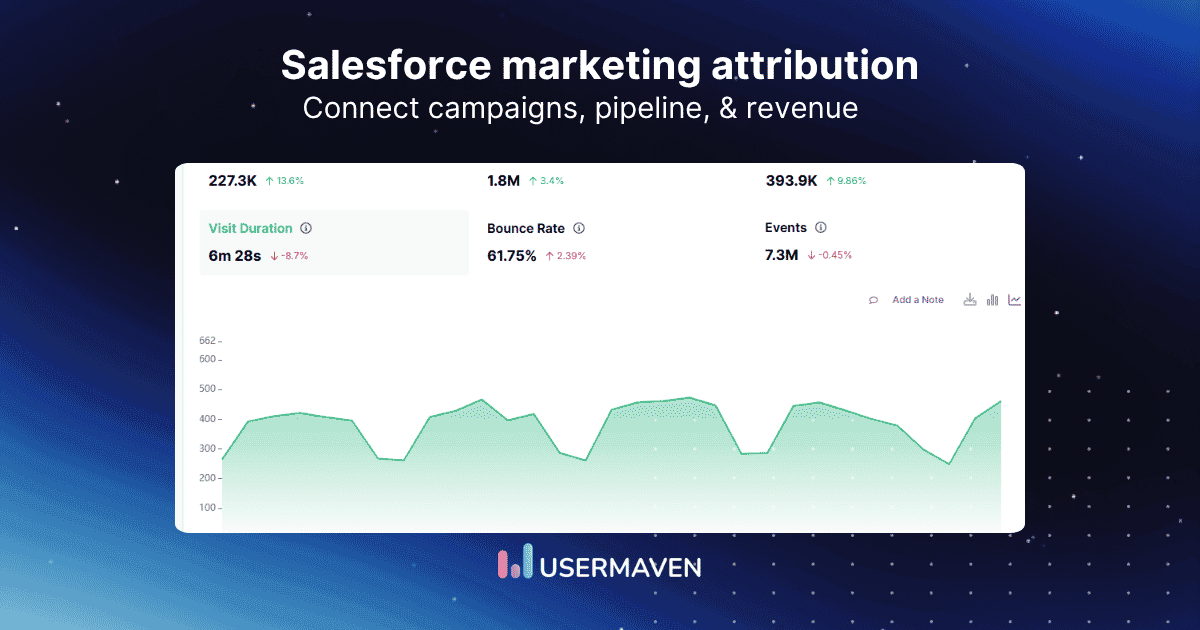
Those earlier interactions can shape the opportunity long before a Closed Won value appears.
This guide explains Salesforce Lead Source, Campaigns, Campaign Influence, attribution models, pipeline, and revenue reporting.
It also shows how Usermaven connects pre-lead acquisition and behavior with Salesforce opportunities so teams can judge marketing by commercial outcomes, not lead volume alone.
Key takeaways
Salesforce already supports attribution: Lead Source, Campaigns, Primary Campaign Source, Customizable Campaign Influence, and Marketing Intelligence can all connect marketing activity with commercial outcomes.
Campaign Influence goes beyond one source: Salesforce can associate several campaigns with an opportunity and assign revenue influence instead of relying only on a single lead-source field.
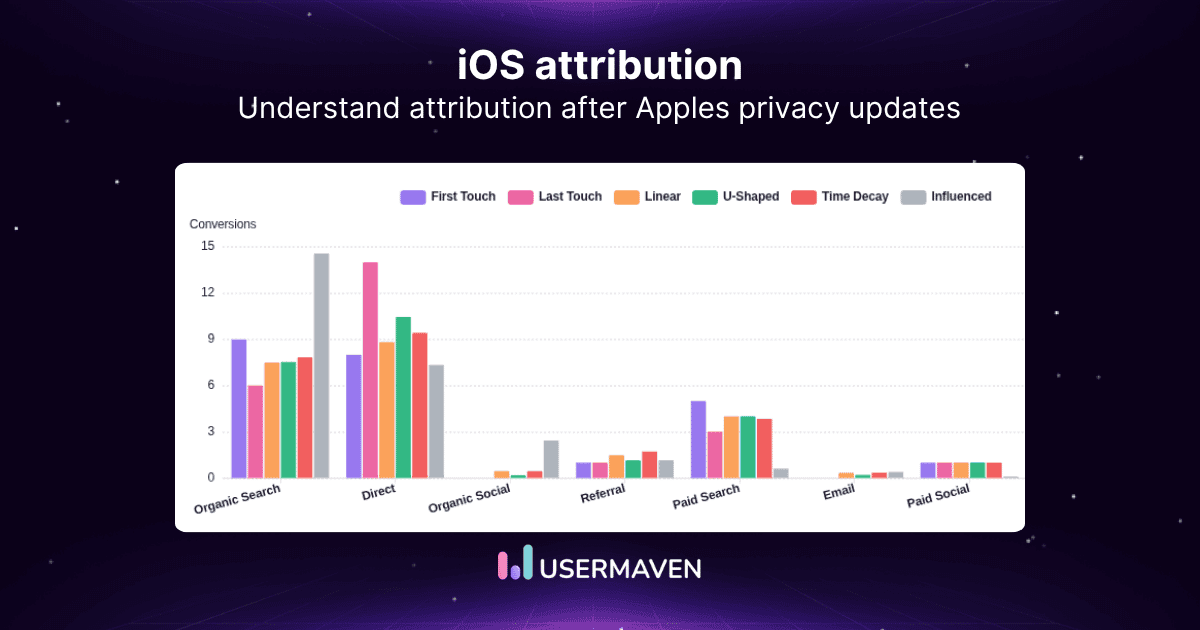
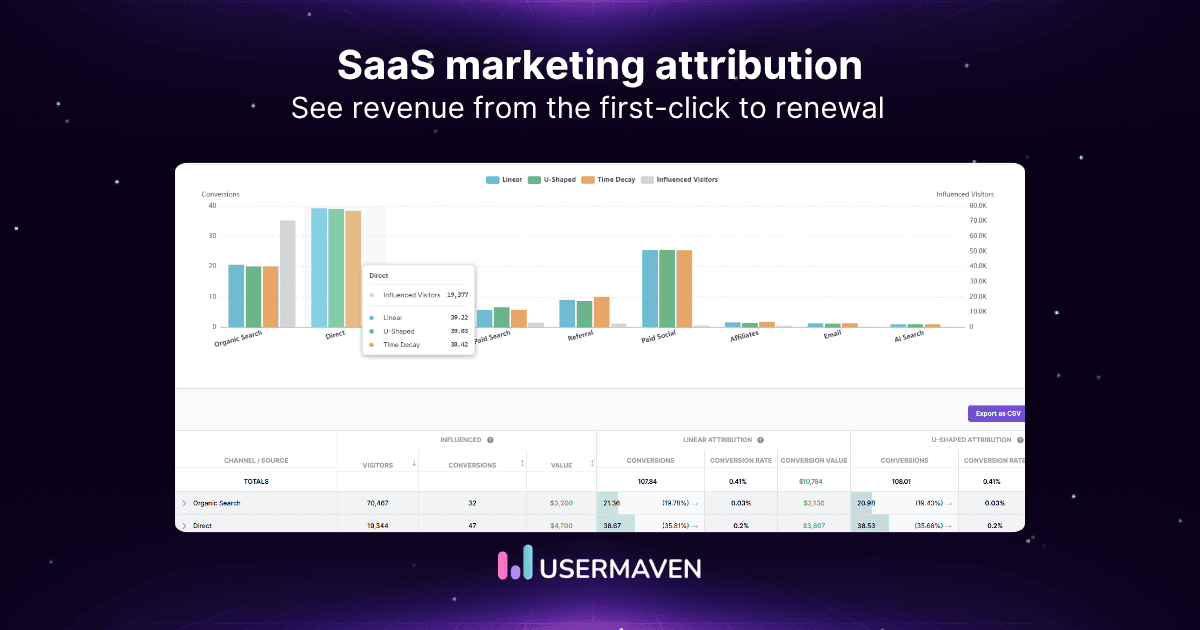
Attribution models answer different questions: First-touch, last-touch, linear, time-decay, U-shaped, custom, and funnel-based approaches shift how recorded credit is interpreted.
Pipeline matters more than raw lead volume: Opportunity creation, pipeline value, win rate, time to opportunity, sales velocity, and Closed Won revenue are often more useful than form counts for B2B teams.
The pre-CRM journey still matters: Anonymous acquisition, content consumption, repeat visits, product behavior, and intent signals can happen before Salesforce creates a known record.
Usermaven extends the CRM view: Usermaven can combine acquisition and behavioral data with Salesforce CRM outcomes, then validate the measurement chain before teams use it for attribution or AI analysis.
What is Salesforce marketing attribution?
Salesforce marketing attribution connects marketing campaigns and customer interactions with leads, opportunities, pipeline, and revenue recorded in Salesforce.
The goal is to understand which marketing activities contribute to commercial outcomes and how much credit each activity should receive.
In B2B marketing attribution, that connection is especially important because a prospect may interact with several campaigns, people, and channels before an opportunity is created. One stored source field can be useful, but it rarely represents the whole buying process.
Salesforce provides several native layers for this job: Lead Source, Campaigns and Campaign Members, Primary Campaign Source, Customizable Campaign Influence, and Marketing Intelligence.
Together, they cover simple origin reporting, campaign relationships, opportunity influence, revenue credit, and broader touch-based or funnel-based attribution.
How Salesforce attribution works
The native Salesforce data model connects marketing and sales through a chain such as Campaign → Campaign Member → Lead or Contact → Opportunity → Revenue. The exact attribution method determines which part of that chain receives credit.

Lead Source
Lead Source is the simplest layer. It records an origin such as paid search, organic search, referral, event, partner, or another business-defined value.
It is useful for high-level acquisition reporting because the field is easy to filter and summarize.
One source field cannot describe a multi-touch journey. A dedicated lead source tracking approach answers “where did this lead originate?”
Attribution asks a different question: which interactions influenced the later opportunity or revenue outcome?
Campaigns and Campaign Members
Salesforce Campaigns represent marketing initiatives such as webinars, events, email programs, paid campaigns, or coordinated launches. Campaign Members connect Leads and Contacts with those initiatives, creating the relationship Salesforce needs for more advanced campaign reporting.
This is where marketing campaign attribution becomes more useful than a source field. One prospect can belong to several campaigns, and one opportunity can therefore contain marketing influence from several parts of the buying journey.
Primary Campaign Source
Primary Campaign Source is the default opportunity-level model in Customizable Campaign Influence. Salesforce assigns 100% influence to the campaign stored in the opportunity’s Primary Campaign Source field.
That makes it easy to answer a simple commercial question: which campaign should receive primary credit for this opportunity? It is useful for straightforward reporting, but the result intentionally compresses a complex journey into one primary campaign.
Customizable Campaign Influence
Customizable Campaign Influence lets Salesforce associate several campaigns with an opportunity and assign revenue share using standard or custom models.
Influence records rely on Campaigns, Opportunities, and the Campaign Influence junction object. Salesforce explains the native mechanics in its Salesforce Campaign Influence documentation.
For example, an enterprise opportunity might involve a LinkedIn campaign, a webinar, a nurture sequence, and a demo campaign. Instead of assuming the webinar or demo did everything, Campaign Influence can recognize several eligible relationships around the opportunity.
That is the practical reason multi-touch attribution matters in Salesforce environments: the buying process may contain several marketing interactions before the CRM outcome exists.
Salesforce attribution methods at a glance
| Method | What it connects | Best question | Main output |
| Lead Source | Lead/contact to one source | Where did the lead originate? | Source-level leads |
| Primary Campaign Source | Opportunity to one primary campaign | Which campaign gets primary opportunity credit? | 100% primary influence |
| Campaign Influence | Opportunity to multiple campaigns | Which campaigns influenced pipeline? | Influence % / revenue share |
| Marketing Intelligence touch-based | Cross-channel touchpoints to conversion | How did interactions contribute? | Model-based conversion credit |
| Marketing Intelligence funnel-based | Ordered stages to progression | What influenced movement through the funnel? | Stage-based attribution |
Salesforce attribution models explained
Salesforce attribution is not one universal model. Marketing Intelligence supports First Touch, Last Touch, Linear, Time Decay, and U-shaped touch-based models, plus funnel-based attribution.
Salesforce documents those model families in its Marketing Intelligence attribution overview.
First-touch attribution
First-click attribution gives all eligible credit to the earliest recorded interaction. In a Salesforce context, it is useful when the business wants to know which campaign or channel first introduced opportunities that later became pipeline.
Last-touch attribution
Last-click attribution gives credit to the final eligible interaction before conversion. It can help identify closing-stage campaigns, but it may overvalue branded search, direct returns, or late-stage nurture in long B2B cycles.
Linear attribution
Linear attribution divides credit evenly across eligible touchpoints. It recognizes that several campaigns contributed, but it assumes each interaction had equal influence.
Time-decay attribution
Time-decay attribution gives more credit to interactions closer to conversion. This can be useful when late-stage content, events, or sales-oriented campaigns tend to influence opportunity creation strongly.
U-shaped attribution
U-shaped attribution emphasizes early discovery and lead creation while sharing the remaining credit across middle touches. It can suit B2B teams that care about both demand creation and the milestone that turned an anonymous visitor into a known lead.
Custom Campaign Influence
A custom attribution model is useful when Salesforce’s default revenue-credit logic does not match the way the business defines influence. Customizable Campaign Influence can support manually maintained percentages or automated rules through the API and Apex processes.
Funnel-based attribution
Funnel-based attribution changes the question from “which touchpoint gets credit?” to “which activity influenced movement through an ordered revenue process?”
That fits Salesforce well because the commercial journey already contains stages such as Lead → MQL → SQL → Opportunity → Closed Won.
For deeper model selection guidance, use the broader marketing attribution models guide rather than assuming that one model should control every Salesforce report.
Which Salesforce attribution model answers which question?
| Model | Credit Logic | Useful Salesforce question |
| First touch | 100% to earliest touch | What created initial demand? |
| Last touch | 100% to final eligible touch | What preceded conversion? |
| Linear | Equal across touches | Which campaigns contributed across the journey? |
| Time decay | More credit to recent touches | Which late-stage interactions influenced conversion? |
| U-shaped | More credit to first and lead-creation milestones | What created awareness and the known lead? |
| Custom influence | Business-defined percentages | How should our sales model define influence? |
| Funnel based | Credit around ordered stage progression | What moves prospects through CRM stages? |
How to set up Salesforce marketing attribution
Start with the business outcome, then work backward into the Salesforce relationships needed to explain it. The goal is not to enable every attribution feature at once, but to connect campaign, person, opportunity, and revenue data reliably.
If you are connecting Usermaven, follow the official Salesforce integration guide for authorization, field mapping, synchronization, and verification steps.

1. Define the conversion and revenue outcome
Start by deciding whether marketing should be evaluated on lead creation, qualified lead, opportunity creation, pipeline, Closed Won revenue, or another commercial stage.
A conversion funnel documents the ordered path so teams do not confuse an early form submission with the final business result.
For B2B teams, this definition should be shared with sales. If marketing optimizes for MQLs while leadership judges success on opportunities or bookings, the attribution system will create arguments even when the underlying data is technically correct.
2. Standardize Salesforce Campaigns
Campaign names, types, dates, statuses, and ownership should follow a consistent structure. A webinar, paid campaign, event, partner program, and nurture sequence should not be named differently every time a new manager creates one.
Consistency matters because Campaign Influence and downstream reporting can only be as clear as the campaign records they summarize. Establish a naming convention before scale makes cleanup expensive.
3. Maintain Campaign Members and opportunity relationships
Connect the Leads and Contacts who actually interacted with each Campaign, then make sure the relevant people are associated with opportunities. These relationships determine whether Salesforce can recognize a campaign as influential around an open opportunity.
In buying committees, this step deserves special attention. One account may contain several contacts with different roles, and a single primary contact rarely represents every marketing interaction that helped the deal progress.
4. Enable the attribution method you actually need
Use Lead Source for simple origin and Primary Campaign Source when one campaign should receive primary opportunity credit.
Use Customizable Campaign Influence for shared revenue credit, and Marketing Intelligence for broader touch-based or funnel-based attribution across channels.
If the organization is evaluating a wider attribution stack rather than only native Salesforce features, a comparison of marketing attribution tools can help clarify whether the need is CRM-native reporting, independent multi-touch measurement, behavioral analytics, or a combination.
5. Choose a lookback rule and model deliberately
Attribution models should define how long a campaign interaction remains eligible before conversion.
An attribution window that is too short can miss early demand creation, while one that is too long can keep weak historical touches eligible for too long.
Long enterprise sales cycles often need a different window from short transactional funnels. Document the rule so marketers know whether a missing campaign is a data-quality problem or simply outside the selected lookback period.
6. Connect acquisition and behavior before the CRM record
Salesforce can only attribute the data it has access to. Pre-lead context may include campaign parameters, page behavior, content engagement, and product actions.
Connect those signals through the measurement layer that collects them so the CRM journey does not begin only at the form.
This creates continuity from anonymous discovery into the known Salesforce record instead of starting the story at the form submission.
7. Validate with a controlled opportunity
Run one test journey from a tagged marketing visit through identification and opportunity creation. Verify the Campaign, Lead or Contact, opportunity association, amount, stage, and final revenue state. Then compare the Salesforce result with the acquisition and behavioral timeline.
A controlled test is easier to debug than an aggregate dashboard because the team knows exactly which campaign and opportunity should appear at every stage.
How to report Salesforce attribution
Attribution becomes useful when CRM relationships translate into reports that answer a business question.
Salesforce can expose influence at record and aggregate levels, but the reporting design should always make the attribution model and revenue basis visible.
Influenced opportunity reporting
Campaign Influence reports can connect campaign details with opportunity amount, stage, and revenue share. This is useful for questions such as which campaigns influence the most open pipeline, which programs appear around won opportunities, and where high-value deals are concentrated.
A broader campaign analytics approach can add spend, traffic, conversion, and channel context so a campaign is evaluated by both engagement and the Salesforce outcomes it eventually creates.
Compare pipeline and revenue, not just influence counts
Influenced-opportunity counts can mislead when one campaign touches many small deals and another contributes to fewer, larger opportunities.
Add opportunity value, pipeline stage, win rate, Closed Won revenue, and time to close before deciding which campaign deserves more budget.
Keep the model visible
A dashboard should state whether the report uses Primary Campaign Source, a custom influence model, first-touch, last-touch, or another method.
The challenges with attribution models grow when users see a precise revenue number but cannot tell which credit rules created it.
This transparency also makes disagreements easier to resolve. Two teams can look at the same opportunities under different models and get different campaign-credit totals without either report being mathematically wrong.
What Salesforce attribution can measure
The strongest Salesforce attribution programs move progressively deeper into the revenue funnel. Each stage changes the marketing question and the metric that should guide decisions.
A broader view of marketing attribution metrics helps teams connect source and campaign reporting with pipeline, CAC, ROAS, and attributed revenue instead of judging Salesforce performance from lead counts alone.
Lead creation
At the acquisition layer, compare lead volume by source or campaign, cost per lead when media spend is available, and lead quality by downstream Salesforce status.
These metrics identify channels that create demand, but they still describe an early stage of the revenue journey.
Opportunity creation
Opportunity metrics show whether marketing creates sales-ready demand. Compare lead-to-opportunity rate, opportunity creation rate, cost per opportunity, average opportunity value, and time to opportunity.
This is where sales tracking software concepts become relevant because sales progression, not form volume, starts to control the decision.
Pipeline
Pipeline by source, pipeline by campaign, influenced pipeline, opportunity amount, stage progression, and sales-cycle length show whether marketing is creating commercially meaningful demand. A channel with fewer leads can still win if those leads create larger opportunities and progress faster.
A useful reporting layer should make those relationships visible in a marketing attribution dashboard without hiding the model and CRM assumptions behind a single revenue number.
Revenue
Revenue attribution extends Salesforce measurement to Closed Won revenue, attributed revenue, revenue by campaign, revenue per lead, CAC, and ROAS where paid-media spend is connected.
Changing the attribution model can redistribute credited revenue, but it does not change the business’s actual total revenue.
Where Salesforce attribution gets harder
Salesforce contains the commercial outcomes marketing ultimately needs. The challenge is that the customer journey can begin before the CRM knows who the buyer is and can continue across systems that Salesforce does not collect by itself.
Anonymous activity happens before the CRM
A prospect may click a Google ad, read a comparison page, return through organic search, view pricing, and only then request a demo.
Salesforce becomes much stronger after identification, but the earlier acquisition and behavior history still matters when explaining why the opportunity exists.

Several channels can influence one opportunity
Enterprise buyers often move between paid search, LinkedIn, webinars, email, organic content, direct visits, and sales interactions. Cross-channel marketing attribution is therefore more useful than treating every channel as an isolated source of leads.
Multiple people influence one account
A champion may discover the product, an evaluator may attend a webinar, finance may review pricing, and an executive may approve the purchase.
Salesforce represents the commercial account, but marketing still needs the individual journeys that created and influenced that opportunity.
Marketing and product behavior may sit outside Salesforce
For SaaS and PLG companies, opportunity quality can depend on what users do after signup. Activation, feature adoption, repeated sessions, and expansion signals may explain why one lead progresses while another stalls.
A product analytics layer can capture those behaviors outside Salesforce and connect them with the CRM record for a fuller opportunity view.
Data quality changes the attribution result
Missing Campaign Members, inconsistent campaign names, incomplete opportunity-contact relationships, duplicate records, stale fields, or disconnected revenue can all distort attribution. A structured attribution checklist helps teams validate the chain before debating which model deserves more credit.
This is also a governance problem. Consistent ownership, field definitions, identity rules, and campaign standards should follow data governance best practices so attribution does not change simply because different teams entered CRM data differently.
When is native Salesforce attribution enough?
Not every Salesforce team needs another attribution platform.
Native Salesforce can be sufficient when campaigns are well maintained, meaningful interactions are represented in the CRM, and the main need is campaign-to-opportunity or campaign-to-revenue reporting.
Salesforce alone can work well when
Marketing programs are consistently represented as Salesforce Campaigns.
Campaign Members and opportunity relationships are maintained reliably.
The team mainly needs Lead Source, Primary Campaign Source, or Campaign Influence reporting.
Website and product behavior are not central to the attribution question.
Pipeline and revenue reporting can be explained from CRM data without reconstructing the earlier anonymous journey.
Add a broader attribution layer when
A broader measurement layer becomes more useful when the customer journey begins anonymously, crosses several paid and organic channels, includes important website or product behavior, or needs to connect CRM outcomes with pre-lead activity that Salesforce did not originally capture.
Teams comparing those options can use a lead attribution software evaluation framework to decide whether they primarily need CRM-native reporting, multi-touch attribution, account-level journeys, call tracking, or a wider behavioral and revenue view.
Salesforce should remain the system of record for sales outcomes, while the attribution layer adds acquisition, behavior, identity, and measurement context around those records.
That distinction supports a cleaner single source of truth: CRM fields stay authoritative while the wider analytics layer reconciles them with marketing and product evidence.
How Usermaven extends Salesforce attribution
Usermaven does not replace Salesforce as the CRM. It adds the acquisition, behavioral, journey, attribution, and measurement-health context around Salesforce records so teams can follow the path from first visit to opportunity and revenue.

Add acquisition context
Google, Meta, LinkedIn, Bing, organic search, referrals, and campaign data can be analyzed before the Salesforce record exists. That makes marketing attribution CRM integration useful when the business wants to compare CRM outcomes against the marketing interactions that preceded them.
Add pre-lead behavior
Event tracking can capture meaningful actions such as pricing-page visits, case-study views, demo clicks, signups, activation, product milestones, or other intent signals. Those behaviors make the journey more informative than a Salesforce Lead Source field alone.
Connect anonymous and known journeys
When a visitor becomes known, the Contacts Hub can show Salesforce-enriched attributes beside the person’s earlier Usermaven activity. Matching is primarily based on email when the same identity is available in both systems.
Follow the complete customer journey
Customer journey analytics software makes the sequence inspectable at customer level: LinkedIn ad → blog → return visit → pricing → demo → Salesforce opportunity → Closed Won. That helps teams explain the journey behind an aggregate pipeline report.
Analyze funnel progression
Funnel analytics software can measure progression from visitor to demo, known lead, opportunity, or another selected milestone. Teams can compare conversion rate, lead-to-opportunity rate, opportunity-to-win rate, drop-off, and time between stages.
Connect Salesforce pipeline and revenue
Once connected, Usermaven combines its behavioral data with Salesforce CRM context such as contacts, accounts, opportunities, and deal information. Matched user and company profiles can then carry both pre-lead activity and downstream Salesforce outcomes.
The result is a measurement path that connects campaign activity and website behavior with Salesforce opportunities and revenue reports.
B2B teams can then compare sources by opportunity value, sales-cycle progression, Closed Won revenue, and the behavior that happened before the CRM outcome.
Salesforce attribution with Usermaven in practice
The screenshots below show the Salesforce connection inside Usermaven, from choosing the CRM integration to confirming that the organization is synced and ready for attribution analysis.
Choose Salesforce

In Workspace Settings → Integrations, Salesforce appears beside HubSpot under CRM. Connect Salesforce to bring contacts, accounts, opportunities, and pipeline activity into the same workspace as marketing and behavioral data.
Verify the sync

After authorization, the integration page shows the connected org, token status, sync status, field mapping, and actions such as Sync Now or Reconnect. Check this before using Salesforce data in attribution reports.
Trace revenue
A $40,000 opportunity can now be viewed alongside the earlier journey: Google Ads → landing page → pricing → demo → known lead → Salesforce opportunity → Closed Won. The CRM outcome no longer sits apart from the marketing path.
That lets teams ask which campaign created the opportunity, what happened before the demo, how long lead-to-opportunity took, and which journeys produced the highest-value Closed Won deals.
What if you use HubSpot instead?
Salesforce is not the only CRM that can provide downstream commercial context. Usermaven also integrates with HubSpot, allowing acquisition and behavioral activity to be analyzed alongside contacts, companies, deals, lifecycle stages, calls, meetings, pipeline, and revenue.
The same measurement principle applies: acquisition → behavior → known lead → CRM → deal → Closed Won. The dedicated guide to why HubSpot users need Usermaven explains that workflow for teams using HubSpot as the system of record.
Common Salesforce attribution mistakes
Salesforce attribution becomes less reliable when CRM fields, campaign relationships, opportunity contacts, and external journey data are incomplete.
Treating Lead Source as full attribution
Lead Source is useful for origin reporting, but it does not preserve every interaction that influenced an opportunity. Teams should separate the source question from the broader influence question instead of expecting one CRM field to answer both.
Ignoring Campaign Members
Campaign Influence relies on relationships between campaigns and people involved in opportunities. If Campaign Members are incomplete, a legitimate marketing interaction may never become eligible for influence reporting.
Poor opportunity-contact relationships
When the people involved in a deal are not associated consistently with the opportunity, campaign influence becomes harder to interpret. This is particularly costly in buying committees where several contacts can represent one account.
Measuring leads instead of pipeline
A campaign that generates 100 low-quality leads can look stronger than a campaign that generates 30 opportunities with high win rates. Salesforce gives teams the commercial data needed to move the decision deeper into the funnel.
Choosing a model before defining the question
First-touch, last-touch, linear, time-decay, and custom influence models redistribute credit differently. The right model depends on whether the question is demand creation, closing influence, pipeline progression, or revenue contribution.
Ignoring data outside Salesforce
Website engagement, product activity, anonymous sessions, advertising identifiers, and content journeys may sit outside the CRM. If those signals influence the sales process, leaving them disconnected creates a narrower attribution story than the business actually experienced.
How to improve Salesforce attribution accuracy
Improve the measurement foundation before adding more models. Sophisticated influence logic cannot repair missing campaign relationships, weak identity matching, or stale integrations.
Clean campaigns
Standardize campaign names, types, dates, and ownership. Consistent records make influenced-pipeline and revenue reports easier to compare over time.
Maintain members
Keep Campaign Members accurate for the Leads and Contacts who actually interacted with marketing. Missing relationships can remove legitimate influence from later opportunity reporting.
Verify relationships
Check opportunity-contact relationships before allocating revenue credit. This matters most in B2B accounts where several people can influence one deal.
Define outcomes
Agree on the commercial milestone first: qualified lead, opportunity, pipeline, Closed Won, or another outcome. Attribution becomes unstable when marketing and sales optimize different definitions.
Preserve context
Keep acquisition and behavioral context from the anonymous visit through identification. The earlier journey should not disappear simply because Salesforce creates the CRM record later.
Connect revenue
Append opportunity value, stage, and Closed Won revenue so campaign credit can be checked against commercial truth. Review models as decision frameworks rather than competing versions of reality.
Test changes
Run controlled journeys after CRM, tracking, or campaign changes. Tracking QA automation can make those checks repeatable as the implementation grows.
Monitor health
Usermaven’s Measurement Trust Center evaluates Collection, Identity, Integrations, Delivery, and Reliability so teams can catch measurement problems before a Salesforce attribution report changes budget.
See Usermaven in action
Book a free demo and discover how powerful analytics can grow your business.
Analyze Salesforce attribution with AI
Suppose a Salesforce report says LinkedIn influenced $400,000 in pipeline. The useful AI question is not simply “is LinkedIn good?”
Ask what happened before those opportunities existed, how they progressed, and which patterns distinguish won opportunities from stalled ones.
Investigate opportunity quality
Maven AI can help teams explore Salesforce-enriched marketing questions such as:
Which campaigns created the highest-value Salesforce opportunities?
Which source has strong lead volume but weak opportunity conversion?
Which campaigns have the fastest lead-to-opportunity time?
What website behavior appears before Closed Won opportunities?
Which source creates the most pipeline per lead?
Which campaigns generate opportunities but low win rates?
Explore Salesforce-enriched data through MCP
Usermaven MCP connects authorized Usermaven analytics with compatible AI clients such as ChatGPT, Claude, Cursor, and Codex.
A revenue team could ask to compare opportunity win rate by acquisition source or find journeys before Salesforce opportunities over $50,000 without rebuilding every report manually.
Separate attribution from causality
AI can summarize patterns, compare journeys, and surface anomalies, but attribution credit does not automatically prove incremental causal impact.
Humans still need to define the conversion, validate CRM relationships, understand sales-process changes, and choose the model that fits the business question.
Salesforce attribution best practices
The strongest Salesforce attribution setup is disciplined before it is sophisticated. Use these principles to keep the system useful as channels, campaigns, and CRM complexity grow.
1. Define the outcome before choosing the model: Decide whether the report should optimize lead creation, opportunity creation, pipeline, Closed Won revenue, or another business result.
2. Treat Salesforce as commercial truth: Use opportunity stage, amount, win status, and revenue records to validate whether marketing-created leads actually became valuable.
3. Preserve pre-lead context: Do not let the customer journey begin only when Salesforce creates the record. Earlier acquisition and behavior can explain later opportunity quality.
4. Keep Campaign data clean: Consistent Campaign naming, membership, dates, types, and opportunity relationships make influence reporting easier to trust.
5. Measure pipeline, not only leads: Lead volume is useful operationally, but opportunity rate, pipeline value, win rate, and Closed Won revenue usually provide a better B2B budget signal.
6. Use several models for different questions: First-touch can explain discovery while later-touch or multi-touch models can explain progression. One model does not need to win every debate.
7. Validate before reallocating budget: Tracking, identity, CRM associations, and integration health should be checked before a surprising attribution result changes spend.
For a broader implementation framework, see how to measure marketing attribution. It is useful when teams need to align conversion definitions, data collection, attribution logic, reporting, and review cadence across more than Salesforce alone.
Final verdict
Salesforce provides meaningful native marketing attribution through Lead Source, Campaigns, Primary Campaign Source, Customizable Campaign Influence, opportunities, and revenue data.
It should be treated as a capable CRM attribution system, not merely a destination for leads.
The fuller measurement challenge is connecting what happened before the CRM record existed with what happened after it became an opportunity.
Acquisition context, website and product behavior, identity, journey continuity, pipeline, and Closed Won revenue all contribute to that explanation.
For teams that want that wider view, Usermaven can connect Salesforce outcomes with acquisition and behavior in one marketing attribution software workflow while validating the underlying measurement before teams use it for attribution, reporting, or AI analysis.
Ready to see Usermaven in action? Explore the platform or book a demo for a closer look.
Unlock insights that drive growth
FAQs
1. What is Salesforce marketing attribution?
Salesforce marketing attribution connects marketing campaigns and interactions with Leads, Contacts, Opportunities, pipeline, and revenue. Native approaches include Lead Source, Primary Campaign Source, Customizable Campaign Influence, and Marketing Intelligence attribution.
2. Does Salesforce have marketing attribution?
Yes. Salesforce supports simple source reporting, Campaigns and Campaign Members, opportunity-level Primary Campaign Source, Customizable Campaign Influence, and Marketing Intelligence touch-based and funnel-based attribution.
3. What is Campaign Influence in Salesforce?
Campaign Influence connects Salesforce Campaigns with Opportunities and can assign influence or revenue share to campaigns that contributed to the opportunity. Customizable Campaign Influence supports standard and custom models.
4. What is Primary Campaign Source in Salesforce?
Primary Campaign Source is the default Campaign Influence model that gives 100% influence to the campaign stored in the opportunity’s Primary Campaign Source field.
5. Which attribution models does Salesforce support?
Salesforce Marketing Intelligence supports First Touch, Last Touch, Linear, Time Decay, and U-shaped touch-based models. Funnel-based attribution supports ordered progression through defined stages, while Customizable Campaign Influence can support business-specific influence models.
6. Can Salesforce do multi-touch attribution?
Yes. Customizable Campaign Influence can associate multiple campaigns with opportunities, and Marketing Intelligence supports touch-based multi-touch attribution across marketing interactions.
Updated

Written by
Junaid Ahmed
Content Writer & Digital Marketer
Junaid Ahmed is a content and copywriter with 3+ years of experience creating research-driven content across SaaS, B2B, ecommerce, and digital marketing. He specializes in turning complex topics into clear, practical content that helps marketers better understand their challenges, evaluate solutions, and make informed decisions. His work spans educational content, industry insights, and actionable marketing guides.
All articles by Junaid →