Every product launch tells a story filled with milestones, challenges, and opportunities. But without the right insights, it’s hard to know if your story is a bestseller or missing key chapters. That’s where product launch analytics steps in – turning raw data into actionable insights about what’s working and what needs improvement.
With tools like Usermaven in your corner, analyzing your launch becomes straightforward and impactful, helping you focus on what matters most. Ready to explore how data can transform your launches into success stories? Let’s dive in!

What is product launch analytics, and why is it important?
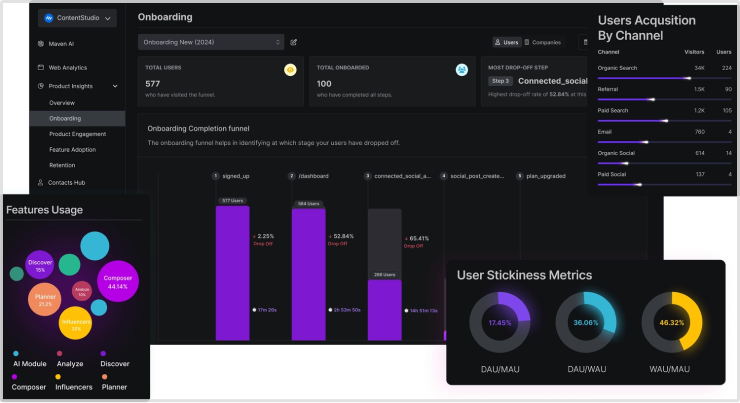
Product launch analytics is the process of gathering, analyzing, and using data to understand how your product is performing after its launch. It tells you which features your users love, where they face hurdles, and how your marketing efforts are doing. Why is it important? Because guessing doesn’t work when it comes to launches – data gives you clarity and confidence to refine your strategies and deliver what your audience truly needs.
How does product launch analytics work?
It’s simpler than it sounds! When you launch a product, product launch analytics tracks important metrics like user engagement, sales, feedback, and marketing performance. This data is then processed and displayed in an easy-to-digest way, helping you see what’s working and what’s not. For example, it can show whether your users are completing a signup flow or abandoning it halfway, giving you a roadmap to improve the experience.
What makes it essential for a successful launch?
Launching a product without product analytics can leave you unaware of critical performance insights. Analytics help identify the big wins while uncovering areas that need improvement. They provide clarity on what features users engage with the most and highlight areas that require attention. This data-driven approach ensures you make informed decisions, refine strategies, and continuously deliver value to your audience, keeping them satisfied from day one.
Common challenges teams face without analytics
Without analytics, teams often fly blind. They rely on hunches instead of hard facts, which can lead to missed opportunities and wasted resources. Common challenges include:
- Lack of clarity: Is your product doing well, or are users struggling?
- Missed trends: Without data, spotting emerging patterns is almost impossible.
- Inefficient decision-making: You may focus on things that don’t matter while ignoring what does.
Analytics take the guesswork out of your launch, making every decision informed and impactful.
Power up your SaaS
with perfect product analytics
Key metrics for effective product launch analytics
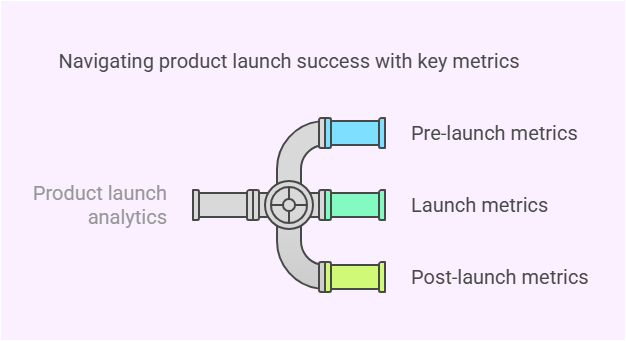
Effective product launch analytics helps you identify what’s working and where to focus your efforts. Metrics such as activation rate, landing page performance, and feature engagement are essential to gauge the success of your launch. These key metrics allow you to measure interest, user adoption, and long-term product value, ensuring you’re making data-driven decisions throughout the process.
Pre-launch metrics
Pre-launch metrics give you a clear indication of your product’s potential and audience interest. By tracking the early signs, you can refine your strategy and make adjustments before your official launch.
How can you gauge interest before launch?
Monitor metrics like sign-ups, social media interactions, and pre-launch campaign engagement to assess the level of interest. These metrics give you an early understanding of how excited your audience is and if your marketing efforts are resonating.
For launch teams that need to connect campaign activity with signups, activation, adoption, and sales outcomes, Usermaven works as performance attribution software that shows which launch channels create real momentum, not just early traffic.
Why is beta feedback critical for success?
Beta feedback provides real-world insights, allowing you to fine-tune your product and fix potential issues before launch. It helps ensure that your product meets users’ expectations and works smoothly on day one.
What role do landing page metrics play?
Landing page metrics, such as conversion rate and visitor-to-sign-up ratio, help you measure how well your pre-launch content is converting visitors into potential users. A high conversion rate signals that your product resonates with your audience.
Launch metrics
Launch metrics help you understand the initial response and user engagement as soon as your product goes live. These metrics are vital in determining how well your product is being received and if users are quickly adopting it.
What is the activation rate, and why is it vital?
The activation rate measures how quickly new users engage with the core features of your product. A high activation rate means that users see value quickly, which increases the likelihood of long-term retention.
How can time-to-value influence retention?
Time-to-value measures how quickly users experience the benefits of your product. A shorter time-to-value means users are more likely to stay engaged and continue using your product, boosting long-term retention.
What does user adoption reveal about your product?
User adoption shows how many people are actively using your product after they’ve signed up. High adoption indicates that your product is providing real value, while low adoption signals the need for improvements.
Post-launch metrics
Post-launch metrics, including product usage analytics, allow you to track user engagement and satisfaction over time, helping you assess long-term success and guide future iterations of your product.
How do retention rates reflect long-term value?
Retention rates measure how many users continue using your product after the initial launch. High retention shows that users find value in your product, while low retention suggests areas for improvement.
Why is feature engagement a powerful indicator?
Feature engagement helps identify which product features are most popular and frequently used. Analyzing feature engagement allows you to refine and prioritize features that users love and improve those that aren’t performing well.
What can customer satisfaction scores teach you?
Customer satisfaction scores provide direct feedback on user experience, showing you where your product excels and where it needs improvement. High satisfaction scores indicate a strong product-market fit, while low scores point to areas for refinement.
Power up your SaaS
with perfect product analytics
How to build a product launch analytics framework
Building a product launch analytics framework means setting up the right structure to track, measure, and adjust your launch efforts. The key to success is defining clear goals, choosing tools that match your launch KPIs, and constantly monitoring your performance to improve. A solid framework helps ensure that your launch stays on course and that every decision is based on data-driven insights.
What are SMART goals, and how do they guide analytics?
SMART goals bring clarity and direction to your product launch. SMART stands for Specific, Measurable, Achievable, Relevant, and Time-bound. Setting these goals helps you focus on what matters most, whether it’s increasing user sign-ups or improving engagement. By defining what success looks like and when you want to achieve it, SMART goals give you something tangible to measure and guide your analytics decisions.
How do you select the right analytics tools for your launch?
Choosing the right analytics setup is crucial for tracking your launch effectively. Look for tools that are simple, reliable, and aligned with your goals. You’ll want something that provides valuable insights without overcomplicating things. Whether it’s measuring user behavior, engagement, or conversion rates, selecting tools that offer real-time data and clear reports will help you make informed decisions during your launch. Usermaven is designed to provide just that, helping you track everything from engagement to conversions with ease and accuracy so you can focus on what matters most: making your launch a success.
How can Usermaven enhance your product launch analytics?
Usermaven is a comprehensive analytics tool designed to support you in every stage of your product launch. Whether you’re preparing for launch, measuring success, or refining your strategy post-launch, Usermaven provides key features that ensure you make data-driven decisions with confidence.
Real-time analytics
With Usermaven, you can track real-time user behavior during your launch. This allows you to monitor immediate responses, user engagement, and adoption rates so you can quickly pivot or optimize your strategies if needed.
User journeys
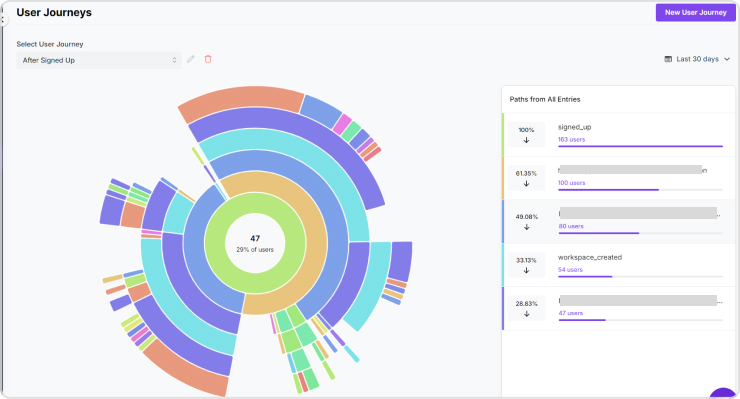
Usermaven’s advanced user journeys feature helps you visualize how users interact with your product from start to finish. By understanding each touchpoint, you can uncover areas of friction and optimize the flow to enhance user satisfaction and retention.
Event tracking
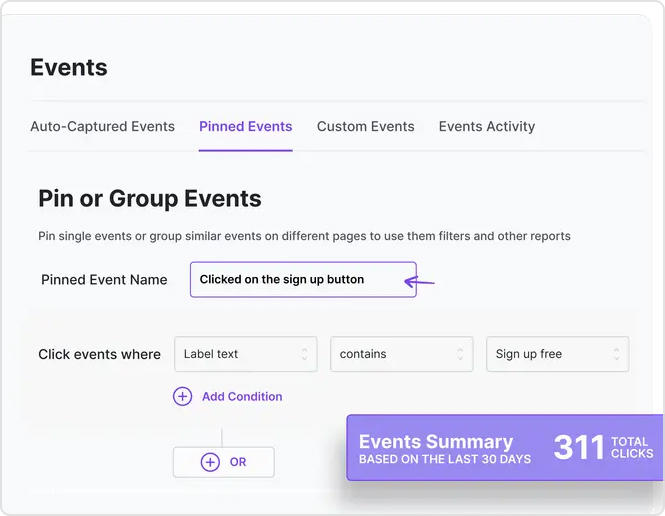
Usermaven allows you to track specific events, such as feature interactions or sign-up completions, which provides granular insights into how users are engaging with your product. This helps you focus on what’s working and identify areas that need improvement.
Segmentation and cohort analysis
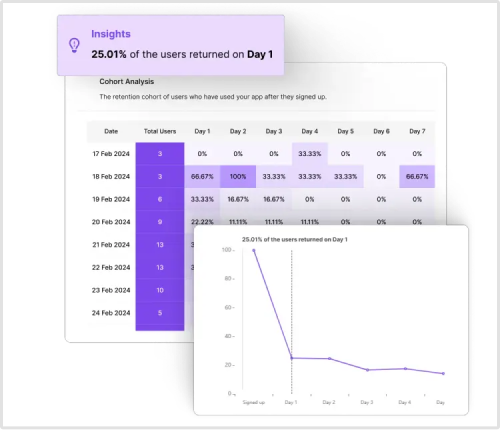
Usermaven enables you to segment users based on various criteria, such as demographics, behavior, and acquisition channels. This allows for a deeper analysis of different user groups, helping you understand which audience segments are most engaged and how they contribute to launch success.
Custom dashboards and reporting
With customizable dashboards, you can tailor your reports to focus on the metrics that matter most to your launch. Usermaven makes it easy to access and interpret data, giving you a clear overview of your product’s performance.
Trends (A/B testing)
Usermaven’s Trends feature allows you to run A/B tests on different versions of your product or messaging during the launch phase. By comparing user responses to variations, you can optimize your product offering for maximum impact and ensure you’re targeting the right audience with the best version.
Retention and engagement metrics
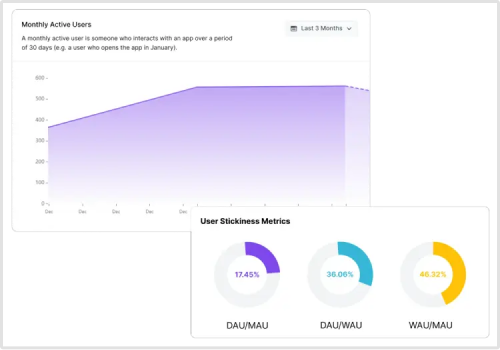
Long-term success relies on user retention. Usermaven provides in-depth retention and engagement metrics, allowing you to see how users continue to interact with your product after the initial launch. This helps you make adjustments to improve long-term user loyalty.
Integration with other tools
Usermaven easily integrates with your existing stack, bringing together data from various sources into one unified platform. This makes it simple to see how different channels and strategies are contributing to the overall success of your launch.
Usermaven’s suite of features is tailored to help you make informed decisions and refine your product launch strategies, ensuring that every launch is as successful as possible.
Best practices for product launch analytics
To make the most of your product launch analytics, it’s essential to follow a few key best practices. These practices not only help you gather meaningful data but also ensure you can act on those insights in the best way possible.
How do you ensure accurate data collection?
Accurate data is the foundation of successful product launch analytics. To ensure your data is reliable, follow these steps:
Use the right tracking setup: Align your tools with your launch goals, ensuring they track relevant metrics like sign-ups, engagement, and retention.
- Set clear KPIs: Determine key performance indicators before your launch and make sure your tools are set up to measure them effectively.
- Automate data collection: Reduce manual errors and automate tracking tests to keep launch data accurate in real time.
Why is continuous monitoring important post-launch?
The excitement of a product launch doesn’t end when the curtain falls. Post-launch monitoring is just as crucial for the following reasons:
- Track user behavior shifts: User interactions can change quickly after launch. Continuous monitoring helps you spot issues early and make necessary adjustments.
- Measure ongoing engagement: Keep an eye on metrics like user retention and feature usage to ensure you’re meeting customer expectations.
- Adapt strategies: By continuously monitoring your product’s performance, you can adjust strategies to maximize growth and engagement.
What are common pitfalls to avoid?
When diving into product launch analytics, watch out for these common pitfalls:
- Focusing on vanity metrics: Metrics like page visits or sign-ups are important, but they don’t always reflect the real value or long-term success of your product.
- Ignoring user feedback: While analytics show trends, listening to your users directly gives you deeper insight into what’s really resonating with your audience.
- Delaying action: Don’t wait too long to act on insights. The faster you can make data-driven decisions, the better you can refine your strategies and improve results.
Conclusion
Product launch analytics are essential for ensuring a successful product launch. By tracking key metrics like user engagement, activation rates, and retention, you gain valuable insights into what’s working and where improvements are needed. These insights allow you to adapt strategies, refine your product, and stay ahead of the competition. With product analytics, journeys, segments, dashboards, and launch performance insights in Usermaven, teams can optimize each launch and drive long-term success. With the right analytics, every launch becomes an opportunity to learn, grow, and deliver a product your audience truly values.
Power up your SaaS
with perfect product analytics
FAQs about product launch analytics
1. What is the role of product launch analytics in the decision-making process?
Product launch analytics helps in decision-making by providing data-driven insights. It enables you to determine which product features resonate with users, what’s not working, and how to adjust your strategy based on real-time feedback.
2. How can product launch analytics improve cross-functional collaboration?
Product launch analytics breaks down silos between teams. By sharing data across marketing, sales, and product teams, everyone can align on what’s working and make decisions based on the same data, leading to better product iterations and launches.
3. How do I integrate product launch analytics into my existing workflow?
Integrating product launch analytics into your workflow involves setting up automated tracking systems, choosing the right metrics, and syncing your analytics tools with your product management and marketing platforms for seamless data flow.
4. What are the potential challenges of using product launch analytics?
Challenges include data overload, improper metric selection, or a lack of integration with existing tools. Ensuring proper setup and focusing on key performance indicators can help overcome these obstacles and streamline the analytics process.
5. How can product launch analytics support product iteration?
Product launch analytics allows you to collect user feedback and performance data, making it easier to prioritize feature improvements and bug fixes. It ensures that updates are aligned with user needs and preferences, helping refine your product continuously.
6. How do I track user engagement during a product launch?
Updated

Written by
Adeel Khan
Growth Marketing Expert
Adeel Khan is a full-stack SaaS marketer with 10+ years of experience in content marketing, paid advertising, analytics, and conversion rate optimization. He shares practical insights and strategies drawn from hands-on experience, helping B2B SaaS marketers improve performance and make better marketing decisions.
All articles by Adeel →