Most attribution tools now claim to use AI. For some, that means machine learning models that assign credit across touchpoints. For others, it means an assistant that answers questions in plain language, or agents that watch your data and suggest budget changes.
This guide compares 12 AI marketing attribution tools on those capabilities, along with pricing, best fit and limitations. If you are new to the topic, start with how AI-driven marketing attribution works, then use this list to build your shortlist.
Key takeaways
- AI marketing attribution tools use machine learning, natural-language assistants, agents and MCP connections to explain which channels drive revenue.
- Usermaven, HockeyStack, Dreamdata and Factors.ai suit B2B teams, while Triple Whale, Northbeam and Wicked Reports focus on ecommerce.
- Cometly, Hyros and Ruler Analytics serve performance marketers and lead-generation businesses.
- Pricing varies widely, from free plans to custom enterprise contracts, and many vendors quote only after a demo.
- AI output is only as good as your tracking, so data quality and identity resolution matter more than the AI label.
Top 3 AI marketing attribution tools
Short on time? These three cover the most common needs.
- Usermaven. Best overall for B2B SaaS, ecommerce and agencies, with attribution supported by Maven AI, Maven AI Agents, MCP and customer-behavior analytics.
- Dreamdata. Best for B2B account journeys, with an AI Analytics Agent and a free plan to start.
- Triple Whale. Best for Shopify and DTC brands, with Moby AI for analysis and automations.
Best AI marketing attribution tools at a glance
Use this table to compare the 12 tools quickly. Pricing reflects what each vendor published at the time of writing and may change.
| Tool | Best for | AI capabilities | Starting price |
|---|---|---|---|
| 1. Usermaven | B2B SaaS, ecommerce, agencies | Maven AI, Maven AI Agents, MCP | Custom quote |
| 2. HockeyStack | B2B revenue and GTM teams | Odin AI assistant | Custom quote |
| 3. Dreamdata | B2B marketing teams | AI Analytics Agent, AI journeys, MCP | Free plan, paid plans custom |
| 4. Factors.ai | B2B ABM teams | Scout agents, MCP, predictive scoring | $199/month (Lite) |
| 5. Cometly | Performance marketers | Cometly Agent, AI Ads Manager, MCP | Usage-based |
| 6. Triple Whale | Shopify and DTC brands | Moby AI, Moby Specialists, MCP | Free plan, paid plans by GMV |
| 7. Northbeam | Ecommerce brands with large ad spend | Apex, MCP, MMM Plus | $1,500/month |
| 8. Ruler Analytics | Lead generation and call tracking | AI Analyst and Media Planner agent | £199/month |
| 9. Wicked Reports | Ecommerce and subscription brands | 5 Forces AI, MCP | $499/month |
| 10. Hyros | Info products, calls and high-ticket offers | AI tracking, AI analyst, MCP | Custom quote |
| 11. Rockerbox | Enterprise multichannel brands | Statistical MTA, MMM, incrementality | Custom quote |
| 12. Fibbler | LinkedIn-led B2B advertisers | Account-level ad engagement, MCP | $89/month |
What is AI marketing attribution?
AI marketing attribution uses machine learning and AI assistants to work out which marketing touchpoints influence conversions and revenue. Instead of fixed rules, such as giving all credit to the last click, models learn from your conversion paths to weight each channel.
Rule-based marketing attribution models are still useful for comparison. AI adds pattern detection across large datasets, faster answers to ad hoc questions and automated recommendations about where to spend next.
How AI improves marketing attribution
AI shows up in attribution tools in four main ways. Most vendors focus on one or two of them, so it helps to know which matters most for your team.
- Machine learning models. Data-driven attribution assigns credit based on observed paths rather than fixed rules.
- Natural-language assistants. You ask questions such as which campaigns drove pipeline last quarter and get an answer without building a report.
- AI agents. Agents monitor performance, flag anomalies and suggest budget changes on their own.
- MCP connections. MCP servers let ChatGPT, Claude or Cursor query your attribution data directly.
How we evaluated these tools
We reviewed each vendor’s website, pricing page and product documentation. Every tool was judged on the same criteria.
Customer feedback below paraphrases selected public G2 and Trustpilot reviews checked on November 27, 2026. These are individual experiences, including some incentivized reviews, rather than product tests. Review dates are shown because older feedback may not reflect the current release.
- AI capabilities. Machine learning models, assistants, agents and MCP access.
- Attribution depth. Multi-touch models, journey views, revenue and CRM connections.
- Data foundation. First-party tracking, identity resolution and cookieless options.
- Fit. Whether the tool is built for B2B, ecommerce, lead generation or enterprise.
- Pricing transparency. Whether plans and starting prices are published.
1. Usermaven
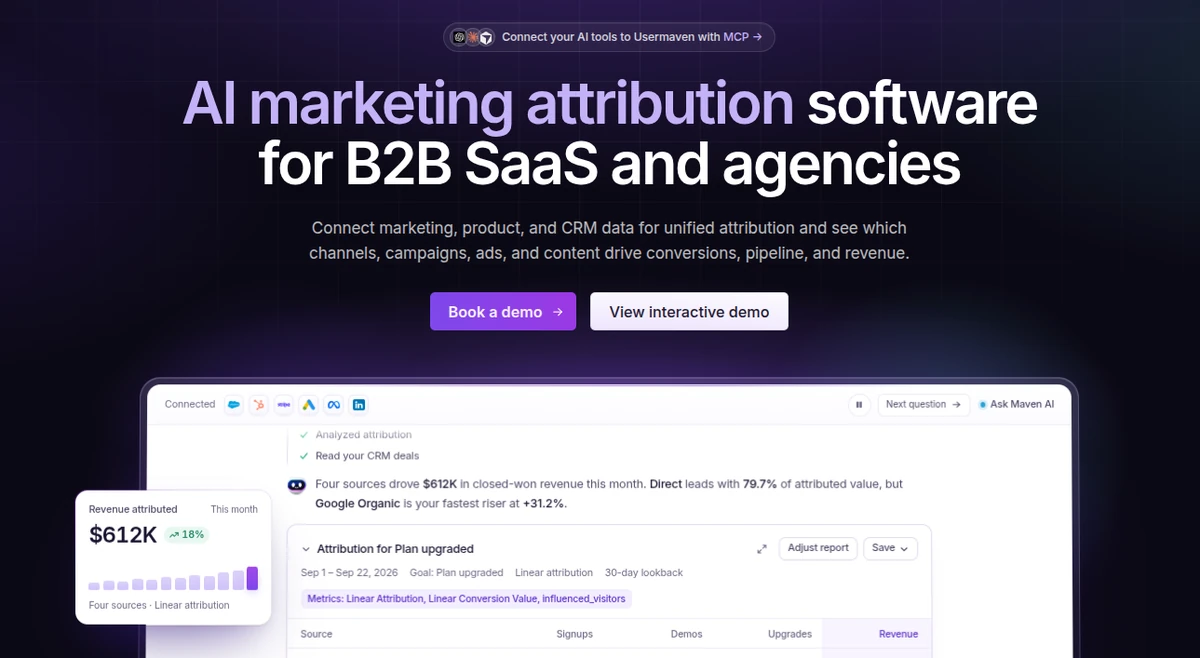
Usermaven is an AI-powered marketing attribution platform for B2B SaaS companies, ecommerce brands, and agencies. It connects marketing touchpoints to conversions, pipeline, and revenue, helping teams understand which channels, campaigns, and ads drive business results.
Its attribution capabilities are supported by powerful features including Maven AI, Maven AI Agents, website analytics, product analytics, funnels, and user journeys. These features help teams investigate the customer behavior behind campaign performance in the same platform.
Key features
- Paid ads and revenue attribution: Connect ad interactions and other marketing touchpoints to conversions, pipeline, and revenue, then compare attribution models to understand how each channel contributes.
- Maven AI: Ask questions about campaign performance and customer behavior in plain English, and turn the answers into charts, reports, or dashboards without manually assembling every view.
- Maven AI Agents: Schedule recurring investigations into campaign performance, growth, or funnel health. Review the findings in Usermaven or receive them through email and Slack.
- MCP connections: Bring Usermaven data into compatible AI tools such as ChatGPT, Claude, and Cursor, so attribution analysis can fit into your team’s existing AI workflow.
- Analytics and journey insights: Use website analytics, product analytics, funnels, segments, and retention analysis as supporting features to investigate what customers do after each acquisition touchpoint.
- First-party data collection: Combine automatic event capture, cookieless tracking, and server-side events to strengthen the data foundation behind your attribution reports.
What customers say
Review highlights: A July 2026 G2 reviewer, Amna F., praised quick setup, clear dashboards, responsive support, and the ability to compare attribution models across paid channels.
What to consider: The same reviewer wanted more advanced training and recorded walkthroughs. Teams planning deeper analysis should use onboarding to work through their own reporting questions.
Source: G2 customer reviews. Review dates: July 2026.
Best for: B2B SaaS companies, ecommerce brands, and agencies that want marketing attribution supported by AI analysis and connected customer-behavior insights.
Pricing: Business and Enterprise plans are quoted after a demo. Enterprise includes data warehouse export and BigQuery integration; white-label analytics is an optional add-on.
Limitations: No public self-serve price list, so you need a demo to get a quote.
Maximize your ROI
with accurate attribution
2. HockeyStack
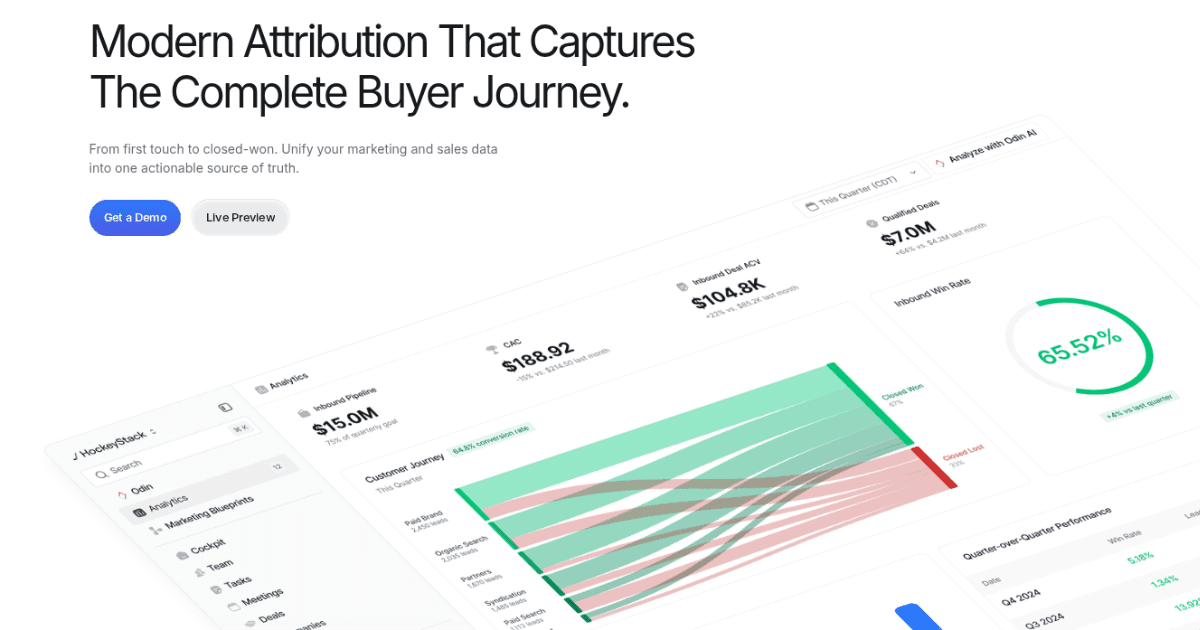
HockeyStack is a GTM analytics and attribution platform for B2B revenue teams. It brings marketing, sales and product touchpoints together at the account level and adds an AI assistant for analysis.
Teams often look at HockeyStack alternatives when they want faster setup, published pricing or product analytics alongside attribution.
Key features
- Odin AI assistant: Ask questions about GTM performance and investigate the underlying data through an AI assistant, reducing the manual work involved in answering recurring revenue questions.
- Account-level journeys: Combine marketing and sales interactions into account histories, helping B2B teams inspect the sequence of activity before an opportunity or closed-won deal.
- Multi-touch attribution: Compare attribution models side by side to see how pipeline and revenue credit changes across channels, campaigns, and other customer touchpoints.
- Custom GTM dashboards: Build reports around your campaign groupings, attribution rules, and pipeline stages, so marketing and sales can review performance using a shared framework.
What customers say
Review highlights: October 2026 G2 feedback highlights pipeline visibility, flexible model comparison, and useful journey reporting once the platform is configured.
What to consider: Reviews also describe demanding setup and reporting complexity. A pilot should test your CRM mappings, internal ownership, and whether AI answers match the underlying reports.
Source: G2 customer reviews. Review dates: October 2026.
Best for: Mid-market and enterprise B2B teams that need account-based revenue reporting.
Pricing: Custom plans only. Startup pricing is available on request.
Limitations: No published prices, and setup can be involved for smaller teams looking for a lighter HockeyStack alternative.
3. Dreamdata
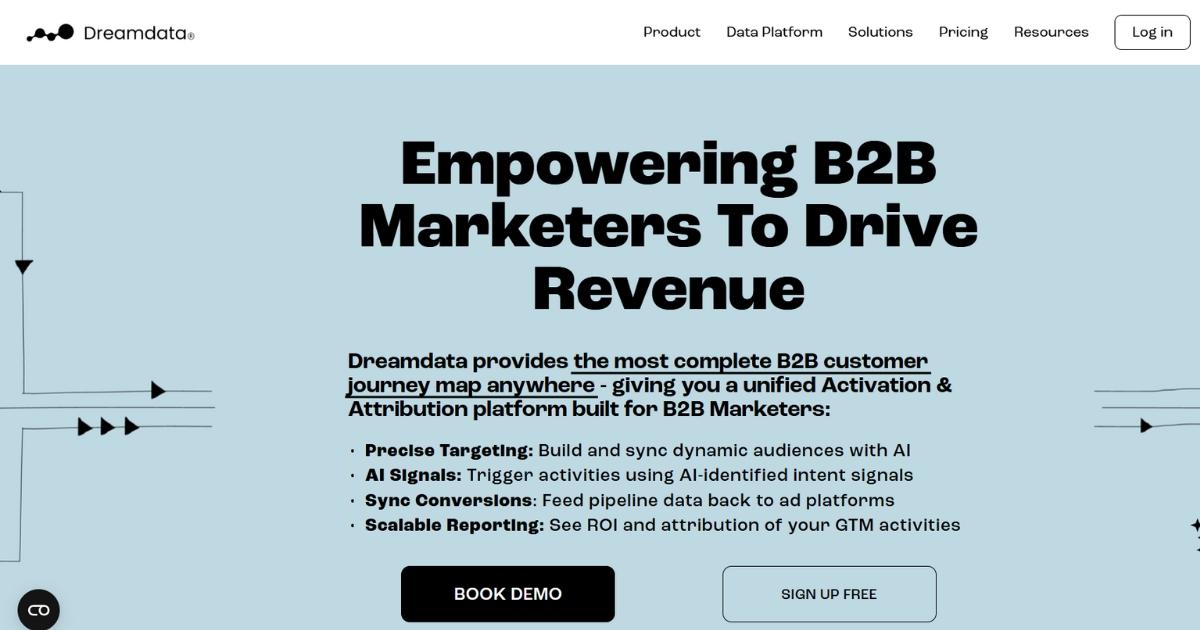
Dreamdata is a B2B attribution platform that maps account journeys and connects marketing activity to revenue. It now positions itself as an agentic attribution platform with several AI features.
Comparing Dreamdata alternatives means weighing account-based revenue reporting against product behavior analysis, activation needs, and implementation scope.
Key features
- AI analysis and summaries: Use Dreamdata AI to ask marketing-impact questions and summarize reports, helping marketers investigate performance without building every analysis from the beginning.
- B2B account journeys: Organize touchpoints by account and connect them to pipeline and revenue, making longer sales cycles and buying-group activity easier to inspect.
- MCP access: Connect supported AI assistants to Dreamdata through its MCP server, allowing teams to query attribution data within their preferred AI workspace.
- Attribution and activation: Use multi-touch reporting to assess marketing contribution, then send account audiences and revenue signals to advertising platforms to support targeting and optimization.
What customers say
Review highlights: In a November 2026 G2 review, Lisa S. valued cross-channel pipeline reporting, configurable stage models, and the reduction in spreadsheet work.
What to consider: Her review also described a learning curve around stage models and ongoing upkeep for custom signals. She flagged extra HubSpot sync costs, so confirm integration scope in your quote.
Source: G2 customer reviews. Review dates: November 2026.
Best for: B2B marketing and marketing operations teams with longer sales cycles.
Pricing: Free plan limited by tracked users and seats. Advanced plans are custom, scaling by monthly tracked users.
Limitations: Paid pricing is not published, and activation and data warehouse features are add-ons.
4. Factors.ai
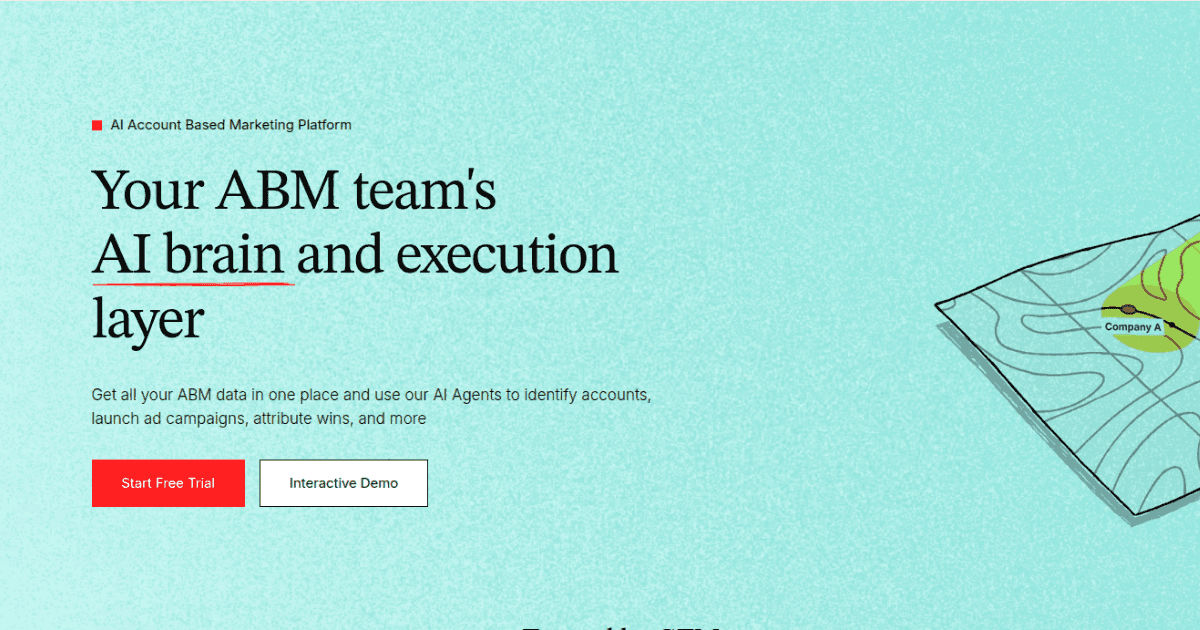
Factors.ai is an account intelligence and attribution platform for B2B teams running ABM. It identifies companies visiting your site and connects their engagement to pipeline.
Evaluating Factors.ai alternatives starts with deciding whether account identification, ABM activation, or revenue attribution is the main requirement.
Key features
- Scout AI agents: Use Scout to investigate account engagement and support ABM workflows, grounding answers and recommended actions in connected account, intent, pipeline, and revenue data.
- Factors MCP: Access Factors data through compatible AI tools such as ChatGPT and Claude, bringing account analysis into the same workspace as other marketing tasks.
- Predictive account scoring: On Enterprise, prioritize accounts using predictive scores so sales and marketing can focus follow-up on accounts that match their targeting and engagement criteria.
- Account identification and attribution: Identify visiting companies and connect website, campaign, and CRM activity to pipeline, helping teams evaluate which marketing interactions influence account progression.
- LLM traffic analysis: Track visits referred by AI assistants to understand how this emerging source contributes to website engagement and the wider acquisition journey.
What customers say
Review highlights: Selected G2 reviews from September–November 2026 praise company identification, unified intent signals, and CRM-connected follow-up for B2B campaigns.
What to consider: Reviewers also mention an initial learning curve and unmatched visitors, particularly at smaller companies. Test identification coverage against your own target-account list before committing.
Source: G2 customer reviews. Review dates: September–November 2026.
Best for: B2B startups through enterprise teams focused on account-based marketing.
Pricing: Lite from $199/month after a free trial. Basic $6,000/year, Growth $20,000/year and Enterprise from $36,000/year.
Limitations: Scout AI usage is sold as add-on credits, and annual billing is the norm on higher tiers.
5. Cometly
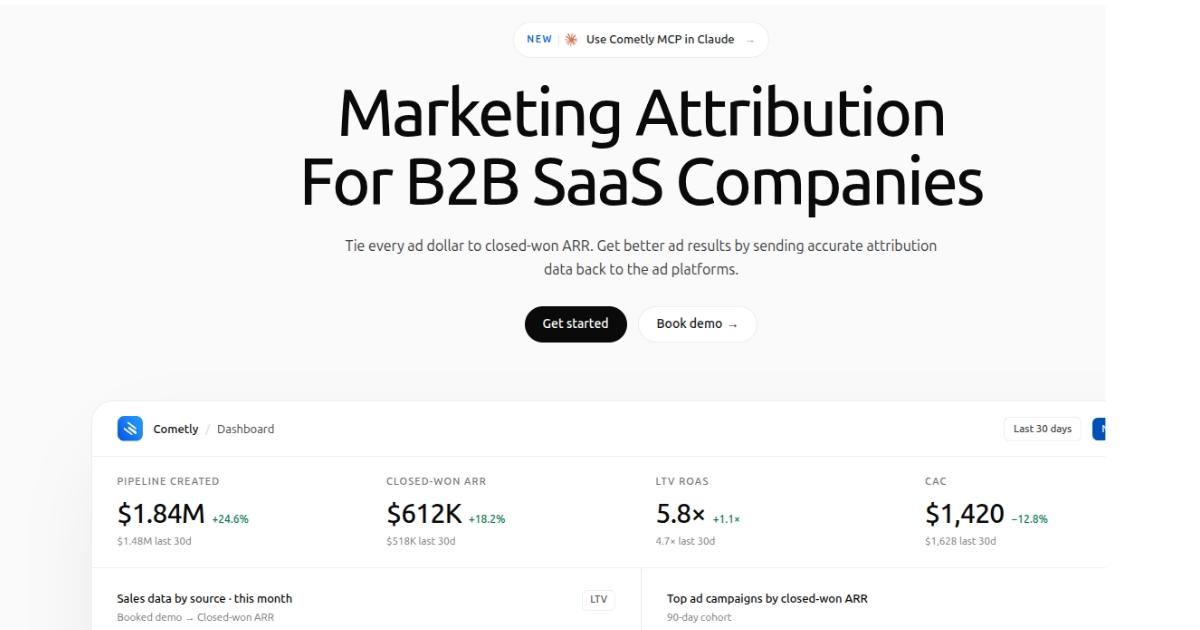
Cometly is an ad attribution platform for performance marketers. It tracks conversions server-side, sends conversion data back to ad platforms and adds an AI agent for analysis.
The Cometly vs. Usermaven decision depends on whether ad attribution covers your workflow or whether product behavior and retention must also inform acquisition decisions.
Key features
- Cometly Agent: Ask attribution and campaign-performance questions in plain language to investigate which sources contribute to conversions, pipeline, and closed-won revenue.
- AI Ads Manager: Review and manage paid campaigns within the platform, bringing campaign decisions closer to the attribution data used to assess their results.
- AI workspace connections: Use MCP and supported Claude or ChatGPT connections to work with Cometly data in an external AI assistant. Confirm access and usage terms for your plan.
- Server-side tracking and conversion sync: Capture conversion events and send them back to ad platforms, helping campaign optimization use business outcomes beyond browser-reported clicks and leads.
What customers say
Review highlights: An October 2026 Trustpilot review praises ease of use, visibility across traffic sources, and responsive support when the team needs help.
What to consider: A July 2026 reviewer found the options complicated and the price high. Test the reporting workflow and total usage cost against your own campaign volume.
Source: Trustpilot customer reviews. Review dates: July–October 2026.
Best for: Performance marketers in B2B SaaS and ecommerce running paid ads at scale.
Pricing: Core plan is usage-based, tiered by monthly pageviews. Enterprise is custom, with 20% off annual billing.
Limitations: No free trial, and pricing is hard to estimate without talking to sales.
6. Triple Whale

Triple Whale is an analytics and attribution platform for Shopify and DTC brands. Its AI assistant, Moby, analyzes store, ad and creative data and can run automations.
For teams comparing Triple Whale vs. Usermaven, the key decision is whether ecommerce-specific workflows or connected website, product, and CRM measurement take priority.
Key features
- Moby AI and automations: Ask Moby questions about ecommerce performance and schedule recurring analysis, helping teams investigate changes across store, advertising, and customer data.
- Compass measurement: Combine attribution, media mix modeling, and incrementality in a broader measurement workflow. Confirm Enterprise access and the scope of each method during evaluation.
- Triple Pixel: Collect first-party shopper activity to connect advertising interactions with store behavior, providing a data foundation for attribution and customer analysis.
- MCP access: Bring Triple Whale data into compatible AI assistants so ecommerce teams can investigate business performance alongside the other tools in their AI workflow.
What customers say
Review highlights: G2 reviews from May–July 2026 value having ecommerce and advertising metrics in one place, with alerts reducing manual monitoring.
What to consider: Reviewers also describe time spent learning and customizing reports, cost concerns for smaller teams, and the need to reconcile differences between platform numbers.
Source: G2 customer reviews. Review dates: May–July 2026.
Best for: Shopify and DTC ecommerce brands.
Pricing: Free plan available. Paid plans (Foundation, Automate, Enterprise) are priced by annual GMV on 12-month terms. AI usage runs on credits.
Limitations: Built mainly for ecommerce, and AI credits add a variable cost.
7. Northbeam
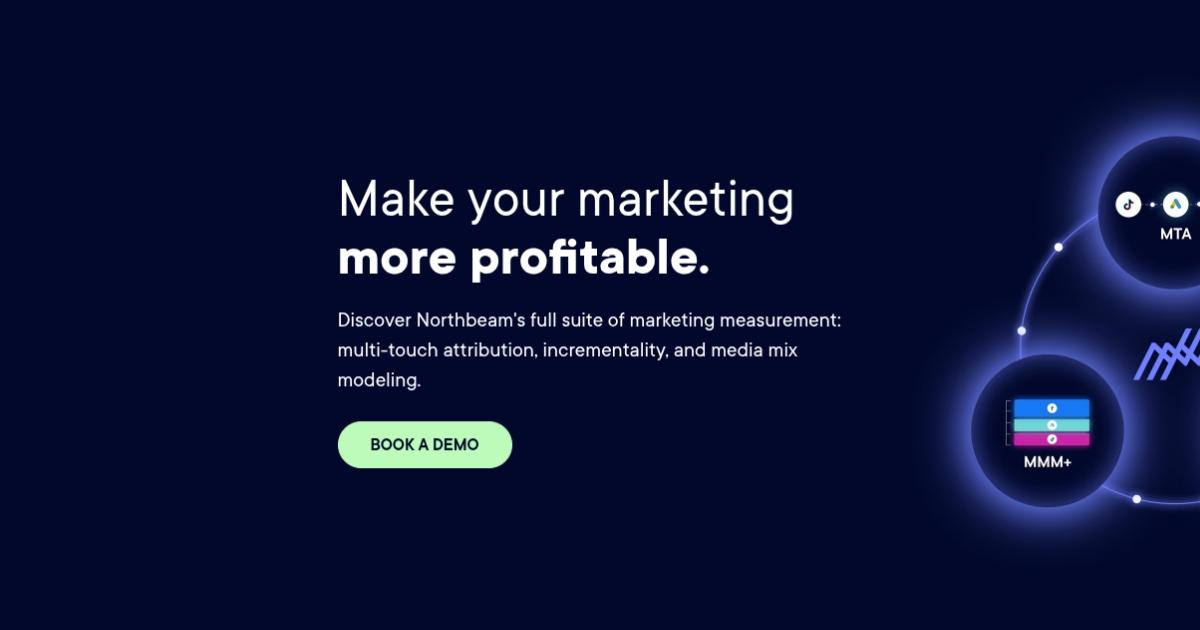
Northbeam is a marketing measurement platform for ecommerce brands with significant ad budgets. It combines multi-touch attribution with media mix modeling.
A Northbeam alternative should be assessed against media-measurement depth, ecommerce integrations, and whether CRM or product-led journeys also need coverage.
Key features
- Northbeam Apex: Send Northbeam performance data directly to supported advertising platforms, giving their optimization systems additional first-party signals from your measurement setup.
- Northbeam MCP: Connect supported AI assistants to Northbeam data to investigate performance outside the standard reporting interface. Confirm connector availability and permissions for your account.
- MMM Plus: Model channel contribution and compare budget scenarios, including revenue that is difficult to evaluate through individual click paths, to support broader media planning.
- Clicks and deterministic views: Include supported view-through interactions alongside clicks when evaluating revenue contribution, helping teams inspect the role of video and awareness campaigns.
What customers say
Review highlights: In a January 2026 G2 review, Ankush J. praised multi-touch reporting, ad and ecommerce integrations, and helpful support after configuration.
What to consider: The reviewer found the amount of data initially overwhelming. Give the team time to learn the reports and agree on the metrics it will use for decisions.
Source: G2 customer reviews. Review dates: January 2026.
Best for: Ecommerce brands spending heavily on paid media.
Pricing: Starter from $1,500/month and Professional from $3,500/month. Growth and Enterprise are custom.
Limitations: High starting price for smaller brands.
8. Ruler Analytics
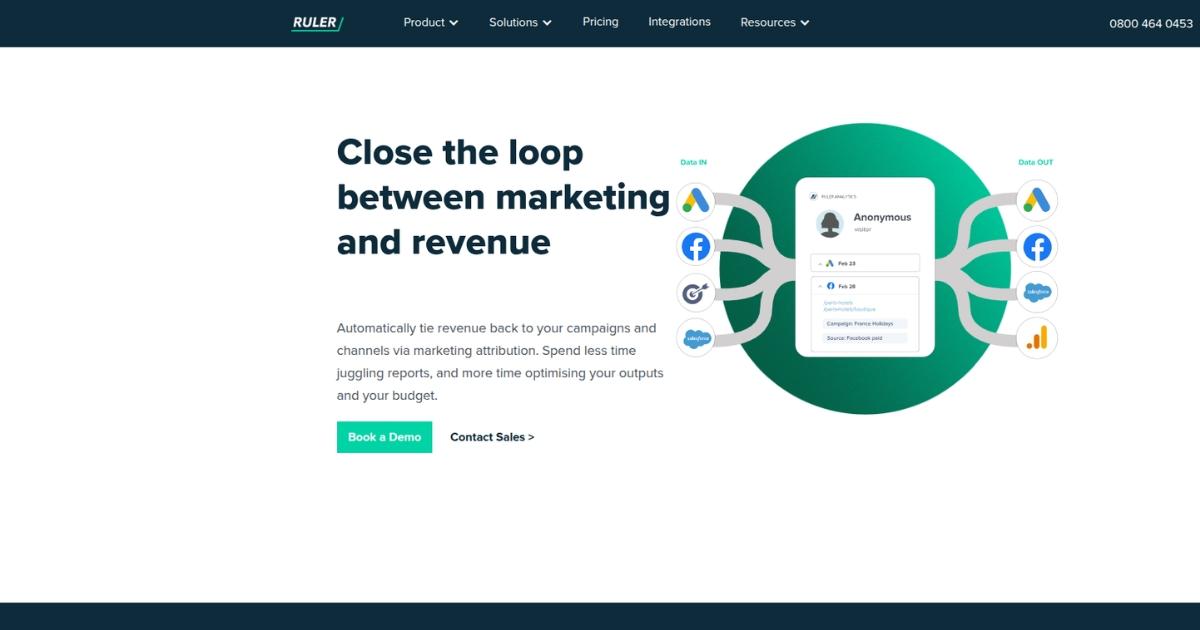
Ruler Analytics connects marketing touchpoints to leads, calls and closed revenue in your CRM. It is popular with lead generation businesses that need offline conversion data.
Evaluating a Ruler Analytics alternative requires checking how call tracking and offline revenue connect with the rest of your customer journey.
Key features
- AI analyst and media planner: On Advanced, use an AI agent to investigate marketing performance and support media-planning questions using the measurement data connected to Ruler.
- Call and form tracking: Connect inbound calls and submitted forms with their marketing sources, helping lead-generation teams follow conversions that do not end in an online checkout.
- CRM revenue attribution: Link leads and customer interactions with closed revenue in your CRM, so campaign reporting can reflect sales outcomes as well as lead volume.
- MMM and budget scenarios: On Advanced, compare spending scenarios and diminishing-return curves to assess how changes to channel budgets could affect expected marketing outcomes.
What customers say
Review highlights: Historical G2 reviews from November–December 2023 praise connecting online and offline activity to revenue, CRM integrations, and responsive account support.
What to consider: Those reviews also mention dashboard speed and requests for more hands-on training. Treat these as historical experiences and check today’s interface and onboarding in a demo.
Source: G2 customer reviews. Review dates: November–December 2023; historical feedback.
Best for: Lead generation businesses, agencies and teams that rely on calls and forms.
Pricing: Small from £199/month, Medium from £499/month, Large from £999/month and Advanced from £1,499/month, based on monthly visits.
Limitations: AI and MMM features are limited to the Advanced plan.
9. Wicked Reports
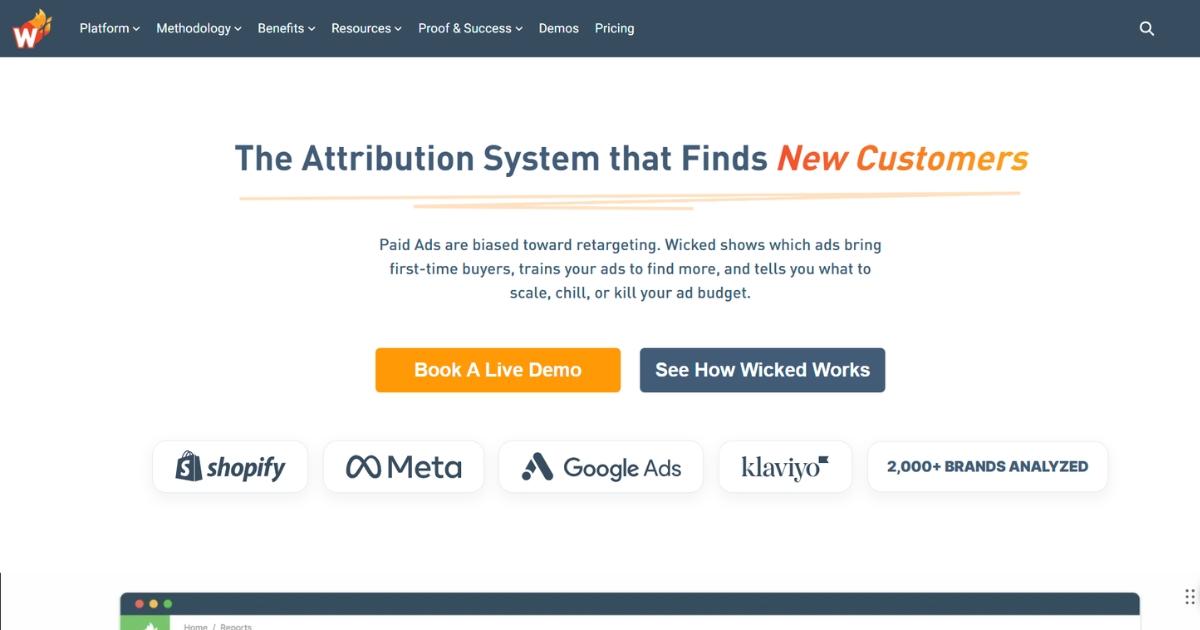
Wicked Reports is an attribution platform for ecommerce and subscription brands. It focuses on customer lifetime value and recurring revenue from ad campaigns.
Comparing high-ticket attribution tools is useful when customer lifetime value, repeat purchases, and longer sales journeys matter more than first-order ROAS.
Key features
- 5 Forces AI recommendations: Receive nightly recommendations about campaigns to scale, hold, or reduce, giving media buyers a starting point for reviewing budget decisions against business results.
- Wicked Coach and Analyst: Use guided analysis to investigate campaign performance and customer value, turning attribution reports into more focused questions about the next marketing decision.
- MCP access: Connect supported AI tools to Wicked Reports data so teams can explore attribution and revenue questions within their preferred assistant.
- Meta CAPI signals: Send conversion signals to Meta through its Conversions API, helping ad optimization draw on the customer outcomes captured by the attribution setup.
What customers say
Review highlights: Historical G2 reviews from 2022 value model comparison and tracking across longer sales cycles, particularly when repeat purchases and subscription revenue matter.
What to consider: Reviewers also described a learning curve, slow data processing, and a cumbersome interface. These older reviews do not assess today’s 5 Forces AI; test that workflow separately.
Source: G2 customer reviews. Review dates: 2022; historical feedback.
Best for: Ecommerce and subscription brands, plus media buyers and agencies.
Pricing: Measure $499/month, Scale $699/month, Maximize $999/month and Enterprise from $4,999/month, banded by revenue.
Limitations: 5 Forces AI is a paid add-on on the lower plans.
10. Hyros
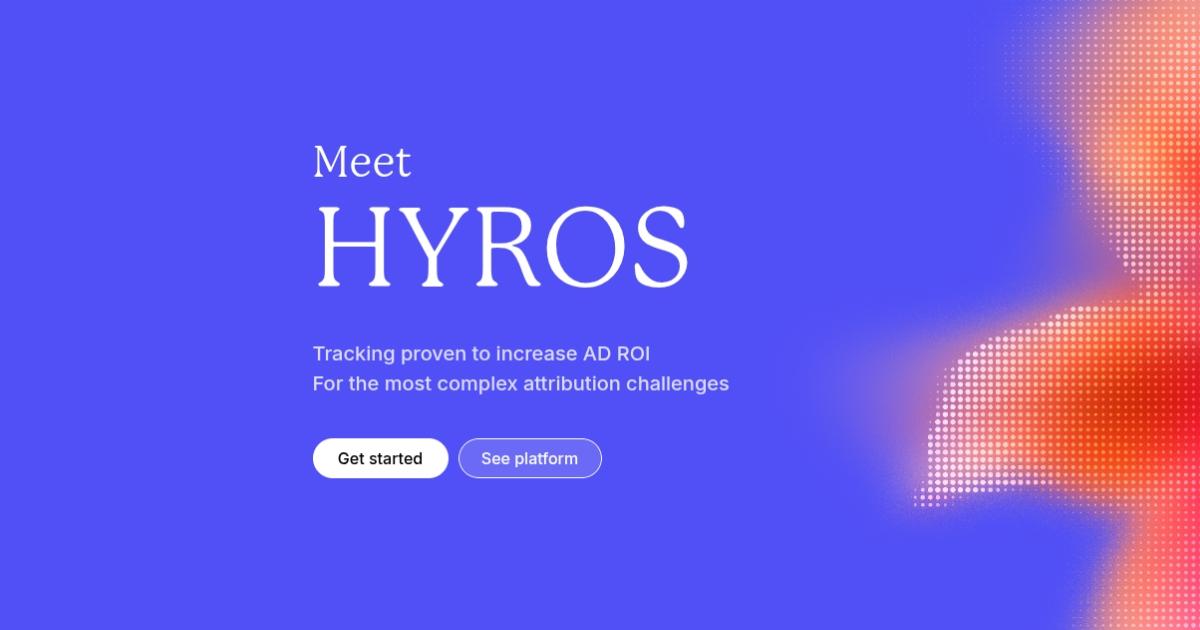
Hyros is an ad tracking and attribution tool for businesses that sell through calls, info products and high-ticket offers. It uses AI-based tracking to tie sales back to ads.
Teams comparing HYROS alternatives should test how each option links ad interactions, sales calls, CRM outcomes, and repeat customer value.
Key features
- AI Swarm Tracking: Connect advertising interactions to recorded sales outcomes so businesses can evaluate campaigns against revenue rather than relying only on lead costs.
- AI analyst: Ask questions about the tracked performance data to investigate campaign results and customer journeys without manually assembling each comparison.
- Claude MCP connection: Bring Hyros tracking data into Claude through MCP to support conversational analysis within an existing AI workflow.
- AI Remarketing: Use the remarketing capabilities to follow up with prospects identified through your tracking setup. Confirm supported channels and the available controls before activation.
What customers say
Review highlights: November 2026 Trustpilot reviews praise revenue visibility across ads, calls, and CRM outcomes, alongside attentive setup and account-management support.
What to consider: One positive review also describes duplicate sales caused by a webhook issue that support resolved. Reconcile recorded sales with your source systems during onboarding.
Source: Trustpilot customer reviews. Review dates: November 2026.
Best for: Info product, coaching, call-based and high-ticket businesses.
Pricing: Custom pricing based on revenue tracked, with all features on every plan.
Limitations: No published prices and no free trial.
11. Rockerbox
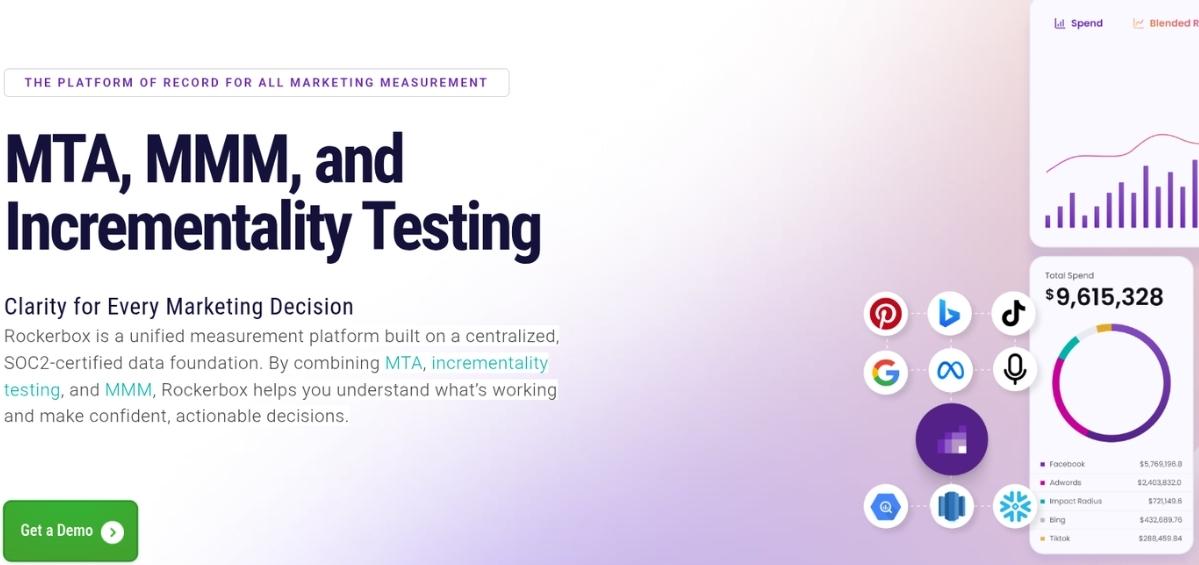
Rockerbox is a marketing measurement platform for large multichannel brands. It combines multi-touch attribution, media mix modeling and incrementality testing, and is now part of DoubleVerify.
A Rockerbox alternative needs to match the measurement methods you use, including attribution, media mix modeling, and incrementality, rather than only dashboard features.
Key features
- Cross-channel attribution: Connect marketing interactions across digital and offline channels to evaluate their contribution to conversions, using a shared view of the customer journey.
- Media mix modeling: Use historical performance and statistical models to estimate channel contribution and compare budget scenarios beyond the scope of individual tracked journeys.
- Incrementality testing: Use testing alongside attribution and MMM to investigate whether marketing activity creates additional business outcomes, rather than treating attributed revenue as proof of causation.
- Marketing data unification: Standardize spend, performance, and conversion data from multiple sources, creating a consistent foundation for measurement and downstream warehouse or reporting workflows.
What customers say
Review highlights: In a G2 review updated in July 2023, Nate B. praised digestible customer reporting and the ability to investigate redundant retargeting spend.
What to consider: This is historical feedback from before Rockerbox became part of DoubleVerify. It offers context on reporting value, but does not validate the current implementation or product experience.
Source: G2 customer reviews. Review dates: July 2023; historical feedback.
Best for: Enterprise brands with large, multichannel budgets.
Pricing: Custom quotes based on marketing spend, data volume and service level.
Limitations: Rockerbox relies on statistical models rather than named AI assistants or agents, and pricing suits larger budgets.
12. Fibbler
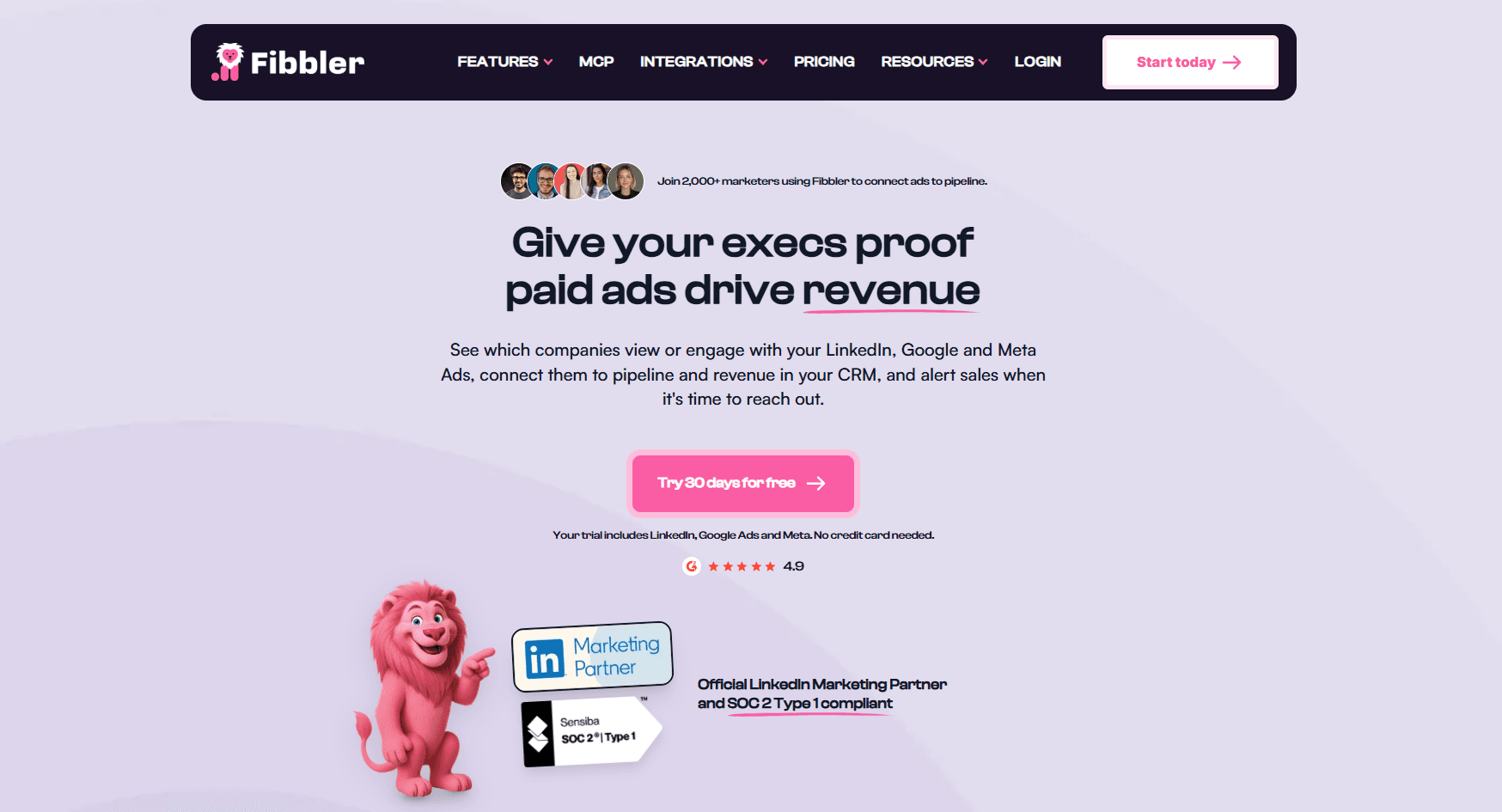
Fibbler is a paid ads attribution and activation tool for B2B teams. Its base plans focus on LinkedIn engagement and pipeline influence, with Google Ads and Meta Ads attribution available as paid add-ons.
Evaluating Fibbler alternatives means checking paid-channel coverage, CRM integration, account-level reporting, and the need for broader website or product analytics.
Key features
- LinkedIn account engagement: See which companies receive and engage with LinkedIn ads, then inspect their activity before opportunities and deals appear in the CRM.
- CRM-connected ad signals: Sync company engagement and deal data with supported CRMs, helping sales prioritize active accounts and marketing assess pipeline influence. CRM availability varies by plan.
- Cross-channel journeys: Add Google Ads or Meta Ads attribution to connect identified company visits with pipeline and revenue. These channels are paid add-ons to the LinkedIn base plan.
- MCP access: On Unlimited and Agency, query pipeline, revenue, and campaign data through compatible AI assistants, allowing account-level investigation beyond the standard interface.
What customers say
Review highlights: November 2026 G2 reviewers value easy setup, HubSpot integration, account journeys, and visibility into LinkedIn’s pipeline influence.
What to consider: Other feedback asks for deeper reporting and more granular ad-set analysis, with occasional speed concerns. Test the exact campaign breakdowns your team needs.
Source: G2 customer reviews. Review dates: November 2026.
Best for: B2B teams where LinkedIn is the main paid channel and sales needs proof of ad influence.
Pricing: Growth $89/month, Unlimited $129/month, and Agency $159/month. Google Ads and Meta Ads attribution each cost an additional $59 per workspace per month.
Limitations: Reporting centers on company and deal activity, and Google and Meta coverage costs extra. Teams combining LinkedIn attribution with person-level behavior or product retention should assess those requirements separately.
How to choose the right AI marketing attribution tool
The best tool depends on your business model, data and team. Use these questions to narrow your shortlist.
| Your situation | Tools to consider |
|---|---|
| B2B SaaS with product-led or hybrid growth | Usermaven, Dreamdata, HockeyStack |
| B2B with an ABM focus | Factors.ai, HockeyStack, Dreamdata |
| Shopify or DTC ecommerce | Triple Whale, Northbeam, Wicked Reports |
| Paid ads across Meta and Google | Cometly, Hyros, Usermaven |
| Lead generation with calls and forms | Ruler Analytics, Usermaven |
| Enterprise multichannel measurement | Rockerbox, Northbeam |
| LinkedIn-led B2B advertising | Fibbler, Factors.ai |
Check the data foundation first
AI cannot fix missing data. Look for first-party tracking, server-side options and identity resolution that links anonymous visits to known users and accounts. Cookieless attribution support also matters as browsers restrict tracking.
Decide what kind of AI you need
A natural-language assistant helps marketers get answers fast, while agents suit teams that want proactive alerts. MCP matters if your team already works in ChatGPT, Claude or Cursor.
Match the tool to your sales motion
B2B teams need account-level journeys and CRM revenue, while ecommerce brands need store and order data. B2B marketing attribution also has to handle long cycles and multiple stakeholders.
Compare total cost
Look beyond the starting price. AI credits, add-ons, onboarding fees and annual contracts can change the real cost, so review marketing attribution software cost factors before you sign.
Limitations of AI marketing attribution
AI makes attribution faster and more flexible, but it does not remove every problem. Keep these limits in mind when reading AI-generated insights.
- Data quality. Broken UTMs, missing events or poor identity resolution lead to confident but wrong answers.
- Black-box models. Some machine learning models are hard to explain to finance or leadership.
- Correlation, not causation. Attribution shows influence, so pair it with incrementality testing for major budget decisions.
- Walled gardens. Ad platforms limit the data they share, which affects every tool.
Final thoughts
The best AI marketing attribution tool is the one that fits your data, sales motion and team. B2B teams should prioritize account-level journeys and CRM revenue, while ecommerce brands should look for store data and media mix modeling.
Whatever you choose, check the AI features against real questions your team asks every week. For a wider view of the category, see how these options compare with other marketing attribution tools.
To see how Usermaven connects marketing activity to revenue, book a demo of its marketing attribution platform and supporting AI, analytics, and journey features.
FAQs
What is AI marketing attribution?
AI marketing attribution uses machine learning, AI assistants and agents to work out which marketing touchpoints drive conversions and revenue. It replaces fixed rules with models that learn from your conversion paths and makes the results easier to query.
Which AI-powered marketing attribution platforms are best?
It depends on your business. Usermaven, Dreamdata, HockeyStack and Factors.ai suit B2B teams, Triple Whale, Northbeam and Wicked Reports suit ecommerce, and Cometly, Hyros and Ruler Analytics suit performance and lead generation marketers.
How does machine learning improve marketing attribution?
Machine learning compares converting and non-converting paths to estimate how much each touchpoint contributes. This data-driven approach adapts to your real customer journeys instead of applying the same rule to every conversion.
Is AI-generated marketing attribution accurate?
It is only as accurate as the data behind it. Clean UTMs, complete event tracking and good identity resolution matter more than the model, and incrementality tests help confirm major findings.
What is the difference between AI attribution and multi-touch attribution?
Multi-touch attribution spreads credit across several touchpoints, using rule-based or data-driven models. AI attribution adds machine learning models, plain-language assistants, agents and MCP access on top of that data.
Do AI attribution tools work without cookies?
Many do. Tools with first-party and server-side tracking, such as Usermaven, rely less on third-party cookies and can still connect visits to conversions.
How much do AI marketing attribution tools cost?
Prices range from free plans, such as Dreamdata’s free tier, to custom enterprise contracts. Published starting prices include Fibbler from $89/month, Factors.ai from $199/month, Wicked Reports from $499/month and Northbeam from $1,500/month.

Written by
Junaid Ahmed
Content Writer & Digital Marketer
Junaid Ahmed is a content and copywriter with 3+ years of experience creating research-driven content across SaaS, B2B, ecommerce, and digital marketing. He specializes in turning complex topics into clear, practical content that helps marketers better understand their challenges, evaluate solutions, and make informed decisions. His work spans educational content, industry insights, and actionable marketing guides.
All articles by Junaid →