HYROS helps advertisers connect paid campaigns to leads, purchases, calls, and revenue, and it feeds conversion signals back to advertising platforms. That makes it a serious contender for businesses whose growth depends on paid traffic. But it does not mean every team needs the same kind of tracking infrastructure.
For a SaaS company, the challenge may be understanding whether acquired users activate, upgrade, and retain. An ecommerce brand may need a better view of profitable orders across stores and ad channels. An agency may need reliable conversion feedback, while a sales-led company may need to connect calls with CRM opportunities. Those differences determine which HYROS alternative makes sense.
This guide compares ten platforms by the job they do best, their trade-offs, and their current pricing information. If your priority is to understand how acquisition contributes to conversions and revenue across the customer journey, marketing attribution software should be evaluated alongside specialized paid-ad trackers.
Shortlisted candidates
Start with these three options based on your business model and measurement priorities.
| Usermaven | Cometly | Triple Whale |
|---|---|---|
| Paid ads attribution connected to product behavior, customer journeys, and revenue. | Paid media attribution connected to sales pipeline and conversion feedback. | Shopify and ecommerce attribution and customer reporting. |
Key takeaways
- Choose by business model: SaaS attribution, ecommerce measurement, affiliate tracking, and call-based sales require different data and workflows.
- Usermaven suits broader measurement: It connects supported marketing sources with website activity, product behavior, customer journeys, and CRM-linked revenue.
- Ecommerce teams have specialized options: Triple Whale and Northbeam focus on retail marketing, customer economics, and multi-channel performance.
- Conversion feedback has its own specialists: RedTrack and AnyTrack emphasize ad integrations, conversion routing, and performance-marketing workflows.
- Look beyond a starting price: Compare the tracked volume, event or session limits, integration scope, add-ons, and contractual commitment.
- Validate before migrating: Keep existing tracking running in a controlled test until you trust event definitions, identity matching, sales outcomes, and duplicate handling.
HYROS alternatives at a glance
| Software | Best for | Main differentiation | Published pricing status |
|---|---|---|---|
| Usermaven | B2B SaaS and growth teams | Attribution connected to web and product analytics | Business and Enterprise, custom quote |
| Cometly | Paid media and sales-led SaaS | Ads-to-pipeline attribution and conversion feedback | Usage-based, request price |
| Triple Whale | Shopify and DTC ecommerce | Retail performance, attribution and Moby AI | Free tier; paid plans by quote |
| Northbeam | Scaling ecommerce advertisers | Independent MTA and omnichannel reporting | Starter page displays $1,500; confirm billing |
| RedTrack | Performance and affiliate marketing | Server-side ad tracking, CAPI and campaign rules | Solo regular $169/month; seasonal prices vary |
| AnyTrack | Smaller paid-media and affiliate teams | Conversion connections across ads and funnels | Free; Starter $100/month |
| SegMetrics | Courses, subscriptions and funnels | Customer LTV and contact-level funnel reporting | Launch $57/month at displayed contact tier |
| Wicked Reports | Retention-oriented ecommerce | Cohort LTV and long-window attribution | Measure $499/month at displayed revenue tier |
| Ruler Analytics | Calls, lead generation and B2B | Call and CRM revenue attribution | From $400/month, monthly billing |
| Rockerbox | Enterprise omnichannel teams | Multi-touch, MMM and incrementality testing | Customized sales-led pricing |
The comparison is based on published product capabilities, not a head-to-head benchmark performed by Usermaven. A vendor’s advertised entry plan may not contain every feature discussed in its profile. Prices and entitlements should be reconfirmed before purchase.
What is HYROS, and why consider an alternative?
HYROS is an advertising attribution and conversion-feedback platform. Its core proposition is connecting campaign activity with downstream outcomes, then sending more useful conversion data to advertising systems. It also supports sales and call funnels, ecommerce orders, recurring revenue, and business-specific tracking setups.
Its own website markets workflows for SaaS, ecommerce, B2B calls, and education businesses. That means HYROS is not limited to one advertising pixel, and it would be inaccurate to say it cannot handle long sales cycles or revenue after a lead is created.
The reasons to compare other products tend to fall into four groups. Some businesses want stronger product and website analytics beside attribution. Others need an ecommerce-first view of customer lifetime value, new-customer performance, and profitability.
Performance marketers may want more direct control over conversion routing and campaign operations. B2B teams may care most about offline leads, calls, and CRM revenue.
Pricing is another consideration. HYROS describes pricing in relation to tracked monthly revenue and a guided sales process. Its own educational content cites an Organic option from $49/month and Business from around $230/month on an annual plan, but the current offer and terms require confirmation directly with HYROS. Those examples should not be confused with an automatically available self-service price or a guaranteed quote.
The better question is not whether HYROS is broadly good or bad. It is whether your business needs a specialized ad measurement system, a customer analytics platform, or an enterprise marketing measurement stack.
How we evaluated these HYROS competitors
We evaluated the products using their official feature pages, pricing information, fit for common business models, ability to connect conversions to business outcomes, and operational trade-offs. The baseline is HYROS’s current product and pricing information, rather than older comparison claims. We did not claim to install and benchmark all ten products, or assign artificial scores to attribution accuracy.
What matters most: Whether the platform can capture the right conversion events, connect those events to appropriate identities and channels, support required advertising or CRM systems, and make the resulting information useful to the marketing team.
What pricing comparisons mean: Published prices are quoted with their available context. A free tier may lack conversion delivery, an annual discount may not be a normal monthly rate, and a plan might be constrained by tracked sessions, contacts, revenue, or ad spend. Where available, related Usermaven pricing and comparison resources are linked in the profiles below.
What these rankings mean: “Best for” indicates fit for a buyer problem, not a proven overall winner. Marketing attribution assigns credit under a defined model; it does not alone establish the incremental causal effect of advertising.
10 best HYROS alternatives in 2026
Below are ten alternatives that solve different parts of the HYROS buying decision. The following list highlights each platform’s strengths, pricing context, and the situations where it may be a good fit.
1. Usermaven
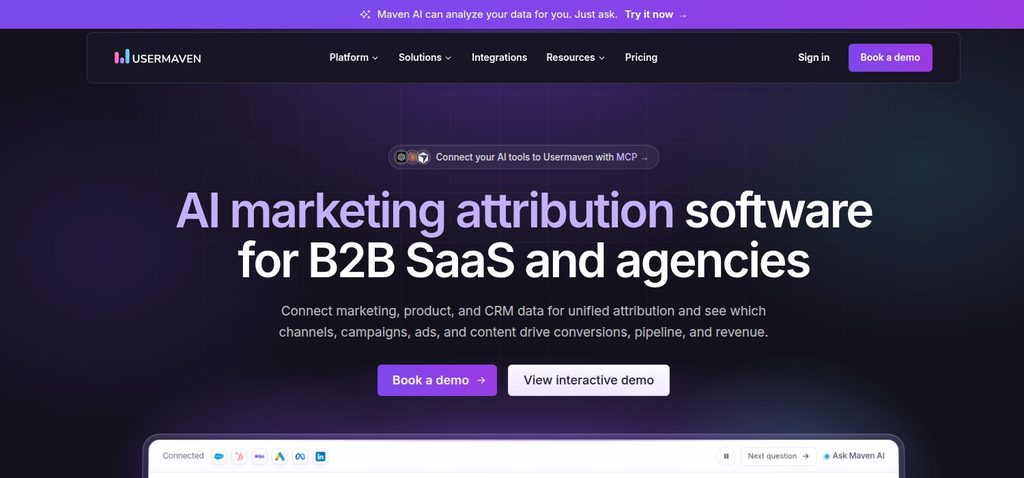
Best for: SaaS and B2B teams connecting marketing attribution with website, product, and revenue outcomes.
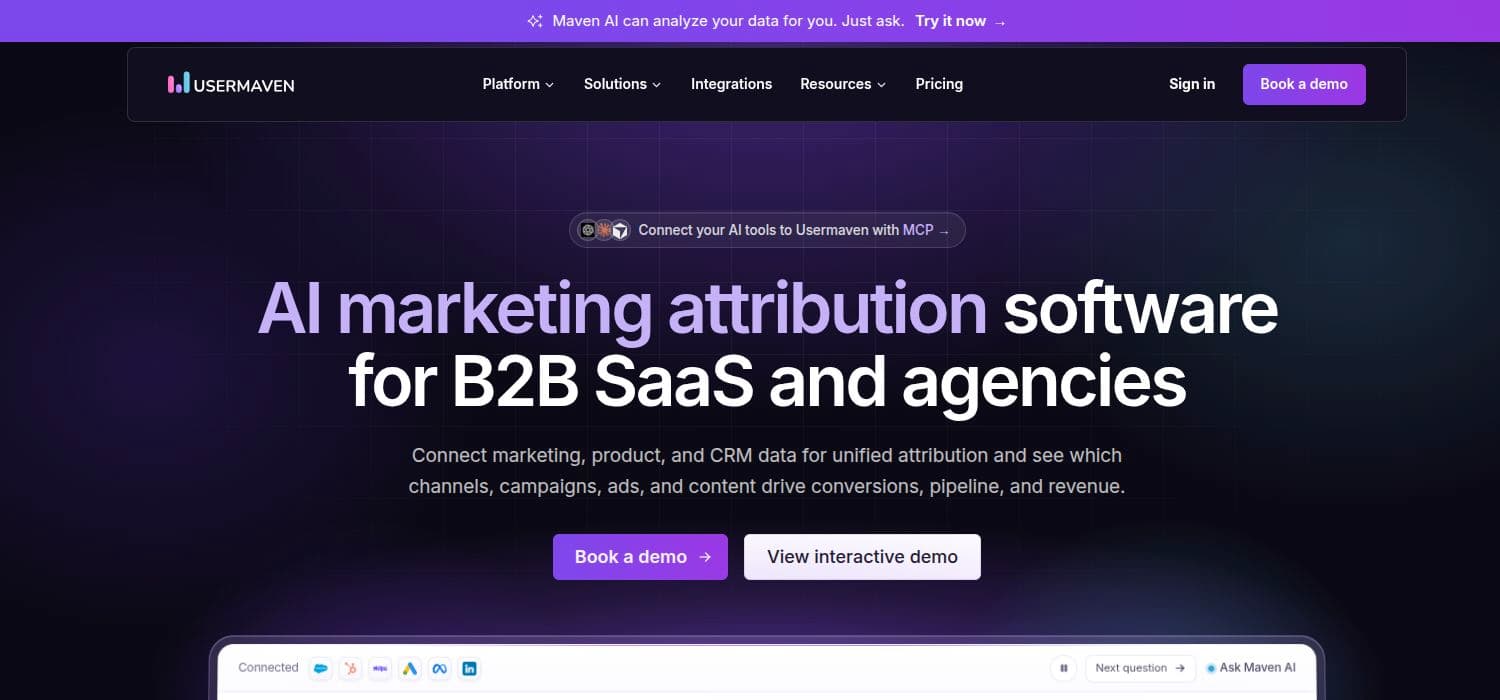
Usermaven is a marketing attribution platform with integrated website and product analytics. It brings tracked acquisition channels, touchpoints, events, conversion paths, and revenue outcomes into a reporting environment designed for marketers and growth teams. The difference from a paid-ad-centric tracker is the emphasis on what recorded customers do after they reach the website or product.
That combination is particularly relevant to SaaS businesses whose prospects start free trials, adopt features, request demos, or upgrade long after their initial marketing touch. The platform’s product analytics software and customer journey analytics software help teams investigate those stages alongside acquisition and attribution.
Key features
- Multi-touch attribution: Compare channel and campaign influence across recorded conversion paths, with configurable models subject to the workspace’s plan.
- Paid ads attribution: Connect supported ad spend, conversion value, and attributed revenue for campaign evaluation.
- Website and product analytics: Examine events, funnels, adoption, and retention beyond the first lead or signup.
- CRM and imported events: Bring supported opportunity, payment, and business events into reports when identities and mappings are correctly configured.
- Maven AI and AI Agents: Explore performance questions and run recurring analysis of acquisition or conversion changes.
Why choose Usermaven over HYROS?
Choose Usermaven when your challenge is joining marketing and product performance, rather than only improving ad conversion signals. For example, a paid campaign may produce trial signups, but the important outcome is whether those accounts activate, request a demo, or generate subscription revenue. The combination of marketing data and conversion funnel analytics software is useful for investigating that gap.
Usermaven’s ContentStudio customer case study provides a concrete example. The team used connected advertising and product events to examine signups, demos, upgrades, and paid customer outcomes, then changed its budget allocation. The published improvements are customer-reported results of several changes, not a controlled test against HYROS.
What to consider
HYROS may be preferable if specialized call and high-ticket funnel attribution, advertising-platform feedback, or its supported hands-on implementation process is your primary requirement. Usermaven is not a claim that every HYROS matching, phone-call, or ad optimization workflow can be reproduced without additional setup and integrations.
Pricing: Business and Enterprise plans are custom-quoted for new customers. The official Usermaven pricing page describes plan coverage but does not publish a fixed monthly amount. Confirm custom-model and integration entitlements for your workspace.
When it is best: B2B SaaS growth and marketing teams that need attributed revenue alongside activation, retention, customer journeys, and pipeline analysis.
2. Cometly
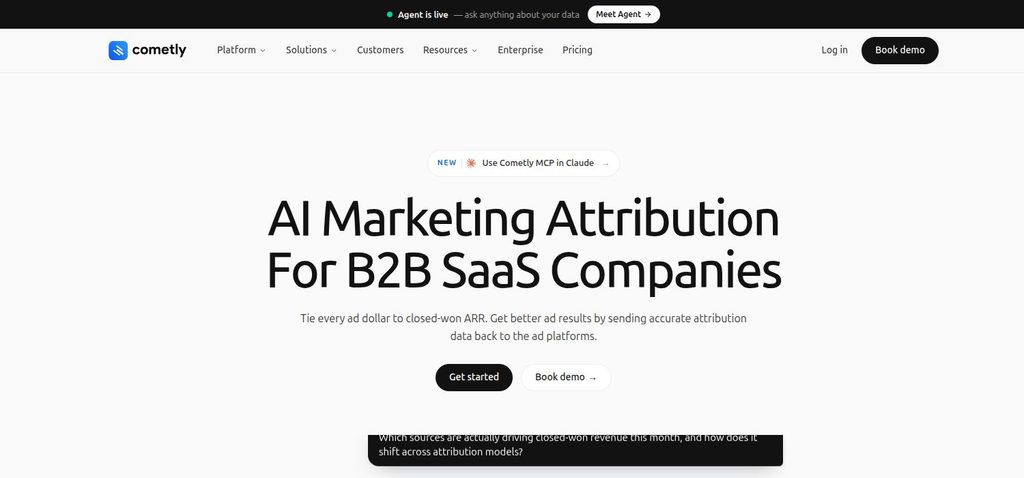
Best for: Paid-media-heavy SaaS teams connecting ad performance to CRM pipeline and revenue.
Cometly positions itself as a B2B SaaS attribution platform for connecting advertising, customer events, account journeys, CRM outcomes, and revenue. Its current offering includes pixel and server-side collection, multi-touch attribution, conversion APIs, and AI-assisted campaign analysis. It is a particularly relevant competitor when HYROS is being considered mainly for ad-to-sale measurement.
Cometly also serves growth and marketing operations teams that want detailed campaign and account data without treating every lead submission as a completed business outcome. The Usermaven vs. Cometly comparison examines how both platforms connect acquisition with customer and revenue data.
Key features
- Server-side tracking and events: Bring conversion signals into a reporting pipeline beyond a basic browser event.
- Multi-touch attribution: Examine paid campaigns and channels along customer and account journeys.
- Conversion API: Send supported conversion events back to advertising platforms.
- Account journeys and dashboards: Review opportunities, conversion paths, and campaign-level performance.
- Enterprise data delivery: CRM, warehouse, and MCP options are available on higher commercial tiers.
Why choose Cometly over HYROS?
It is a natural candidate when a SaaS team prioritizes connected ad and CRM revenue reporting, customizable account-level analysis, and conversion feedback. The company explicitly sells paid advertising-to-pipeline workflows rather than retail store reporting alone.
What to consider
Cometly and HYROS both address paid attribution and conversion feedback, so differences should be validated against actual integrations, identity coverage, and reporting requirements. Cometly’s Enterprise-only data sync and warehouse capabilities may affect procurement.
Pricing: Cometly pricing is usage-based and tailored to monthly pageviews. Core and Enterprise can be purchased monthly or annually; an exact quote is required.
When it is best: Growth and RevOps teams running paid campaigns into demos, trials, pipeline, and closed-won SaaS revenue.
3. Triple Whale
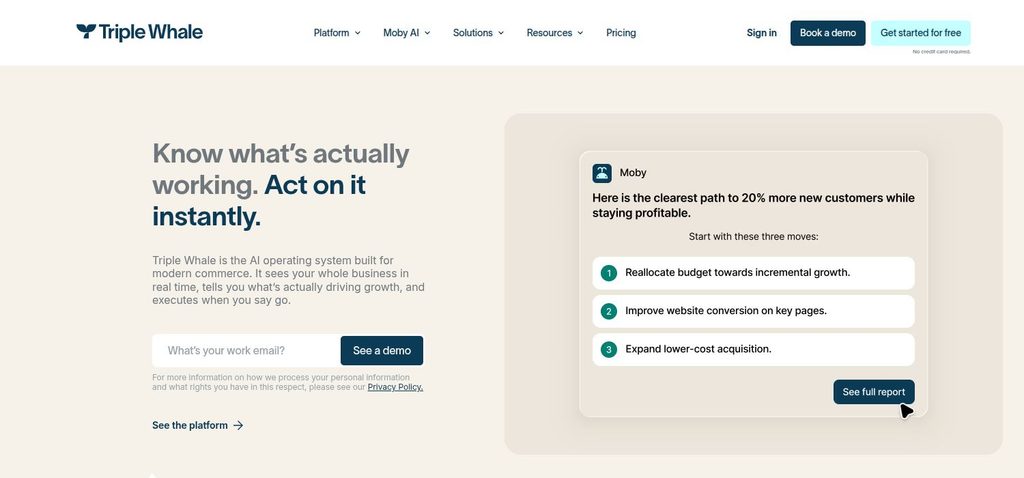
Best for: Ecommerce teams measuring Shopify growth, channel performance, and store economics.
Triple Whale is an ecommerce analytics and attribution platform built around the performance of online brands. It combines store data, advertising performance, attribution, and an AI analysis layer called Moby. Its emphasis on ecommerce operations makes it a different proposition from a general-purpose SaaS or call-tracking stack.
For a Shopify business, the key evaluation questions often involve new versus returning customers, blended marketing efficiency, orders, and how changing ad spend affects store revenue. The Usermaven vs. Triple Whale comparison explores ecommerce reporting alongside broader customer journeys and product analytics.
Key features
- Ecommerce reporting: Combine paid, owned, subscription, and organic performance in a central view.
- Triple Pixel: Collect and connect customer behavior for attribution and customer journeys.
- Attribution models: Understand how traffic sources contribute to sales, subject to plan scope.
- Moby AI: Ask questions about marketing and business performance.
- Store and creative analytics: Analyze what drives ecommerce sales and campaign outcomes.
Why choose Triple Whale over HYROS?
Choose it when the most important measurement unit is an ecommerce customer or order, and the team wants store-focused dashboards beside ad attribution. It can be more intuitive for ecommerce operators evaluating repeat buying and product-level performance.
What to consider
Its specialization may be less appropriate for complex B2B CRM opportunities, phone-heavy lead generation, or product-led SaaS activation. Some advanced features require a paid tier rather than the advertised free account.
Pricing: The Triple Whale pricing guide explains how its packages and costs vary with the business’s annual GMV. Confirm attribution coverage and other feature access for the proposed plan.
When it is best: Shopify and direct-to-consumer brands that need ecommerce reporting and attributed marketing performance together.
4. Northbeam
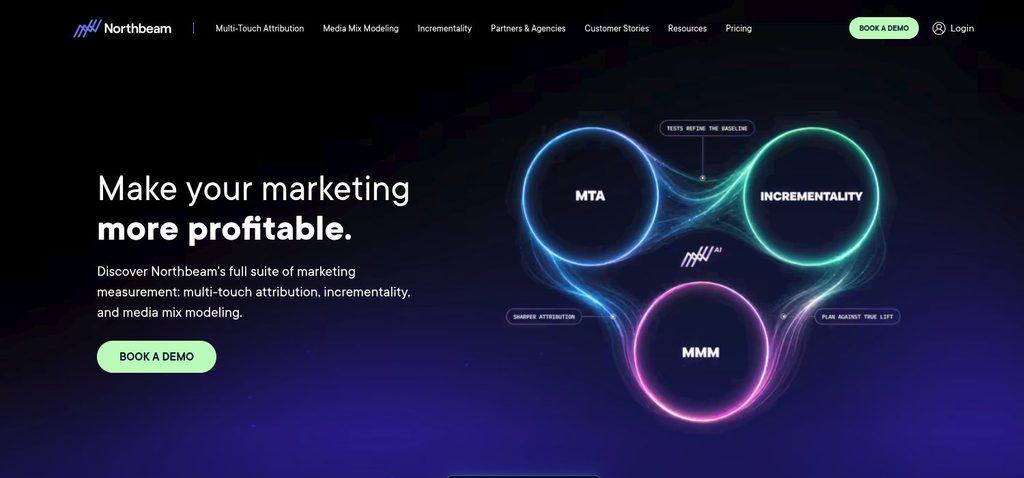
Best for: Scaling ecommerce advertisers with large, multi-channel media budgets.
Northbeam focuses on attribution and performance measurement for ecommerce brands investing heavily across advertising channels. Its platform emphasizes independent first-party multi-touch attribution, omnichannel dashboards, view-through measurement, and feedback for optimizing campaign delivery.
The product is typically more relevant when teams need to explain substantial media investment than when a small SaaS company is simply looking to track its first few trial signups.
Key features
- Multi-touch attribution: Connect channel interactions with recorded revenue outcomes.
- Omnichannel dashboards: Compare advertisers and campaigns across a wider media mix.
- View-through measurement: Evaluate qualifying ad exposure under a documented method.
- Northbeam Apex: Support custom attribution feedback for ad optimization.
- Media strategy support: Higher-tier plans and partner arrangements can include implementation or strategy assistance.
Why choose Northbeam over HYROS?
It can be compelling when a mature ecommerce team wants broad ad-channel measurement and specialized reporting for sustained spend, rather than a general call and sales funnel focus.
What to consider
Pricing and onboarding can make Northbeam disproportionate for smaller teams. Ensure that the business needs its specialized retail measurement and can support the data integrations and measurement governance involved.
Pricing: Northbeam pricing information displays a $1,500 Starter figure and $3,500/month Professional, while requesting buyers contact sales for exact terms. Confirm the Starter billing basis and contract before using these amounts for direct comparisons.
When it is best: Ecommerce brands investing significant recurring budgets across advertising channels.
The Usermaven vs. Northbeam comparison examines ecommerce-focused measurement alongside broader attribution and analytics.
5. RedTrack
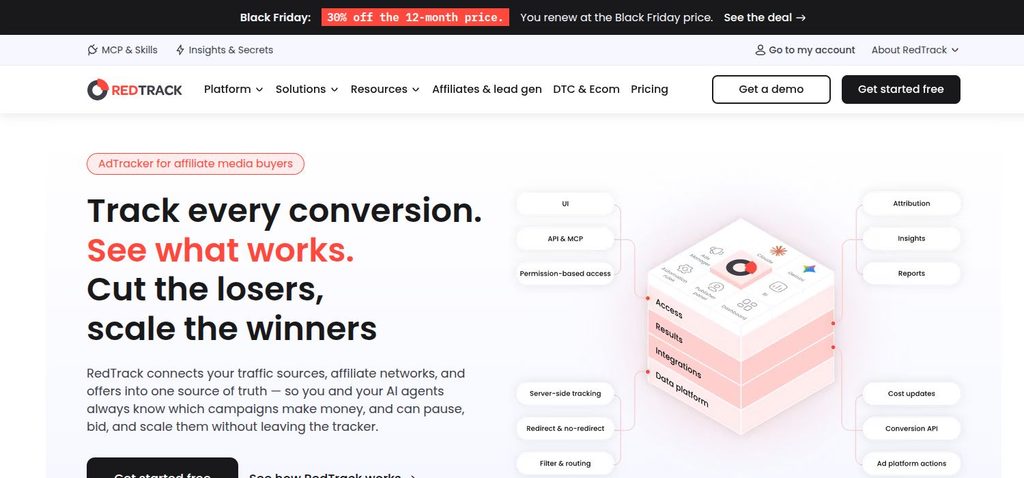
Best for: Affiliate, lead-generation, and performance-advertising operations.
RedTrack is a performance-marketing tracking and automation platform. It combines conversion routing, ad account data, campaign analysis, rules, and integrations across paid traffic and affiliate workflows. Its reporting is centered on media-buying operations and making campaign decisions from tracked conversion and cost data.
That makes it a relevant HYROS alternative for affiliates and agencies who need operational control over offers, landing pages, campaign spend, and conversion signals.
Key features
- Conversion API integrations: Route supported conversion events to advertising networks.
- Campaign and offer tracking: Track traffic sources, offers, landing pages, and conversion performance.
- Automated rules: Pause or scale supported campaigns based on defined signals and plan coverage.
- Ad spend sync: Bring campaign spending into analysis at the plan’s supported frequency.
- Reporting and agency workflows: Manage multiple campaigns, teams, and customer properties.
Why choose RedTrack over HYROS?
Choose it when detailed paid traffic operations and automation are the requirement, especially for affiliate or lead-generation teams. It offers explicit plans for tracked events, ad integrations, and advertising rules.
What to consider
Event and account limits, data refresh rates, add-ons, and advertising workflow complexity affect the actual value. A performance tracker does not automatically replace full product analytics or revenue cohort analysis.
Pricing: RedTrack pricing currently shows Solo’s regular listed rate of $169/month alongside a temporary Black Friday annual discount. The promotional price should not be used as its permanent starting rate; confirm post-promotion terms and event allowances.
When it is best: Paid-media specialists and agencies optimizing conversion-rich affiliate and lead-generation campaigns.
6. AnyTrack
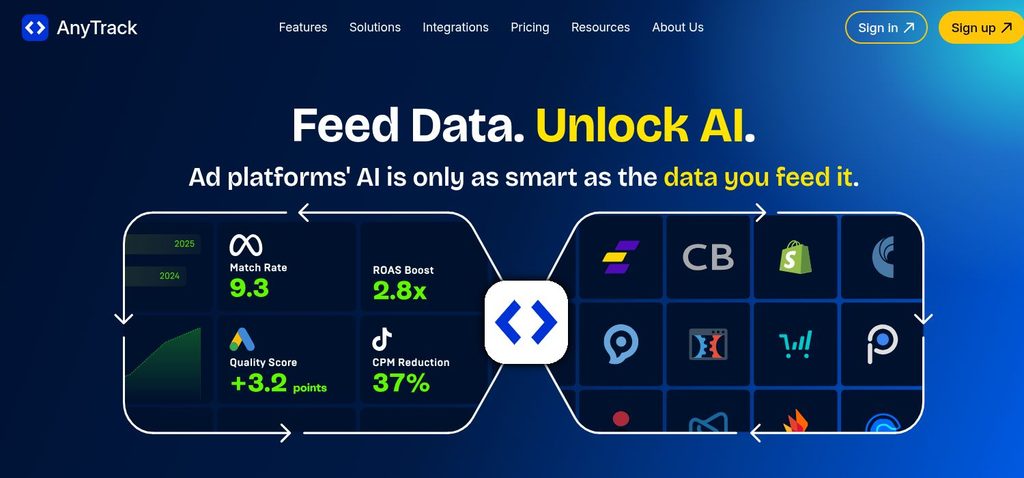
Best for: Smaller advertisers that need conversion integrations without an enterprise attribution purchase.
AnyTrack provides conversion tracking and integration across advertising networks, ecommerce tools, affiliate programs, and business systems. Its focus is making conversion events and journey data usable across a marketer’s advertising stack. It includes a free tier, which makes it approachable for teams starting with simpler tracking requirements.
Its paid plans add more connections, session capacity, conversion API delivery, and advanced integrations as traffic and business needs increase.
Key features
- Automatic conversion capture: Collect supported conversion events and map them to campaigns.
- Advertising integrations: Connect major paid networks and tracking sources.
- Server-side event routing: Send supported real-time conversion feedback on qualifying plans.
- Attribution and journey logs: Examine tracked paths, campaigns, and landing pages.
- Plan-based scaling: Increase sessions, connected properties, and advanced data delivery as needed.
Why choose AnyTrack over HYROS?
Its clear entry plans and integration-first approach can be attractive when a team wants useful conversion routing without a large custom engagement. It is also relevant to marketers relying on affiliate networks or multiple checkout providers.
What to consider
The free plan is limited to 5,000 monthly sessions and does not include Conversion API delivery. Teams needing cross-domain tracking, GA4 integration, high event volumes, or many connected websites may need more expensive tiers.
Pricing: AnyTrack pricing lists Free at $0, Starter at $100/month, Personal at $150/month, and Advance at $300/month on monthly billing, with session and integration limits.
When it is best: Smaller performance-marketing teams prioritizing actionable conversion data and ad-platform integrations.
7. SegMetrics

Best for: Subscription, course, and coaching businesses measuring funnel lifetime value.
SegMetrics focuses on contact-level attribution across marketing funnels, subscriptions, and customer histories. The platform is useful when the buying journey includes multiple emails, lead magnets, webinars, payments, and recurring charges rather than a single ecommerce checkout.
Its reports emphasize customer lifetime value and the relationship between acquisition and later revenue, which can matter to education and subscription businesses with long nurture sequences.
Key features
- Full-funnel reporting: Follow recorded interactions from lead acquisition through revenue.
- Lifetime value analysis: Connect marketing sources with customer spend over time.
- Marketing integrations: Use data from email, CRM, payment, and funnel systems.
- Contact-level journeys: Inspect how individual customers move through a longer sequence.
- Segmentation and conversion feedback: Advanced capabilities are available on qualifying tiers.
Why choose SegMetrics over HYROS?
Choose it when your main question is which marketing sequences and nurture steps create valuable subscribers over time, not only which ad was linked to the immediate conversion.
What to consider
Features such as advanced segmentation, customer journey details, and advertising conversion feedback may require higher plans. Contact counts affect pricing, so volume assumptions need to be realistic.
Pricing: SegMetrics pricing lists Launch at $57/month for the displayed 10,000-active-contact example; Grow appears at $197/month. Actual costs vary by active-contact volume and billing term.
When it is best: Coaching, education, subscriptions, and lead-nurture businesses tracking longer-term customer value.
8. Wicked Reports

Best for: Ecommerce and subscription brands comparing acquisition cost with repeat customer revenue.
Wicked Reports is built for marketing attribution across longer customer lifecycles. It emphasizes first-time acquisition, cohort reporting, customer lifetime value, and recurring revenue rather than treating the initial order as the end of the story.
For businesses with substantial repeat purchases or renewals, that focus can change which campaigns look economically healthy once the later revenue is visible.
Key features
- Lifetime-value attribution: Relate acquisition channels to customer revenue over extended periods.
- Cohort reports: Compare customer groups by acquisition timing and value.
- Marketing funnel views: Analyze which campaigns contribute to recorded conversions.
- Ecommerce and CRM integrations: Bring orders and customer records into reports.
- Scaling options: Higher tiers add broader API and multi-region functionality.
Why choose Wicked Reports over HYROS?
It is worth considering when customer retention, repeat buying, and long-term revenue are more important than optimizing only short-term advertising conversions. Cohort economics can provide another way to judge campaign quality.
What to consider
It is not a substitute for enterprise omnichannel experimentation or a general product analytics environment. Pricing and integration options depend on the business’s revenue and operational requirements.
Pricing: Wicked Reports pricing lists Measure at $499/month for the displayed revenue band, with higher tiers from $699/month. Confirm the revenue tier, integrations, and current commercial terms.
When it is best: Ecommerce and subscription teams optimizing marketing for profitable customer relationships beyond first purchase.
9. Ruler Analytics
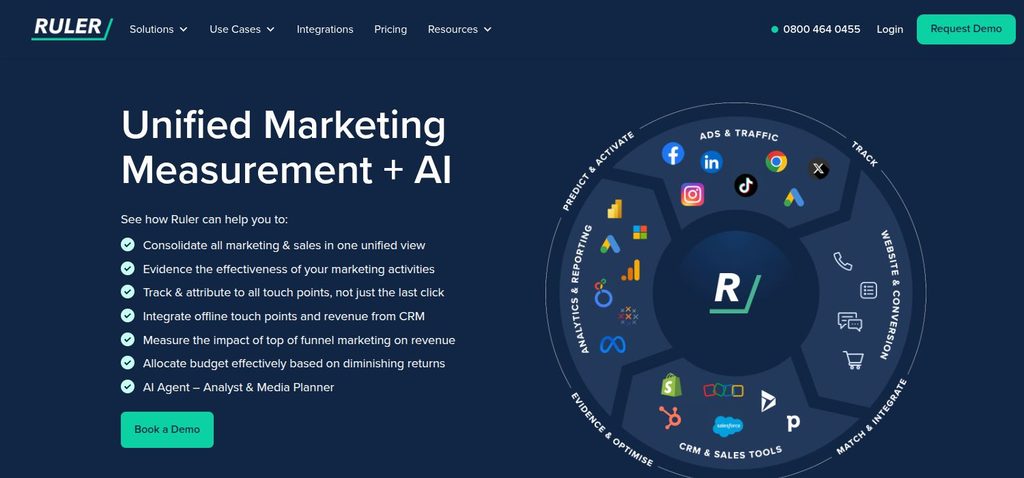
Best for: B2B lead generation and businesses where calls and CRM opportunities drive revenue.
Ruler Analytics specializes in marketing attribution and first-party conversion measurement for lead-generation businesses. Its capabilities include tracking forms and calls, connecting leads to CRM outcomes, and understanding how channels contribute to eventual revenue.
A website form submission may be the beginning of a commercial process rather than the transaction itself. Ruler is relevant when the buying journey includes phone conversations, qualification stages, and sales follow-up. The Usermaven vs. Ruler Analytics comparison considers call-focused attribution alongside website and product analytics.
Key features
- Call and form tracking: Connect relevant inbound interactions with source information.
- CRM-connected revenue: Relate qualified leads and opportunities to marketing activity.
- Multi-touch attribution: Compare recorded interactions across the buying journey.
- First-party data and conversion syncing: Support data use across marketing systems.
- Advanced measurement tiers: Higher plans add more analytical capabilities and volume.
Why choose Ruler Analytics over HYROS?
Choose it when the principal challenge is connecting inbound leads and calls to closed deals in a CRM, rather than optimizing a predominantly checkout-based advertising funnel. Ruler’s call-focused B2B measurement is an especially relevant buying criterion.
What to consider
Confirm the exact form, call, CRM, and offline-event integrations required. Volume-based pricing and setup may matter when tracking many sites or high visitor counts. Its strongest use case differs from SaaS product-feature adoption analytics.
Pricing: Ruler Analytics pricing guide discusses the Small plan from $400/month on monthly billing, or $360/month with annual billing, at the displayed up-to-10,000-visits tier. Higher traffic increases cost.
When it is best: B2B service firms and high-ticket lead generators with meaningful phone and CRM sales activity.
10. Rockerbox

Best for: Enterprise marketers combining attribution, media mix modeling, and lift testing.
Rockerbox focuses on unified marketing measurement rather than one attribution method. Its platform brings marketing data into a common foundation and supports multi-touch attribution, marketing mix modeling (MMM), and incrementality testing. Those methods answer different questions, which is important for large advertisers balancing short-term campaign optimization with longer-term budget decisions.
It is a different category of investment from a lightweight conversion tracker and can be more appropriate when the marketing organization needs to reconcile competing measurement views. The Usermaven vs. Rockerbox comparison contrasts enterprise measurement needs with connected attribution and customer analytics.
Key features
- Multi-touch attribution: Analyze recorded campaign paths and daily channel performance.
- Marketing mix modeling: Estimate aggregate channel contribution for planning and forecasting.
- Incrementality testing: Evaluate causal lift under suitable experiment designs.
- Unified data foundation: Connect digital and offline marketing sources.
- Enterprise enablement: Support training, integration, and governance for complex programs.
Why choose Rockerbox over HYROS?
Choose it if the central question is not just which ads receive conversion credit, but how attribution, aggregate modeling, and controlled experiments should work together to inform enterprise budget allocation.
What to consider
MMM and incrementality testing require suitable data, design, and interpretation. Rockerbox is generally a more involved measurement decision than adding a simple ad pixel, and those methodologies cannot be treated as interchangeable.
Pricing: Rockerbox uses a tailored commercial process rather than a broadly published self-service starting rate. Review its official platform and request current scope and pricing.
When it is best: Large omnichannel teams with sufficient data, spend, and analytical resources to support multiple measurement approaches.
HYROS vs. Usermaven: Which should you choose?
HYROS and Usermaven overlap in marketing attribution but differ in emphasis. HYROS is strongly oriented toward paid-ad conversion collection, sales tracking, and feedback for ad optimization. Usermaven is primarily marketing attribution software with website and product analytics, customer journeys, funnels, and CRM-linked revenue where supported data is connected.
| Buying question | HYROS | Usermaven |
|---|---|---|
| Primary focus | Paid ads, sales and conversion feedback | Cross-channel attribution with customer behavior |
| Paid campaign attribution | Core capability | Core capability |
| Call and high-ticket funnels | Strong documented specialization | Requires compatible events and sales integrations |
| Website and product analytics | Not its primary specialization | Native analytics and funnels |
| SaaS activation and retention | Useful revenue context | Dedicated product and lifecycle analysis |
| CRM revenue attribution | Supported | Supported with connected events and identity mapping |
| Ad platform conversion feedback | Core workflow | Supported for selected integrations and configurations |
| Pricing and onboarding | Current quote-led process | Business and Enterprise, custom quote |
Choose Usermaven if the team needs to evaluate which sources drive trials, activation, demos, qualified pipeline, subscriptions, and retention across the recorded customer journey. The measurement advantage is a broader analytics context, not a blanket claim that one platform recovers more conversions than another.
Choose HYROS if specialist advertising conversion feedback, complex call-driven revenue, or its managed ad tracking workflow is central and the team is satisfied with its coverage and commercial arrangement.
For a direct product comparison, the existing HYROS alternative comparison explains Usermaven’s position in greater depth. Its older pricing references should be checked against the current quote-based Usermaven plans before making purchasing decisions.
Which HYROS alternative fits your business model?
B2B SaaS and product-led growth: Start with Usermaven for acquisition connected to activation and product usage. Consider Cometly if the priority is specifically paid ads connected to opportunities and conversion feedback.
Shopify and DTC ecommerce: Evaluate Triple Whale for store-level performance and customer reporting, or Northbeam for a larger independent attribution program.
Affiliate and paid-traffic operations: Compare RedTrack’s campaign tracking and rules with AnyTrack’s conversion-integration approach. Session and event limits, support, and cost structures will be decisive.
Courses, coaching, and recurring subscriptions: SegMetrics and Wicked Reports are worth evaluating when lead nurturing and customer lifetime value are key metrics.
Call-heavy B2B sales: Ruler Analytics merits a close look because call and CRM connections are central to its positioning.
Enterprise omni-channel measurement: Consider Rockerbox if the business wants attribution, media mix modeling, and incrementality testing in a coordinated program.
The correct decision may also involve more than one tool. For example, a marketing team might need a separate call-tracking service alongside cross-channel analytics. That combination should be evaluated for cost, data ownership, event consistency, and maintenance burden.
How to switch from HYROS without losing tracking continuity
Switching attribution software is a measurement change, not just a subscription change. The largest risk is that two tools produce different figures because they use different identifiers, attribution windows, event rules, or conversion definitions.
Step 1. Inventory the data and business outcomes
Document the exact events that matter, such as form submissions, booked calls, qualified leads, first purchases, subscription renewals, refunds, and closed-won opportunities. Capture which platform currently receives each event and which business system is authoritative.
Step 2. Record the attribution and identity rules
List the attribution models, lookback windows, identifiers, cross-domain behavior, consent rules, and how repeat customers are handled. A change in attribution methodology may alter reported revenue credit even when the underlying sales are identical.
Step 3. Map integrations and conversion feedback
Verify advertising networks, CRM connections, checkout and payment providers, web events, call tracking, and server-to-server events. Confirm the destination and deduplication rules for every conversion sent back to ad platforms. A migration should not create duplicate purchase or lead signals.
Step 4. Run a controlled parallel validation
Where permitted by consent, platform terms, and technical capacity, collect a limited period of comparable data in both tools without double-sending conversions to the same ad destination. Compare source coverage, conversion counts, values, delays, and unmatched records.
Step 5. Confirm historical access and reporting handoff
Check export availability, data retention, client dashboards, scheduled reports, contractual cancellation terms, and which metrics may no longer be comparable. Save the definitions used before and after the cutover.
Step 6. Monitor quality after launch
Set ownership for data checks during the first reporting periods. Review tracking errors, conversion drift, attribution differences, and whether sales or finance can reconcile the key business outcomes. When investigating discrepancies, conversion tracking definitions matter as much as software selection.
When staying with HYROS may be the better decision
Switching has an opportunity cost. If HYROS reliably measures the outcomes that drive budget decisions, sends the required ad-platform signals, and integrates well with your funnel, another platform may not create enough additional value to justify migration.
This is especially relevant for call-heavy advertising, high-ticket education funnels, and paid traffic businesses where the tracking and feedback process has already been validated. A vendor should not be replaced merely because an alternative advertises more dashboards or a lower headline price.
Before committing, calculate the full cost of a replacement: implementation time, parallel reporting, integration work, any lost historical continuity, onboarding, and the risk of incorrect optimization signals.
Final verdict
There is no single best HYROS alternative for every advertiser. Usermaven is an excellent option when the priority is broader marketing attribution connected to website behavior, product usage, conversion journeys, and revenue. Cometly is worth considering for ads-to-CRM reporting, while ecommerce, affiliate, call-based, and enterprise teams have distinct specialist choices.
The most defensible evaluation begins with the business outcome that matters: a paid subscription, repeat purchase, qualified opportunity, or closed-won deal. Then confirm that your candidate tool can collect the necessary events, keep identity and attribution definitions consistent, and support useful decisions.
If your team wants to connect acquisition activity to product outcomes and revenue with revenue attribution software, book a Usermaven demo to review your measurement stack and integration requirements.
FAQs
-
What is the best HYROS alternative for SaaS?
Usermaven is a strong choice when SaaS teams need marketing attribution connected to trials, product behavior, customer journeys, CRM events, and subscription revenue. Cometly is also relevant for paid-ad attribution tied to sales pipeline. The right choice depends on required integrations and attribution definitions.
-
Are there lower-cost HYROS alternatives?
Yes. AnyTrack publishes a Free tier and a $100/month Starter plan, while SegMetrics lists a $57/month Launch example at a defined contact volume. However, lower starting prices do not imply equivalent functionality. Confirm conversion feedback, volume limits, required integrations, and ongoing costs.
-
What is the best HYROS alternative for Shopify?
Triple Whale and Northbeam are particularly relevant to Shopify and ecommerce measurement. Their value comes from connecting marketing performance with store orders and customer economics, but the correct plan depends on revenue, ad spend, and feature requirements.
-
Can HYROS alternatives track phone calls and offline sales?
Some can. Ruler Analytics is especially relevant for call and lead attribution, while Usermaven and other platforms can analyze compatible imported or CRM events when correctly connected. Phone attribution, call recording, and CRM revenue tracking are different capabilities, so confirm each separately.
-
Is HYROS better than Google Analytics 4?
They serve different functions. HYROS specializes in advertising attribution and conversion feedback; GA4 provides broader website and app measurement. A server-side tagging setup or analytics dashboard alone does not guarantee the same sales or ad-platform optimization workflow.
-
Should I choose attribution software or marketing mix modeling?

Written by
Ryan Mitchell
Marketing Analytics Strategist
Ryan Mitchell is a marketing analytics strategist specializing in campaign measurement, customer journeys, and marketing performance. He writes about analytics, reporting, and data-driven marketing strategies, helping SaaS and B2B teams measure what matters across every stage of the customer journey.
All articles by Ryan →