Marketing attribution companies provide platforms that connect marketing activity with conversions, pipeline, and revenue. Choosing a provider also means deciding how its specialty, implementation approach, support, and commercial model fit the way your business operates.
This guide compares 15 providers for 2027, with concise product summaries and practical questions to settle before signing a contract. It covers software companies and attribution product lines within larger groups, with company ownership and product names clearly distinguished.
Key takeaways
- Start with business fit: Match the provider to your sales cycle, customer model, and the outcomes you need to measure.
- Define implementation ownership: Establish who configures tracking, connects the CRM, validates revenue, and maintains the setup.
- Separate ownership from funding: A privately held company may be bootstrapped or investor-backed; neither status guarantees service quality.
- Compare the full engagement: Include licensing, onboarding, support, add-ons, and internal administration in the budget.
- Validate before committing: Test a real customer journey and agree on reporting acceptance criteria before a wider rollout.
Shortlisted providers by operating model
Use these three starting points to align the evaluation with how your team works and the support it will need.
Usermaven
Primary fit: Marketing teams connecting paid acquisition, customer journeys, and revenue.
Evaluation priority: Validate the full path from tracking setup to CRM outcomes and recurring reporting.
Adobe (Marketo Measure)
Primary fit: Enterprise marketing operations teams working within an established CRM stack.
Evaluation priority: Define administration, implementation-partner responsibilities, and reporting governance.
Triple Whale
Primary fit: Ecommerce operators aligning store, order, advertising, and cost data.
Evaluation priority: Confirm store compatibility, revenue reconciliation, and the support package.
Marketing attribution companies at a glance
Compare the primary market, measurement specialty, and company ownership before exploring the implementation questions in each profile.
| Company | Primary customers | Main specialty | Ownership |
|---|---|---|---|
| 1. Usermaven | B2B SaaS, ecommerce brands, and agencies | Revenue attribution and connected customer journeys | Privately held |
| 2. Dreamdata | B2B marketing and marketing operations teams | B2B account journeys and activation | Privately held |
| 3. HockeyStack | Mid-market and enterprise B2B revenue teams | GTM and pipeline measurement | Privately held |
| 4. Factors.ai | B2B teams running account-based marketing | Account identification and ABM attribution | Privately held |
| 5. Adobe (Marketo Measure) | Enterprise B2B marketing operations teams | Enterprise CRM attribution | Part of Adobe |
| 6. CaliberMind | Mid-market and enterprise B2B marketing operations | B2B attribution and revenue data | Part of Integrate |
| 7. Ruler Analytics | Lead-generation businesses and agencies | Calls, leads, and offline sales | Privately held |
| 8. Cometly | Paid acquisition teams and performance marketing agencies | Ad tracking and conversion feedback | Privately held |
| 9. Triple Whale | Shopify and DTC ecommerce operators | Store-connected ecommerce measurement | Privately held |
| 10. Northbeam | Ecommerce brands with substantial paid-media investment | Media attribution and budget modeling | Privately held |
| 11. Rockerbox | Large multichannel advertisers | MTA, MMM, and incrementality | Part of DoubleVerify |
| 12. Wicked Reports | Ecommerce and subscription marketing teams | Acquisition and lifetime value | Privately held |
| 13. Attribution | B2B SaaS, ecommerce, and other growth teams | User-level cost and revenue | Privately held |
| 14. Hyros | Direct-response, coaching, and high-ticket businesses | Ad-to-sale and call journeys | Privately held |
| 15. Fibbler | B2B teams running LinkedIn-led paid campaigns | Company-level ad and pipeline influence | Privately held |
How we chose these companies
We reviewed official product, pricing, support, and company materials, alongside public corporate profiles and acquisition announcements, as of November 27, 2026. Selection focuses on dedicated attribution offerings across B2B, ecommerce, lead generation, and enterprise measurement.
Each profile uses the same provider-selection criteria: customer fit, measurement specialty, implementation requirements, commercial model, and questions to resolve before purchase. Service availability and contract scope should be confirmed in the proposal.
Comparing marketing attribution tools establishes the required models, integrations, and reporting. Evaluating AI marketing attribution tools adds questions about assistants and automation. This guide focuses on the company delivering those capabilities and the working relationship needed to use them.
1. Usermaven
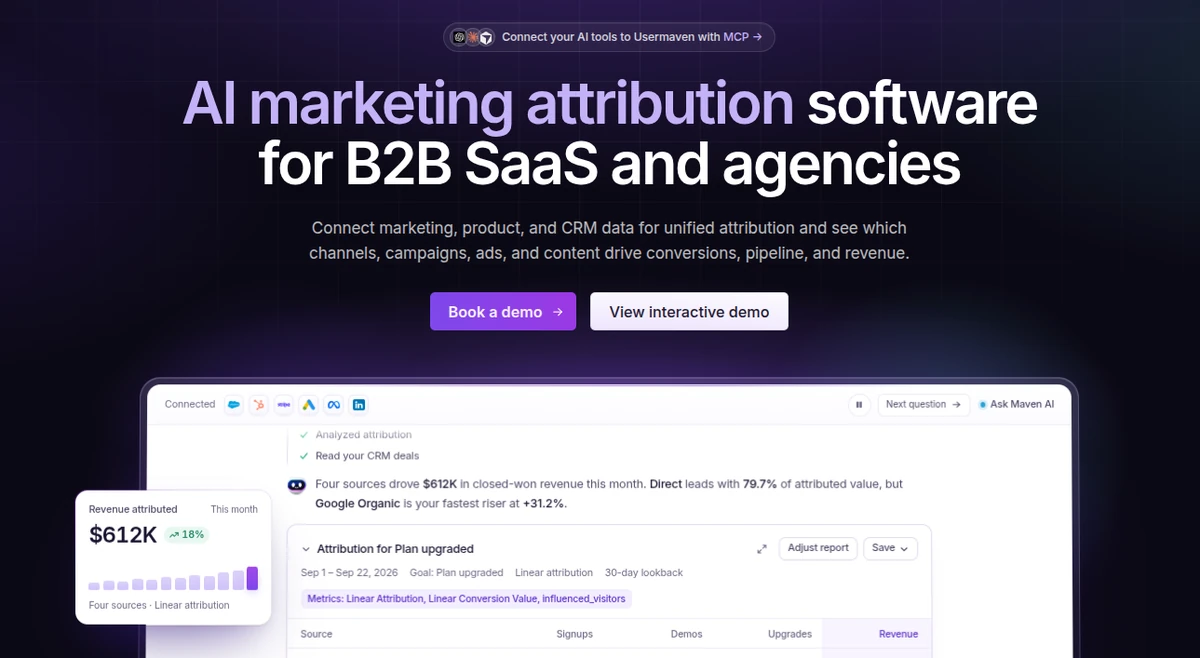
Usermaven provides an AI-powered marketing attribution platform that connects channels, campaigns, ads, and content to conversions, pipeline, and revenue. Powerful supporting features, including website analytics, product analytics, funnels, and user journeys, help teams investigate the customer behavior behind those results.
Company/product: Usermaven / Usermaven
Primary customers: B2B SaaS, ecommerce brands, and agencies
Specialty: Marketing attribution connected to customer and revenue outcomes
Ownership: Privately held; bootstrapped
Key features
- Paid ads and revenue attribution: Compare model allocations and connect marketing activity with CRM outcomes and revenue.
- Connected customer insights: Use analytics, funnels, journeys, and retention as supporting features to investigate acquisition quality and conversion drop-offs.
- Maven AI and Agents: Ask performance questions in plain English and schedule recurring investigations, with findings available in Usermaven, email, or Slack.
Working with this provider
Guided onboarding and implementation are available. Enterprise also includes expert onboarding, a dedicated success manager, and SLA support. Scope the tracking, CRM connections, conversion goals, and reporting deliverables around the outcomes your team needs.
Commercial model: Business and Enterprise plans are quoted around business requirements. White-label analytics and additional workspaces are optional add-ons; Enterprise includes warehouse export and BigQuery integration.
Before you commit: Agree on the initial tracking plan, who validates CRM revenue, and which reporting tasks your team will own after handover.
Usermaven MCP also connects attribution data to compatible tools such as ChatGPT, Claude, and Cursor, extending analysis into an existing AI workflow.
Maximize your ROI
with accurate attribution
2. Dreamdata
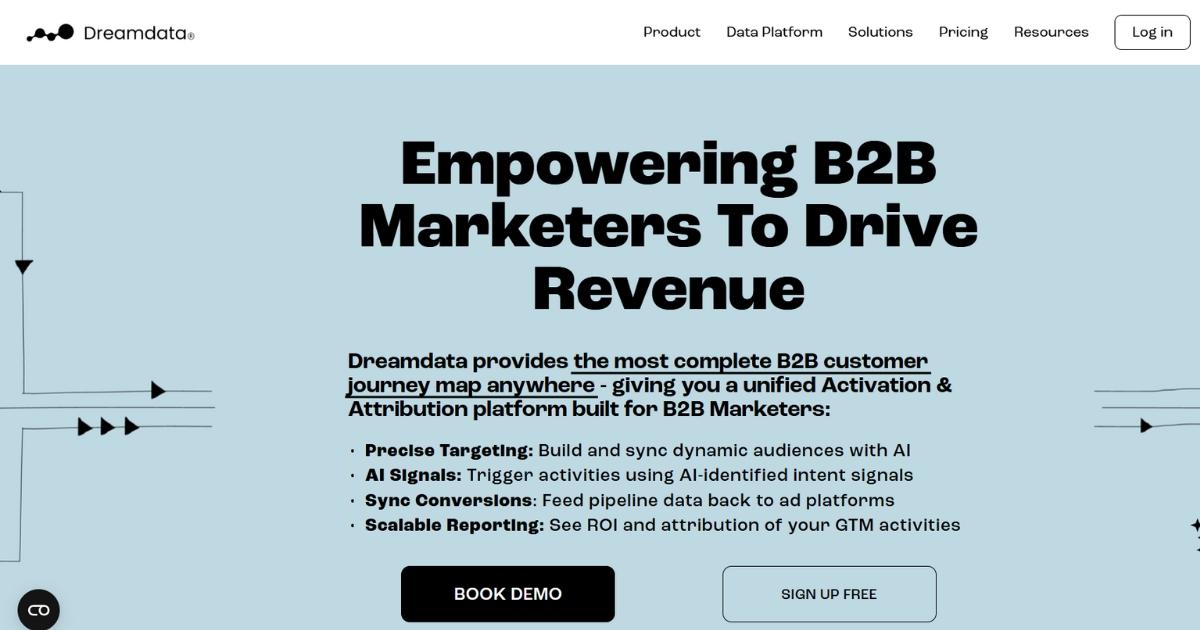
Dreamdata specializes in B2B attribution across account journeys and longer sales cycles. Its provider fit centers on teams that need consistent definitions of accounts, pipeline stages, and marketing contribution across their go-to-market data.
Company/product: Dreamdata / Dreamdata
Primary customers: B2B marketing and marketing operations teams
Specialty: Account-based journeys, revenue attribution, and activation
Ownership: Privately held
Key features
- Account journeys: Inspect buying-group interactions and the sequence of marketing and sales activity before a deal.
- B2B revenue attribution: Evaluate channel contribution using the account and revenue structure defined by your team.
- Audience activation: Use account and pipeline signals to build audiences and feed advertising workflows.
Working with this provider
Dreamdata describes pre-purchase consultation, onboarding, and ongoing product support. Use those sessions to establish account matching, stage definitions, integration scope, and who maintains the reporting framework.
Commercial model: A free plan is available; advanced attribution and activation use custom pricing. Confirm tracked-user allowances, integration scope, and optional services in the proposal.
Before you commit: A Dreamdata alternative should be assessed against the same account structure, implementation scope, and ongoing reporting requirements.
3. HockeyStack
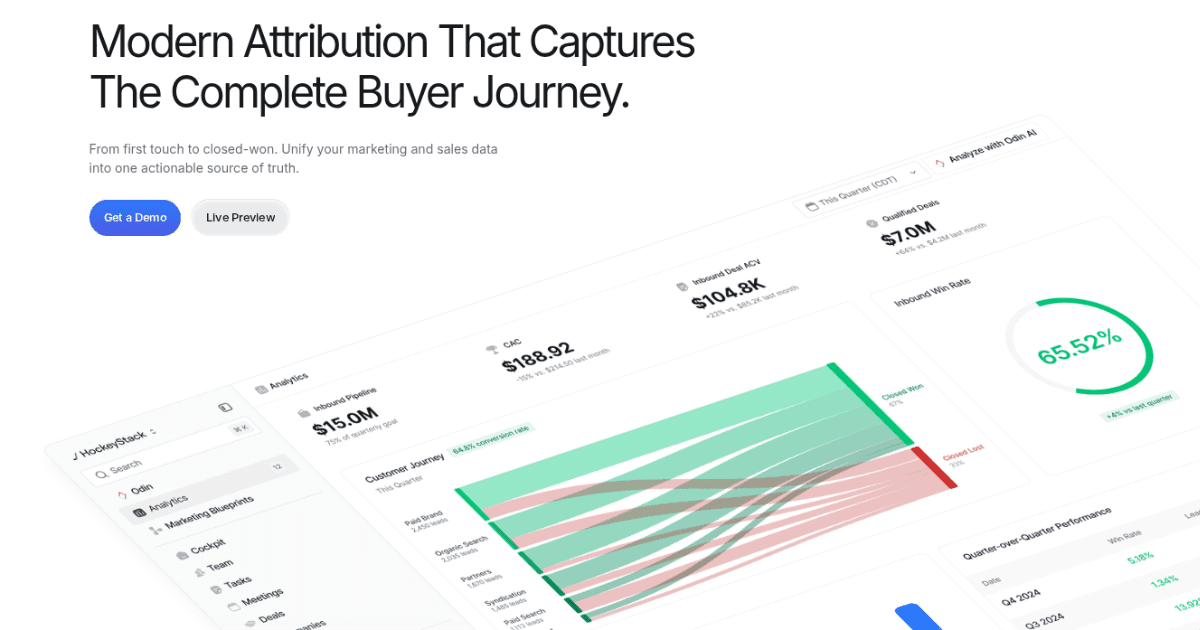
HockeyStack brings marketing and sales activity into an account-level view for B2B revenue teams. Its specialty is a shared GTM measurement framework spanning buyer journeys, attribution, and pipeline reporting.
Company/product: HockeyStack / HockeyStack
Primary customers: Mid-market and enterprise B2B revenue teams
Specialty: Unified GTM data and account-level pipeline measurement
Ownership: Privately held
Key features
- Unified buyer journeys: Connect marketing and sales interactions across the account’s path to closed-won revenue.
- Attribution comparisons: Inspect how different models allocate pipeline and revenue credit across campaigns.
- Custom GTM reporting: Build dashboards around campaign groupings, business rules, and revenue-stage definitions.
Working with this provider
HockeyStack describes self-serve implementation supported by customer success and technical teams for data mapping and reconciliation. Establish which configuration tasks your team owns and how reporting will be checked against source systems.
Commercial model: Custom commercial plans require a sales conversation. Include data sources, required workflows, support, and implementation scope in the quote.
Before you commit: A HockeyStack alternative should be evaluated on CRM mapping, report ownership, and the resources needed to maintain the setup.
4. Factors.ai
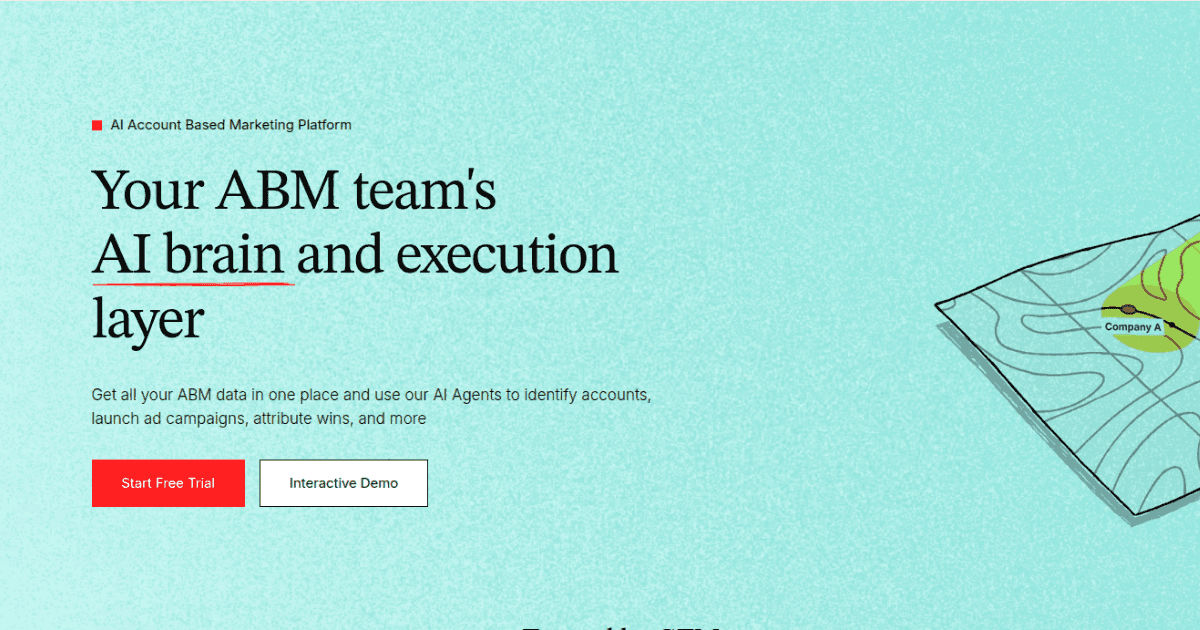
Factors.ai focuses on account-based marketing, combining company identification, intent signals, and attribution. It is most relevant when sales and marketing need to identify engaged accounts and coordinate follow-up around pipeline.
Company/product: Factors.ai / Factors.ai
Primary customers: B2B teams running account-based marketing
Specialty: Account identification, engagement signals, and ABM attribution
Ownership: Privately held
Key features
- Account identification: Connect identifiable website activity with the companies your team wants to reach.
- Engagement and intent signals: Bring website, advertising, and connected intent activity into account prioritization workflows.
- ABM attribution: Connect account engagement with opportunities and revenue to evaluate marketing’s contribution.
Working with this provider
Onboarding and support vary by plan, with higher tiers offering additional customer-success and service options. Test identification coverage, CRM field mappings, and how signals reach sales before agreeing on a rollout.
Commercial model: Paid plans combine subscription tiers with optional Scout usage and other add-ons. Confirm billing terms, integrations, and service allowances for the selected tier.
Before you commit: Comparing Factors.ai alternatives is useful when account identification, website measurement, and revenue attribution carry different priorities for your team.
5. Adobe (Marketo Measure)
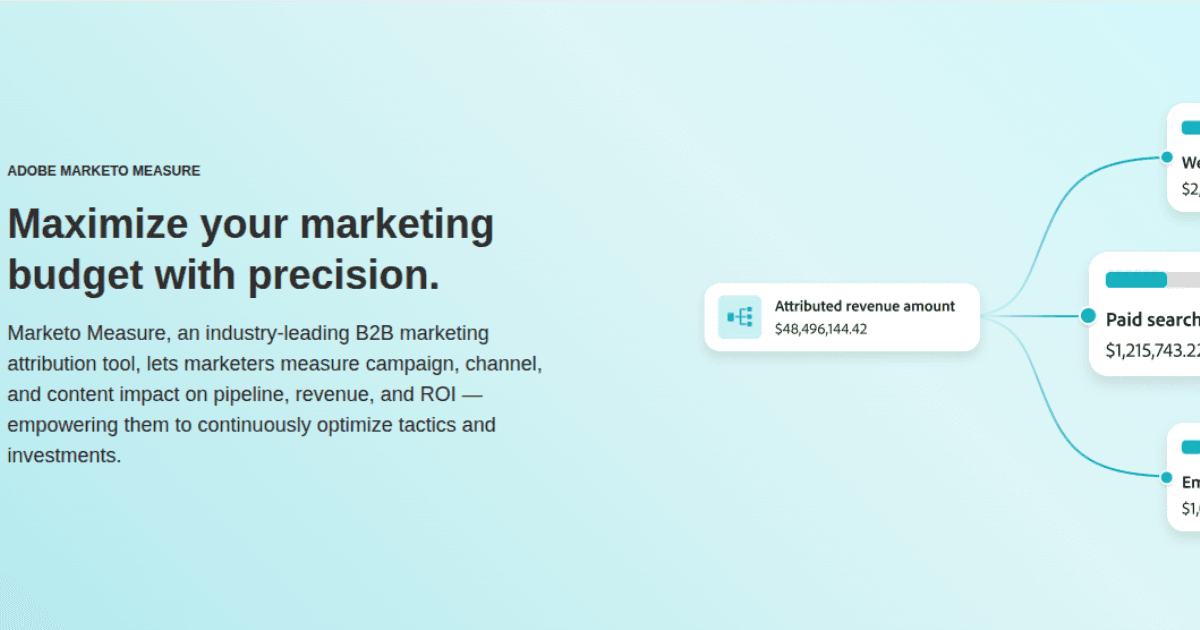
Adobe offers Marketo Measure, formerly Bizible, as its B2B marketing attribution product. Its provider fit is strongest when a marketing operations team needs attribution configured around enterprise CRM processes and an established marketing technology stack.
Company/product: Adobe / Marketo Measure, formerly Bizible
Primary customers: Enterprise B2B marketing operations teams
Specialty: CRM-connected attribution within an enterprise marketing stack
Ownership: Part of Adobe
Key features
- Revenue-stage attribution: Connect touchpoints with lead, opportunity, and closed-won stages in a B2B sales process.
- CRM reporting: Use touchpoint data alongside Salesforce or Microsoft Dynamics records and reporting workflows.
- Configurable attribution: Adjust the measurement framework to reflect the stages and rules used by the business.
Working with this provider
Include CRM administrators and marketing operations in the evaluation. Ask Adobe to document the implementation scope, whether a partner is involved, and who will maintain touchpoint rules and report configuration.
Commercial model: Pricing is quoted through Adobe sales. Request a proposal that separates product licensing, implementation, partner services, and ongoing administration.
Before you commit: Confirm the supported CRM configuration and the exact responsibilities of Adobe, any implementation partner, and your internal team.
6. CaliberMind
CaliberMind is a B2B attribution and revenue intelligence product line within Integrate, following its August 2026 acquisition. It is relevant to teams that need to connect complex marketing and CRM data with account and opportunity outcomes.
Company/product: Integrate / CaliberMind
Primary customers: Mid-market and enterprise B2B marketing operations
Specialty: Account-centric attribution and governed revenue data
Ownership: Part of Integrate
Key features
- Account-centric data model: Relate campaign members, contacts, accounts, and opportunities for consistent B2B reporting.
- Multi-touch attribution: Compare marketing contribution across pipeline and revenue using the configured model.
- Data preparation: Normalize source data and inspect the relationships behind attribution reports.
Working with this provider
The acquisition announcement states that existing contracts, integrations, and customer-success relationships remain in place. New buyers should distinguish capabilities available today from the broader Integrate interoperability targeted for 2027.
Commercial model: Pricing is custom. Confirm the CaliberMind scope and whether any Integrate products or services are included or separately contracted.
Before you commit: Request a written list of current capabilities, implementation deliverables, and optional future integrations.
7. Ruler Analytics
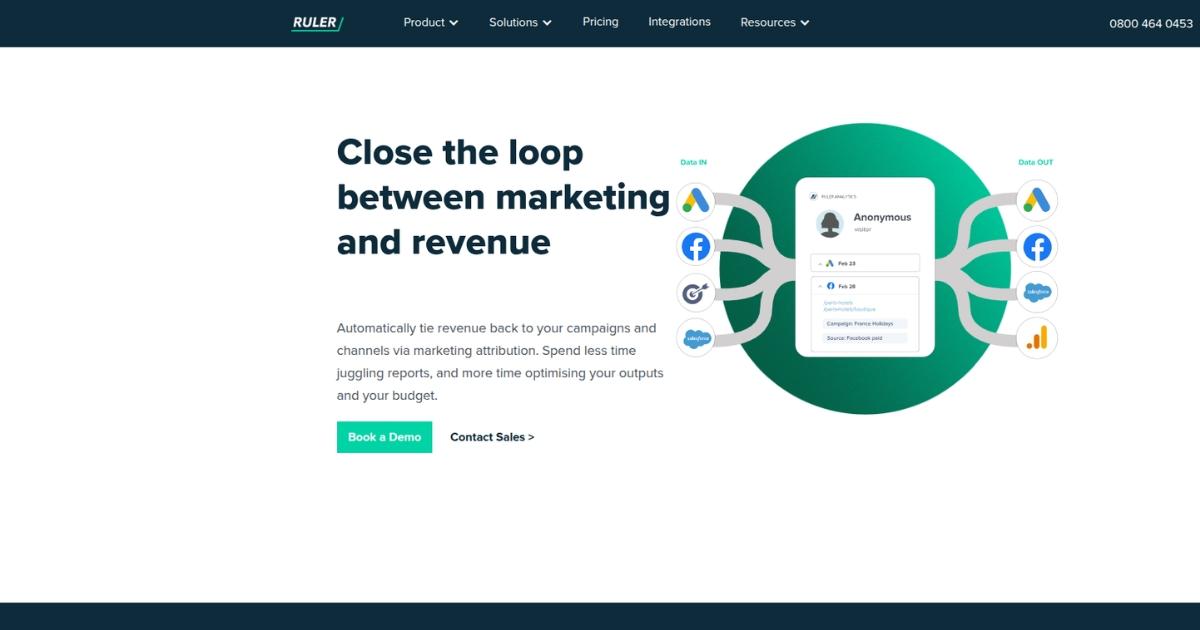
Ruler Analytics specializes in closed-loop attribution for businesses where calls, enquiries, and offline sales matter. Its provider fit depends on connecting the lead captured by marketing with the eventual outcome recorded in the CRM.
Company/product: Ruler Analytics / Ruler Analytics
Primary customers: Lead-generation businesses and agencies
Specialty: Calls, forms, and offline revenue attribution
Ownership: Privately held
Key features
- Call attribution: Connect phone enquiries with the marketing sources and campaigns that generated them.
- Lead tracking: Follow form submissions and other enquiries through the customer journey.
- CRM revenue connection: Bring sales outcomes back into channel and campaign measurement.
Working with this provider
Walk through a real call or form enquiry from first visit to closed sale. Ask how tracking numbers, CRM updates, offline outcomes, and onboarding support are scoped for your organization.
Commercial model: Subscriptions scale with traffic and the required product, data, and integration scope. Ruler Analytics pricing should be evaluated alongside call-tracking and onboarding requirements.
Before you commit: Confirm which plan covers the attribution, planning, and support capabilities needed by your team.
8. Cometly
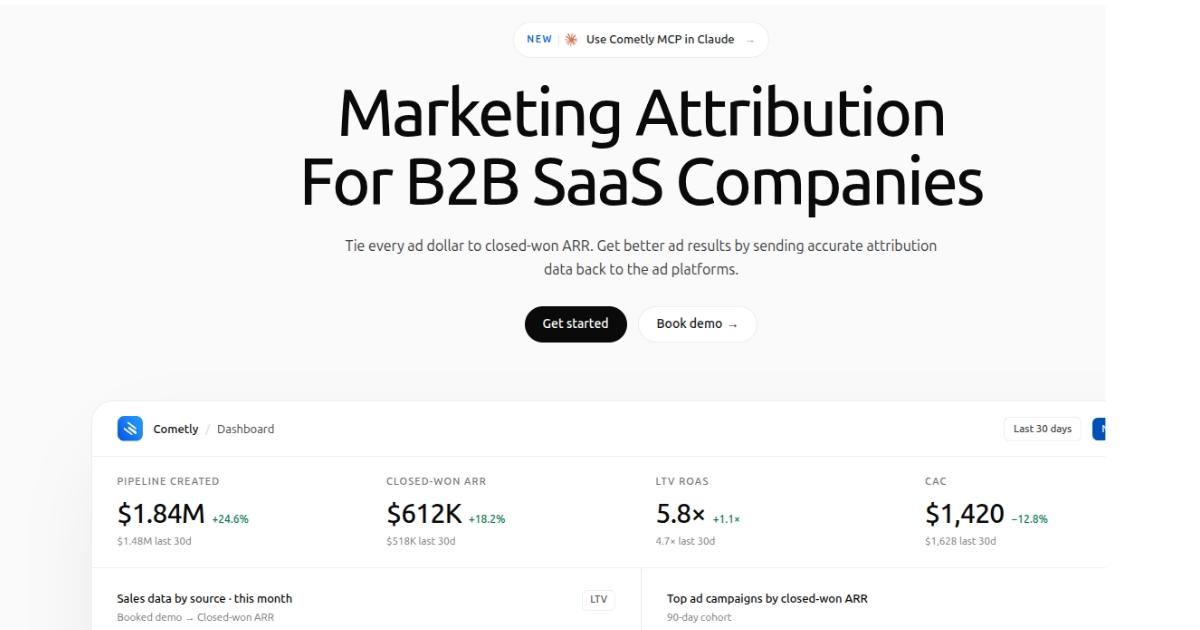
Cometly focuses on paid acquisition measurement, connecting advertising interactions with leads, pipeline, and sales. It is relevant when improving the conversion data sent back to advertising platforms is central to the project.
Company/product: Cometly / Cometly
Primary customers: Paid acquisition teams and performance marketing agencies
Specialty: Ad-to-revenue tracking and conversion feedback
Ownership: Privately held
Key features
- Server-side conversion tracking: Collect business outcomes through connected tracking and source-system events.
- Ad-platform feedback: Send conversion data to advertising platforms to support optimization around recorded outcomes.
- Revenue attribution: Compare paid-channel contribution against pipeline and revenue rather than lead volume alone.
Working with this provider
Cometly offers professional onboarding with a dedicated specialist. Agree on the tracking plan, CRM connections, event validation, and the handover from implementation to ongoing support.
Commercial model: Core and Enterprise are priced by tracked pageviews, with monthly or annual billing. Cometly pricing therefore depends on traffic volume and the required integration scope.
Before you commit: Confirm how pageviews are counted, which Enterprise connections are required, and how duplicate conversions will be prevented.
9. Triple Whale

Triple Whale combines attribution with ecommerce operating data for Shopify and DTC brands. Its provider fit depends on bringing store, advertising, order, and cost data into a consistent commercial view.
Company/product: Triple Whale / Triple Whale
Primary customers: Shopify and DTC ecommerce operators
Specialty: Store-connected attribution and ecommerce performance
Ownership: Privately held
Key features
- First-party shopper tracking: Use Triple Pixel to connect advertising interactions with activity in the store.
- Commerce reporting: Review campaign and creative performance alongside order and revenue data.
- Broader measurement: Combine attribution with MMM and incrementality through the relevant Compass package.
Working with this provider
The onboarding workflow covers store authorization, ad integrations, tracking, and cost inputs. Validate installation and order reconciliation, then confirm the support and customer-success arrangements for your package.
Commercial model: A free plan is available, while paid packages and AI usage have separate terms and allowances. Triple Whale pricing should be checked against GMV, contract length, and the required measurement package.
Before you commit: Confirm store-platform compatibility and how revenue, refunds, shipping, and other costs will be reconciled.
10. Northbeam
Northbeam serves ecommerce advertisers that need attribution alongside broader media measurement. It is relevant when media teams need to investigate channel contribution, view-through interactions, and budget scenarios.
Company/product: Northbeam / Northbeam
Primary customers: Ecommerce brands with substantial paid-media investment
Specialty: Media measurement and budget analysis
Ownership: Privately held
Key features
- Multi-touch attribution: Evaluate channel and campaign contribution using first-party marketing and order data.
- MMM Plus: Compare modeled channel impact and budget scenarios beyond individually tracked journeys.
- Northbeam Apex: Send Northbeam performance signals to supported advertising platforms.
Working with this provider
Northbeam’s Media Strategy team provides analytical guidance, with dedicated onboarding and ongoing support described for Professional and Enterprise. Clarify the cadence and scope of that service for the proposed plan.
Commercial model: Subscription pricing depends on the plan and tracked data volume. Confirm the cost of measurement modules, strategic support, and any agency-partner arrangement.
Before you commit: A Northbeam alternative should be compared against the same measurement scope, support needs, and total contract cost.
11. Rockerbox
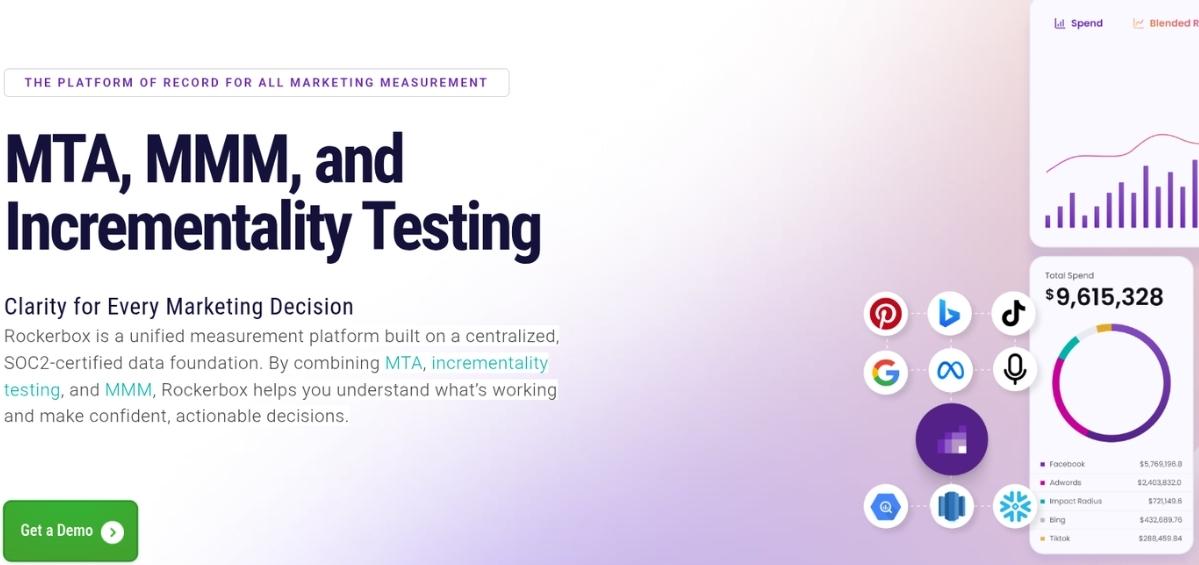
Rockerbox is DoubleVerify’s marketing measurement offering, following its 2025 acquisition. Its specialty is combining attribution, media mix modeling, and incrementality for advertisers with complex channel mixes.
Company/product: DoubleVerify / DV Rockerbox
Primary customers: Large multichannel advertisers
Specialty: Attribution, MMM, and incrementality across channels
Ownership: Part of DoubleVerify
Key features
- Cross-channel attribution: Connect touchpoints across supported digital and offline sources.
- MMM and scenario planning: Evaluate modeled channel contribution and compare spending scenarios.
- Incrementality measurement: Use testing alongside attribution to assess whether activity generates additional outcomes.
Working with this provider
Ask the team to map the required data sources and explain how attribution, modeling, and testing will be delivered together. Clarify the support relationship and any dependencies on other DoubleVerify products.
Commercial model: Pricing is quoted around the required scope. Rockerbox pricing should be assessed with data integration, measurement services, and any additional products included.
Before you commit: Separate the capabilities in the proposed contract from broader DoubleVerify roadmap or suite-level descriptions.
12. Wicked Reports
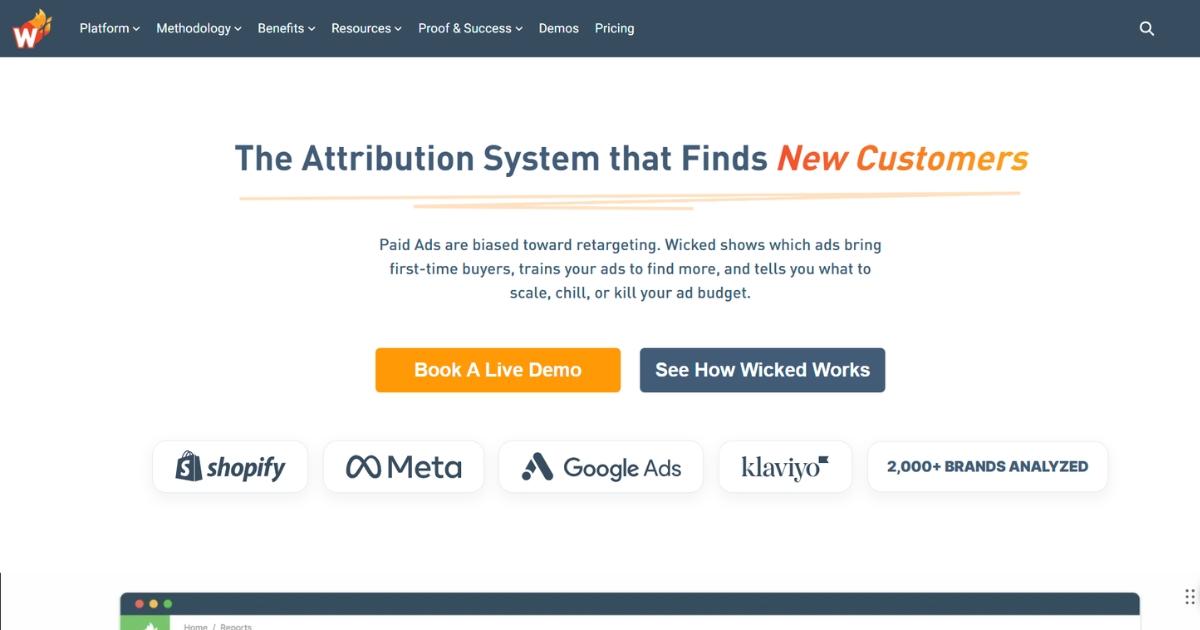
Wicked Reports focuses on first-party attribution for businesses with repeat purchases or subscription revenue. Its provider fit centers on distinguishing acquisition performance from revenue generated by existing customers.
Company/product: Wicked Reports / Wicked Reports
Primary customers: Ecommerce and subscription marketing teams
Specialty: New-customer acquisition and lifetime-value attribution
Ownership: Privately held
Key features
- Lifetime-value attribution: Connect initial marketing interactions with later customer purchases and recurring revenue.
- Cohort analysis: Review revenue outcomes by acquisition cohort to evaluate longer-term campaign value.
- New-customer measurement: Assess acquisition performance separately from retargeting and repeat-customer revenue.
Working with this provider
Use a sample of real orders to test first-time versus returning-customer classification. Establish how historical purchases, subscriptions, and repeat orders will be imported and reconciled with your sales system.
Commercial model: Subscription tiers scale with business revenue, with some AI capabilities offered as add-ons. Confirm the complete package and implementation costs in the proposal.
Before you commit: Agree on the treatment of refunds, subscription renewals, attribution windows, and the source of truth for order revenue.
13. Attribution
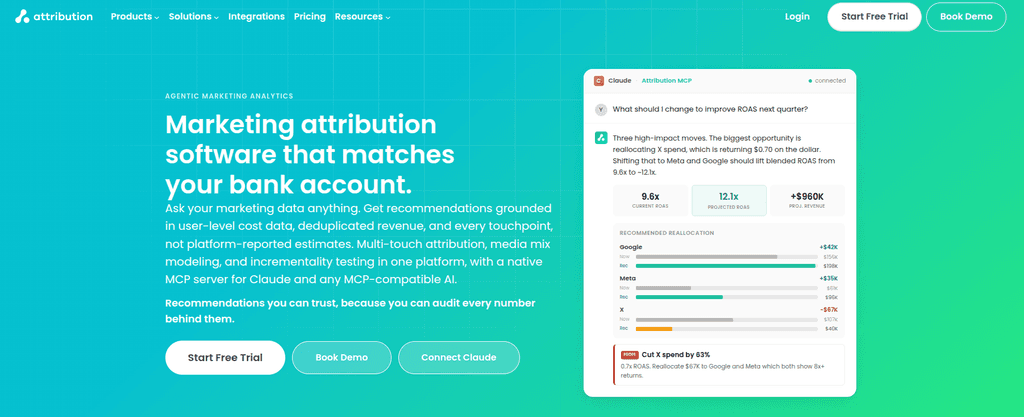
Attribution, also known as Attribution App, connects marketing cost with user-level journeys and revenue. Its provider fit depends on the integrations, identity structure, and reporting access needed by the business.
Company/product: Attribution / Attribution App
Primary customers: B2B SaaS, ecommerce, and other growth teams
Specialty: User-level cost and revenue attribution
Ownership: Privately held
Key features
- Cost-to-revenue reporting: Connect ad costs with user and conversion records to inspect marketing contribution.
- Configurable multi-touch models: Compare attribution rules and lookback settings against actual customer journeys.
- Connected analysis: Use supported CRM and commerce integrations, with MCP available for AI-assisted investigation.
Working with this provider
Optional managed onboarding is available on Pro and Shopify; Custom includes managed onboarding. Confirm the source integrations, identity matching, and the support tier needed for your setup.
Commercial model: Pro and Shopify have published subscription prices; Custom is quoted by traffic. Data export and API access are separately quoted add-ons.
Before you commit: Include onboarding, tracked-user overages, export access, and ongoing support when comparing the full cost.
14. Hyros

Hyros serves advertisers that need to connect individual ads with sales across calls, payments, and multi-step funnels. Its provider fit is strongest when a lead’s eventual purchase is more useful than the initial enquiry cost.
Company/product: Hyros / Hyros
Primary customers: Direct-response, coaching, and high-ticket businesses
Specialty: Ad-to-sale attribution across calls and multi-step funnels
Ownership: Privately held
Key features
- Ad-to-sale tracking: Connect recorded sales with the advertising interactions that preceded them.
- Call-based journeys: Include booked calls and recorded sales outcomes in campaign evaluation.
- Conversion feedback: Send supported sales events back to ad platforms to support outcome-based optimization.
Working with this provider
Bring examples of booked calls, qualified opportunities, completed payments, and refunds into the evaluation. Ask the team to demonstrate matching and explain how integration issues and duplicate events will be handled.
Commercial model: Pricing depends on the plan, billing terms, and tracked revenue. Hyros pricing should be checked against your sales volume and required implementation scope.
Before you commit: Confirm the revenue definition used for billing and which payment, CRM, and call outcomes are supported.
15. Fibbler
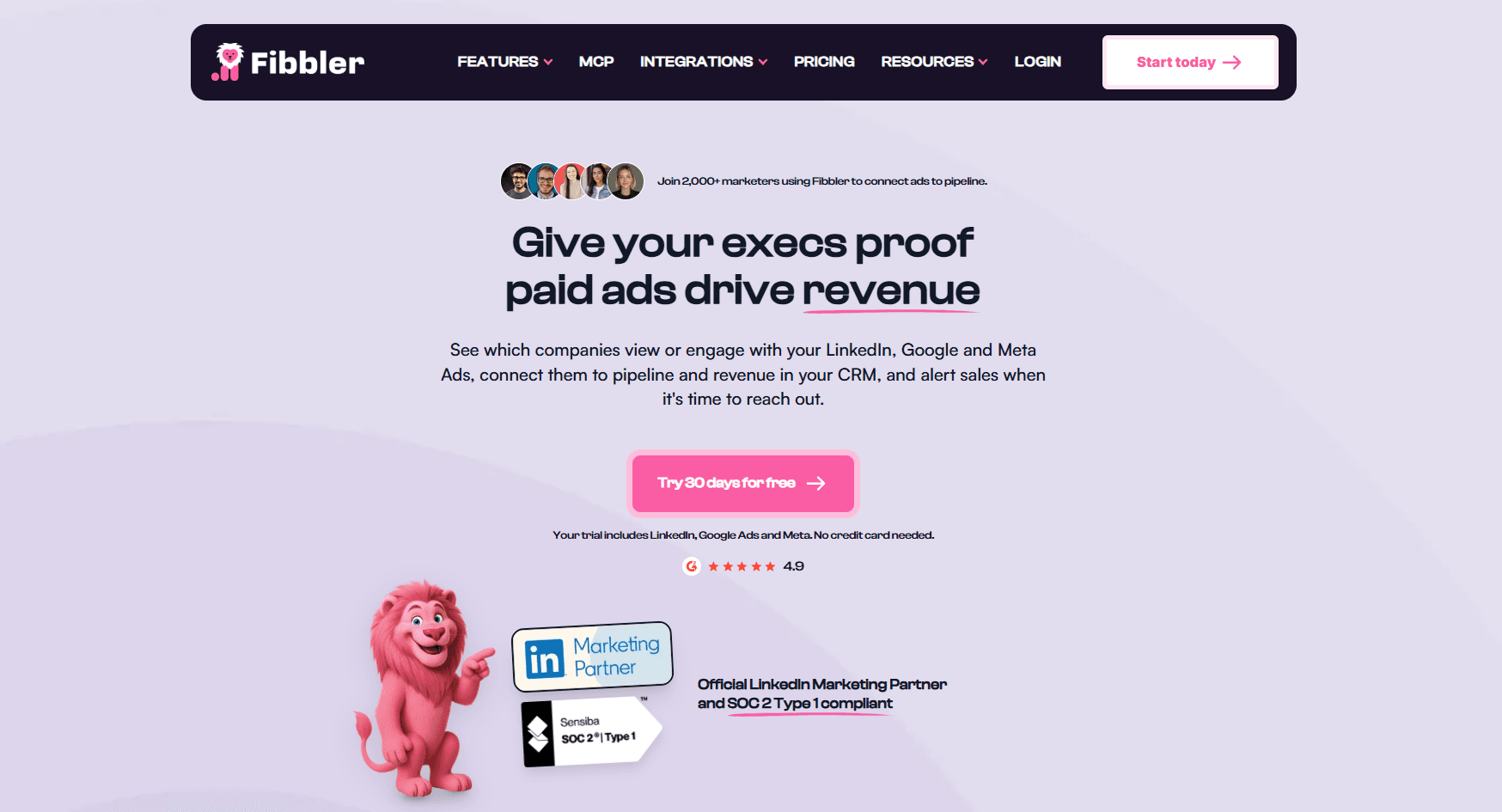
Fibbler is a paid ads attribution provider that connects company-level ad engagement with CRM pipeline. LinkedIn is the base offering, with Google Ads and Meta Ads attribution available as paid add-ons.
Company/product: Fibbler / Fibbler
Primary customers: B2B teams running LinkedIn-led paid campaigns
Specialty: Company-level paid-ad engagement and pipeline influence
Ownership: Privately held; bootstrapped
Key features
- Company-level engagement: Inspect which accounts receive and engage with LinkedIn advertising.
- CRM pipeline influence: Connect company engagement with opportunities and closed deals in supported CRMs.
- Additional paid channels: Add Google or Meta company-visit attribution to extend the paid-channel view.
Working with this provider
Fibbler offers a self-serve trial. Connect the intended CRM and ad accounts, then test domain matching, historical coverage, sync behavior, and the campaign breakdowns needed by marketing and sales.
Commercial model: Monthly or annual base plans cover LinkedIn attribution; Google and Meta are separate per-workspace add-ons. CRM availability and MCP access vary by plan.
Before you commit: Comparing Fibbler alternatives helps establish whether company-level pipeline influence covers your needs or person-level and product journeys are also required.
What company ownership means for buyers
A private company can be bootstrapped or investor-backed. A product can also operate within a larger group while retaining its own brand. These relationships help identify the contracting and support structure; they do not establish service quality or guarantee the roadmap.
| Offering | Company relationship | What to confirm |
|---|---|---|
| Marketo Measure | An Adobe product; formerly Bizible | Licensing, implementation partners, CRM support, and administration. |
| CaliberMind | An Integrate product line following the August 2026 acquisition | Current capabilities, contracted services, and the scope of future interoperability. |
| Rockerbox | Part of DoubleVerify following its 2025 acquisition | Product scope, data integrations, and the ongoing support relationship. |
Bizible was acquired by Marketo in 2018, before Adobe acquired Marketo later that year. The product was renamed Adobe Marketo Measure in 2022. Company and product histories should be distinguished when evaluating the current offering.
For any provider, ask who signs the agreement, who handles support, and which capabilities are available today. Assess planned features separately from the deliverables included in the contract.
How to choose a marketing attribution company
Build a shortlist around the operating requirements of your business, then ask each provider to respond to the same brief. This makes differences in implementation scope, service, and commercial terms easier to assess.
Match the provider to your sales motion
B2B marketing attribution needs to connect accounts, buying groups, opportunities, and longer sales cycles. Ecommerce teams should establish how orders and repeat purchases are handled; lead-generation teams should test calls and offline outcomes.
Document your primary conversion, source systems, reporting audience, and the decisions the reports must support. Use that brief to determine which provider has relevant experience with your operating model.
Assign implementation and maintenance owners
Name the people responsible for website tracking, CRM access, identity mapping, and revenue validation. Ask the provider to separate the work it will perform from tasks assigned to your team or an implementation partner.
The handover should explain how to add a conversion, fix a broken connection, change a report, and investigate a data discrepancy. Define who maintains the system when your stack or sales process changes.
Test a real journey before rollout
Use a complete customer example: the marketing interaction, website activity, lead or order record, and final revenue outcome. Reconcile source records and explain differences caused by attribution models, windows, refunds, or stage definitions.
Choose acceptance criteria before the pilot begins. Detailed multi-touch attribution tools comparisons can establish model requirements, while the pilot tests whether the provider can implement those requirements in your environment.
Define support and the working relationship
Ask about support channels, response commitments, escalation, training, and the availability of technical specialists. Establish whether ongoing reporting design and integration changes are included, optional services, or your own responsibility.
Request a reference or implementation example that resembles your business model and stack. Use it to understand delivery responsibilities and day-to-day administration.
Compare the complete commercial proposal
Marketing attribution software cost depends on more than the subscription. Compare onboarding, data-volume allowances, support, optional modules, and the internal time required to maintain measurement.
Ask how billing changes when traffic, tracked users, revenue, workspaces, or connected sources grow. Record the initial term, renewal process, cancellation notice, and which services are separately scoped.
Check data governance and exit options
Confirm where customer data is processed, who can access it, and how permissions and deletion requests are handled. A company’s headquarters do not establish where its data is hosted.
Before committing, confirm which events, identities, model settings, and reports you can export, in what format, and at what cost. Agree on access and retention during a transition to another provider.
What to request before signing
Ask shortlisted providers for the same six deliverables so the final decision is based on evidence and a clear working agreement.
| Deliverable | What it should establish |
|---|---|
| Implementation scope | Data sources, conversion definitions, task owners, and the handover. |
| Validation example | A customer journey reconciled to CRM or order records, with differences explained. |
| Support arrangement | Support channels, escalation, training, and configuration-change responsibilities. |
| Commercial proposal | Subscription, onboarding, usage allowances, services, add-ons, and renewal terms. |
| Data and access summary | Hosting, permissions, connected-system access, and relevant security documentation. |
| Exit and export plan | Exportable data, formats, fees, retention, and transition access. |
Final thoughts
Choose a marketing attribution company by testing how well its specialty, implementation approach, and support fit your business. A strong proposal makes the deliverables, responsibilities, validation process, and total cost clear before the rollout begins.
To evaluate how Usermaven would connect your marketing activity to revenue, book a demo of its marketing attribution platform using your own campaign, CRM, and reporting requirements.
FAQs
1. What are marketing attribution companies?
Marketing attribution companies provide platforms that connect marketing touchpoints with conversions, pipeline, and revenue. Some also offer implementation or advisory services. This guide covers software providers and attribution product lines within larger companies.
2. How is an attribution company different from an attribution agency?
A software provider develops and supports the measurement platform. An agency or consultant may select, implement, or operate that platform for a client. Some vendors offer both software and services, so establish the exact responsibilities in the proposal.
3. Which marketing attribution company fits my business?
Start with your sales motion and data sources. Usermaven serves B2B SaaS, ecommerce, and agency teams that want marketing attribution with supporting AI and customer insights. Other providers specialize in account-based B2B, store operations, calls, or enterprise media measurement. Validate the fit with your own data.
4. How much implementation work will my team need to do?
The workload depends on your tracking, CRM structure, integrations, and reporting requirements. Ask who will install tags, authorize connections, map records, validate revenue, train users, and maintain the setup. A tracking snippet alone does not establish that the full attribution workflow is ready.
5. What should I ask about onboarding and ongoing support?
Confirm the onboarding deliverables, included hours, support channels, escalation process, and the owner of configuration changes. Ask whether report design, new integrations, and training after launch are included or charged separately.
6. Does company ownership affect the buying decision?
Ownership is useful context for contracting, product relationships, and support arrangements. Adobe offers Marketo Measure, Rockerbox is part of DoubleVerify, and CaliberMind is part of Integrate. Private ownership or investor backing alone does not establish product quality, financial stability, or the level of service you will receive.
7. What costs should a provider proposal include?
Request a breakdown of subscription fees, implementation, support, usage allowances, add-ons, and renewal terms. Include internal administration and any implementation partner. Compare proposals using the same data volumes, integrations, and measurement requirements.
8. What should I check before switching attribution providers?
Confirm which historical events, identities, model settings, and reports can be exported, their format, and any fees or retention limits. Plan how to compare the old and new systems, explain differences in definitions, and preserve access to the evidence behind past reports.

Written by
Adeel Khan
Growth Marketing Expert
Adeel Khan is a full-stack SaaS marketer with 10+ years of experience in content marketing, paid advertising, analytics, and conversion rate optimization. He shares practical insights and strategies drawn from hands-on experience, helping B2B SaaS marketers improve performance and make better marketing decisions.
All articles by Adeel →