Every marketing campaign costs money, but not every campaign brings results. Without the right data, budgets get drained on low-performing channels, ineffective ads, and missed opportunities. Digital marketing analytics helps track what’s working and what’s not, ensuring that resources go to strategies that drive real impact. It identifies wasted spend, optimizes performance, and turns insights into smarter decisions.
In this blog, we will go through the key aspects of digital marketing analytics, how it prevents budget waste, and how Usermaven helps you make data-driven marketing decisions.
What is digital marketing analytics?
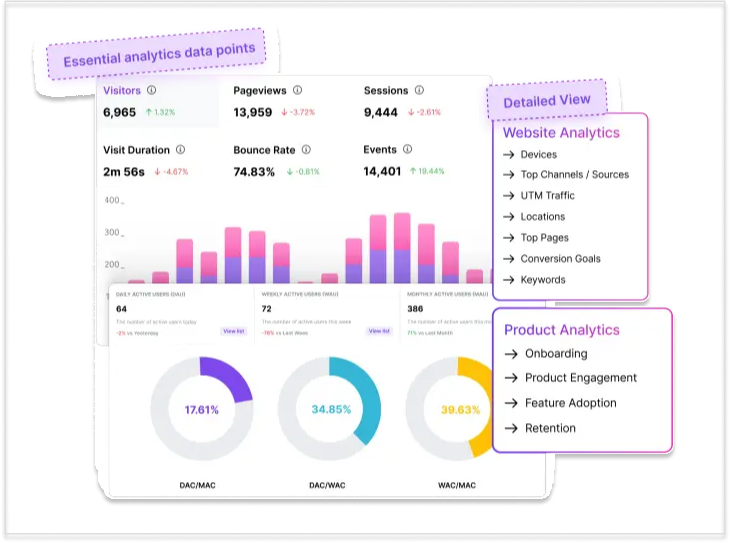
Digital marketing analytics is the process of gathering, measuring, and analyzing data from online marketing efforts to assess performance and improve results. It helps businesses understand how users interact with their digital presence and which strategies drive the best outcomes.
Key aspects of digital marketing analytics include:
- Tracking performance across multiple channels – Websites, social media, email campaigns, paid ads, and search engines.
- Measuring key digital marketing metrics – Traffic sources, user engagement, conversion rates, and customer journey insights.
- Optimizing marketing strategies – Identifying high-performing campaigns and reallocating budgets for better ROI.
- Understanding customer behavior – Analyzing how users navigate a website, what content interests them, and what drives conversions.
- Improving decision-making – Using real-time data to adjust strategies instead of relying on assumptions.
With digital marketing analytics, businesses can make informed decisions, refine their marketing efforts, and ensure resources are spent on strategies that generate the best results.
Why is digital marketing analytics important?
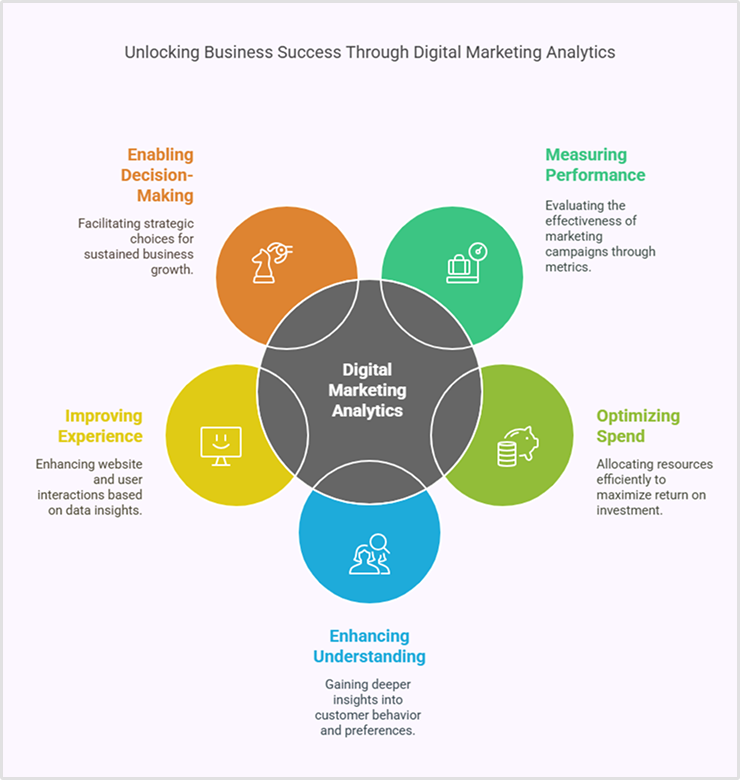
Understanding and utilizing analytics in digital marketing is crucial for businesses aiming to improve their strategies, enhance customer experiences, and maximize returns. It enables marketers to make data-driven decisions rather than relying on assumptions, ensuring every marketing effort contributes to measurable success.
Measuring campaign performance
Digital marketing efforts span multiple channels, from social media and paid ads to email campaigns and search engines. Without proper tracking, businesses risk wasting resources on ineffective strategies. Digital analytics provides clarity by measuring key performance indicators such as traffic, engagement, conversions, and return on investment. By analyzing these metrics, businesses can determine what’s working, what needs improvement, and how to refine their campaigns for better results.
Optimizing marketing spend
Every marketing dollar spent should contribute to meaningful outcomes. With analytics in digital marketing, businesses can identify which platforms and campaigns generate the highest ROI. Instead of spreading the budget across multiple channels without clear results, marketers can reallocate funds to the most effective strategies. AI budgeting tools can further optimize spend by automatically analyzing performance data and recommending the most cost-effective channels. This leads to better resource management, cost efficiency, and improved overall performance.
Enhancing customer understanding and personalization
Knowing your audience is key to successful marketing—not just for engagement but also to avoid wasting money on ineffective targeting. Analytics for digital marketing helps businesses gather insights into customer demographics, preferences, and behaviors, ensuring that marketing efforts focus only on high-value prospects.
Instead of spending on broad, untargeted campaigns, businesses can:
- Identify which customer segments convert best and allocate budgets accordingly.
- Personalize content to increase engagement and reduce ad spend inefficiency.
- Optimize remarketing efforts to retain customers at a lower cost than acquiring new ones.
By eliminating guesswork, businesses avoid pouring money into campaigns that don’t resonate with their ideal customers.
Target the right audience
with Usermaven Segments
Improving website and user experience through analytics
A well-optimized website plays a major role in digital success. Analytics in digital marketing helps businesses understand how users interact with their site, revealing patterns such as high bounce rates, slow-loading pages, or ineffective call-to-action placements. By analyzing user behavior, marketers can make data-backed adjustments that enhance website performance, improve navigation, and ultimately increase conversions.
Enabling data-driven decision-making for long-term success
Making informed decisions is what sets successful businesses apart. Analytics for digital marketing ensures that every strategy is backed by real-time data, reducing guesswork and uncertainty. Whether it’s adjusting content strategies, refining ad targeting, or predicting market trends, businesses can continuously optimize their marketing efforts for sustainable growth.
Using digital marketing analytics helps businesses make smarter decisions, refine strategies, and maximize results by turning data into actionable insights.
What are the key metrics for digital marketing analytics?
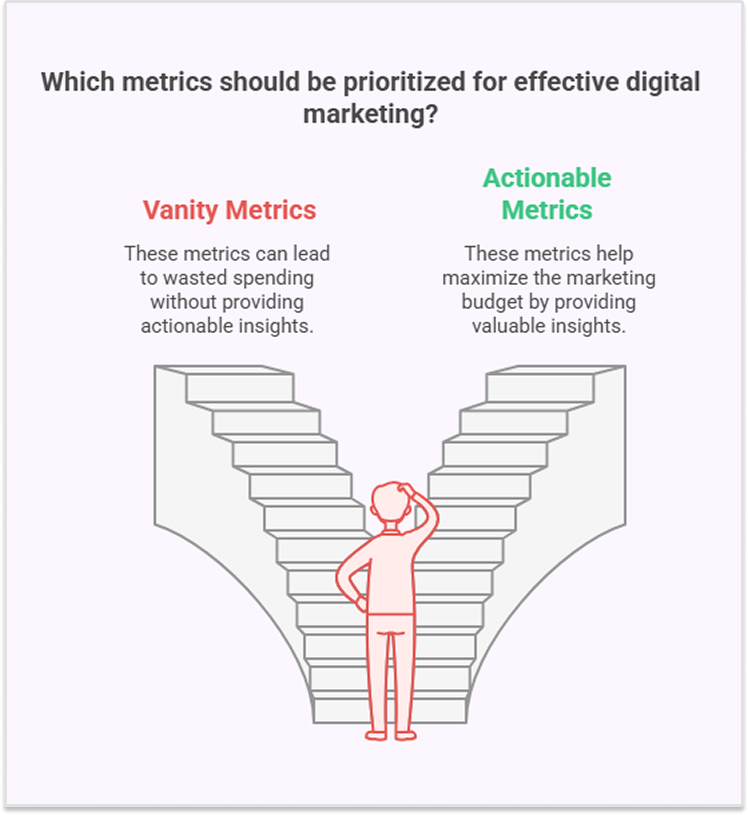
Not all metrics in digital marketing analytics hold the same value. Some may look great on website reports but don’t translate into real business impact, while others provide actionable insights that help refine strategies and maximize ROI. Understanding the difference ensures your marketing efforts are data-driven and effective.
Vanity metrics that can lead to wasted spend
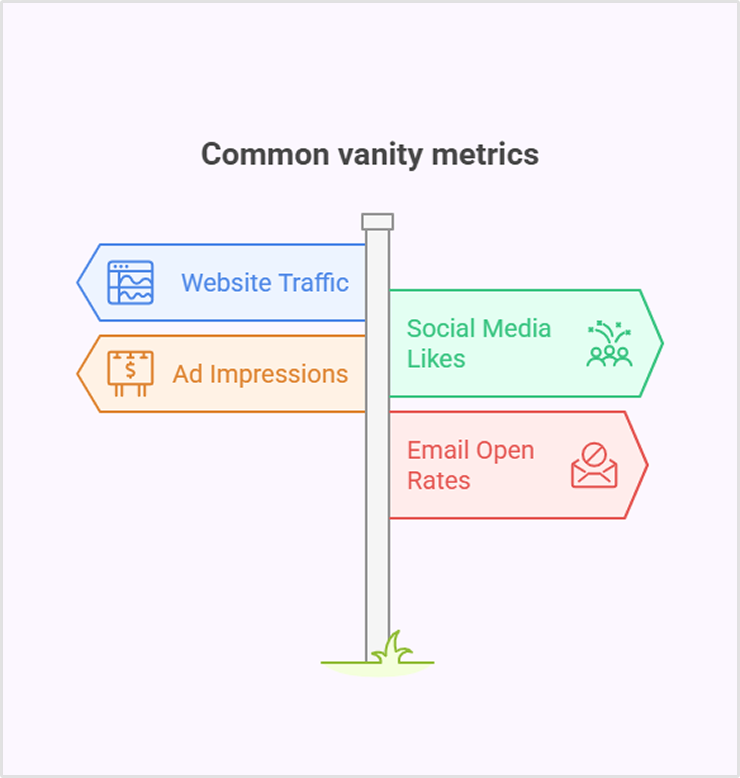
These metrics might create an illusion of success, but they rarely provide insights that often lead to wasted spend without driving real growth.
Website traffic without engagement
Driving website traffic through paid ads is costly if visitors don’t convert. Instead of focusing solely on traffic numbers, prioritize customer engagement and conversion rates to ensure real business impact.
Social media likes and followers
High follower counts don’t guarantee success. If followers aren’t engaging with content or converting into customers, marketing spending might be misplaced. Focus on meaningful interactions rather than vanity metrics.
Ad impressions and reach
Ads seen by thousands don’t matter if they don’t lead to actual conversions. Click-through rates (CTR) and conversion tracking provide a clearer picture of whether an ad campaign is effective or just draining your budget.
Email open rates without clicks
A high open rate suggests an engaging subject line, but if recipients don’t take action, the email isn’t achieving its conversion goal. Click-through rates and conversions offer a clearer picture of email marketing success.
Actionable metrics that help maximize your marketing budget
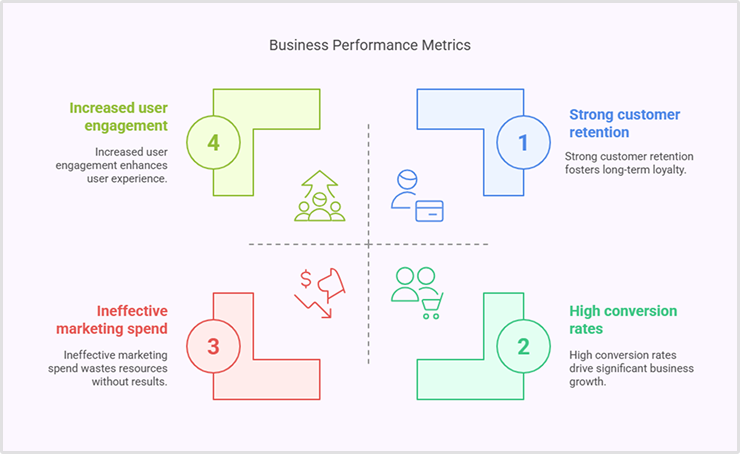
Unlike vanity metrics, these provide valuable insights that help optimize marketing efforts and drive real results.
Engagement and user behavior
Metrics that show how users interact with your website and content help improve customer experience. Key indicators include:
- Bounce rate – A high bounce rate may indicate poor content relevance or a bad user experience.
- Pages per session – More pages suggest that users find your content valuable.
- Time on page – The longer users stay, the more engaging your content is.
Conversion and sales performance
Tracking conversions ensures that marketing efforts are driving real business outcomes. Important metrics include:
- Conversion rate – The percentage of visitors who take a desired action.
- Cost per acquisition (CPA) – Helps measure the cost-effectiveness of marketing campaigns.
- Customer lifetime value (CLV) – Indicates the long-term revenue potential from each customer.
Marketing spend efficiency
It’s essential to know where your marketing budget is best spent. These metrics help:
- Return on ad spend (ROAS) – Determines the profitability of paid advertising.
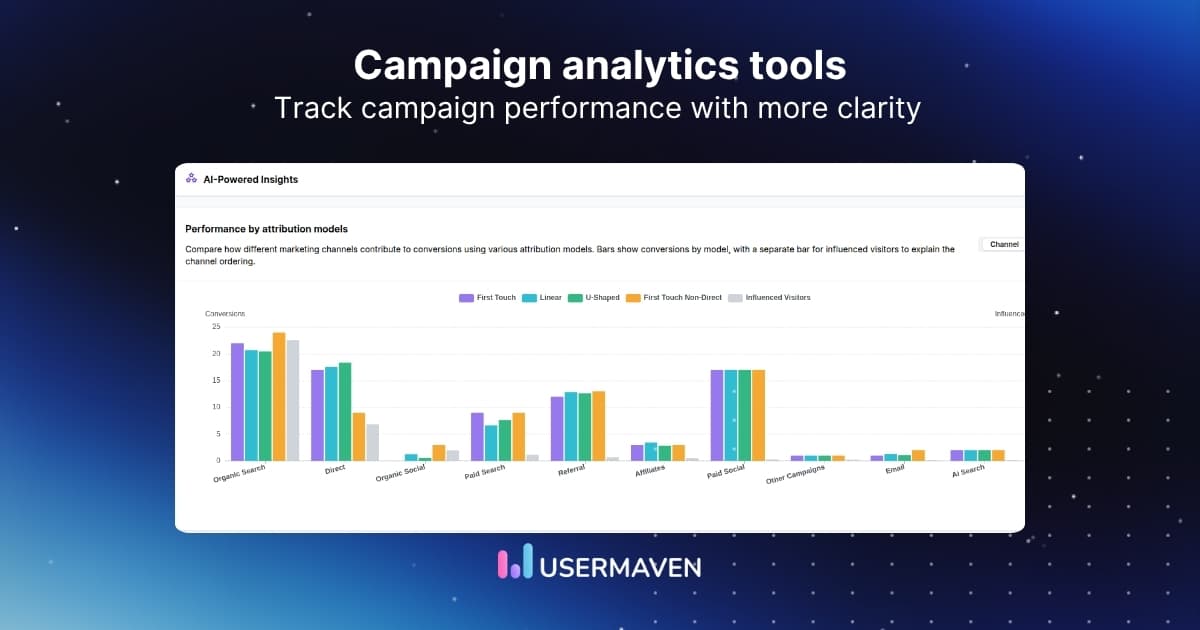
- Attribution models – Show which channels contribute most to conversions.
- Engagement-to-conversion ratio – Helps refine audience targeting strategies.
Retention and customer loyalty
Acquiring customers is important, but keeping them engaged is even more valuable. Key retention metrics include:
- Repeat purchase rate – Shows how many customers return.
- Churn rate – Helps identify why customers leave.
- Net promoter score (NPS) – Measures customer satisfaction and customer loyalty.
Power up your SaaS
with perfect product analytics
Focusing on the right metrics in digital marketing analytics is the key to long-term success. While vanity metrics may look impressive, they don’t always translate into real impact. By prioritizing actionable data, businesses can refine their strategies, allocate budgets effectively, and drive sustainable growth.
How to use digital marketing analytics in your strategy
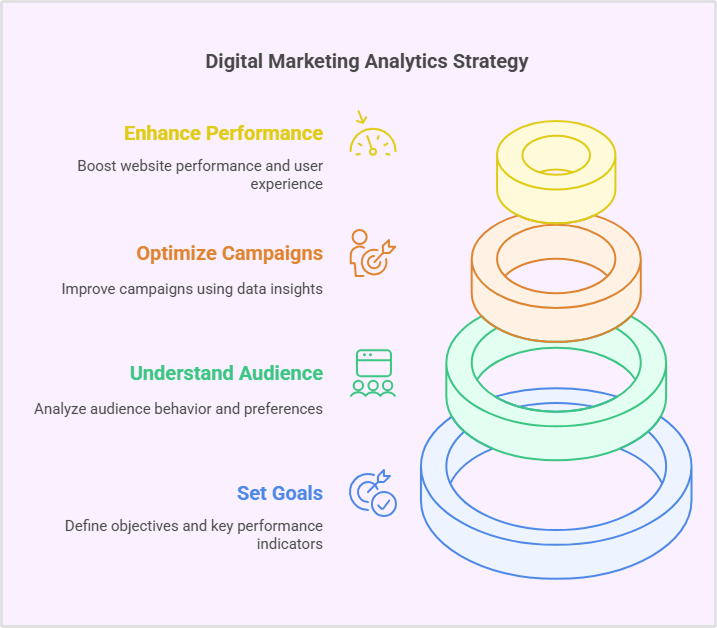
Having data is one thing – using it effectively is another. Digital marketing analytics helps businesses move beyond assumptions and make decisions backed by real insights. Whether it’s optimizing campaigns, refining audience targeting, or improving user experience, leveraging analytics can significantly enhance your marketing strategy.
Set clear goals and KPIs
Before diving into analytics, define what success looks like. Whether it’s increasing conversions, improving product engagement, or reducing customer acquisition costs, setting measurable KPIs ensures that your efforts align with business objectives. For example:
- If you want more sales, track conversion rates and cost per acquisition (CPA).
- If brand awareness is the focus, monitor impressions, reach, and engagement.
- If retention matters most, analyze customer lifetime value (CLV) and churn rate.
By aligning your analytics with specific goals, you gain clarity on what to measure and improve.
Understand your audience and their behavior
Analytics reveals who your audience is, what they want, and how they interact with your brand. Use digital analytics tools to analyze:
- Demographics – Age, location, and interests help tailor marketing messages.
- Behavior flow – Tracks how users navigate your website and where they drop off.
- Engagement patterns – Identifies which content types resonate most.
These insights allow for better personalization, leading to improved customer experiences and higher conversions.
Optimize campaigns based on data insights
Instead of relying on guesswork, let data guide your marketing decisions, and use analytics test automation to keep your tracking dependable.
Analyze past performance to:
- Adjust ad spend towards high-converting channels.
- Refine messaging based on engagement data.
- Improve email open rates by testing subject lines and send times.
Continuously monitoring analytics helps businesses make informed adjustments and maximize campaign effectiveness.
Enhance website performance and user experience
Your website is often the first touchpoint for potential customers. Digital marketing analytics helps optimize it by:
- Identifying pages with high bounce rates and improving their content.
- Tracking load times to ensure a fast, seamless experience.
- Analyzing call-to-action (CTA) performance and making necessary tweaks.
A data-driven approach to website optimization not only improves user experience but also boosts conversions.
Website analytics tool for modern marketers & agencies
Incorporating digital marketing analytics into your strategy ensures that every marketing decision is backed by data. By setting clear goals, understanding audience behavior, optimizing campaigns, and refining the user experience, businesses can drive more meaningful results and stay ahead of the competition.
How Usermaven helps you save your money
Wasting a budget on ineffective marketing strategies can be costly. Without the right data, businesses often invest in channels that don’t bring results, leading to unnecessary expenses. This is where Usermaven makes a difference. With its privacy-friendly digital marketing analytics, you get clear, actionable insights that help optimize spending, improve conversions, and maximize returns.
Identify high-performing and underperforming channels
Not every marketing channel delivers the same results. Some drive high engagement and conversions, while others drain your budget with little impact. Usermaven’s advanced analytics helps you:
- Track which channels bring the most qualified traffic.
- Analyze conversion paths to see where users drop off.
- Optimize ad spend by focusing on high-ROI platforms.
This ensures that your budget is allocated to the most effective marketing efforts, reducing wasted spend.
Reduce customer acquisition costs with precise targeting

Targeting the wrong audience leads to high acquisition costs and low returns. AI in website and product analytics helps businesses refine their audience targeting by:
- Analyzing customer behavior and preferences.
- Identifying the demographics that engage and convert the most.
- Improving ad targeting based on real-time data.
By reaching the right people at the right time, you lower acquisition costs and increase conversion efficiency.
Improve campaign performance with data-driven decisions
Running campaigns without tracking performance is like shooting in the dark. Usermaven provides real-time analytics to:
- Measure ad and content performance across multiple platforms.
- Identify the best-performing creatives, messaging, and formats.
- Adjust campaigns instantly to maximize engagement and ROI.
Instead of relying on guesswork, Usermaven ensures every marketing decision is backed by accurate data.
Prevent budget leaks with precise attribution
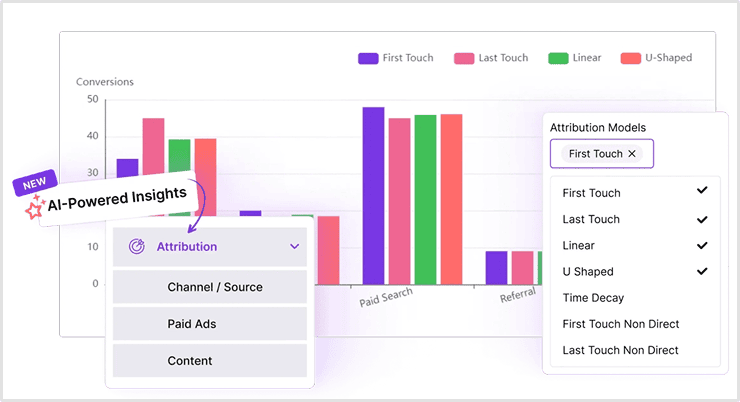
Many businesses struggle to track where their conversions come from, leading to inefficient spending. As marketing attribution software, Usermaven helps teams connect conversions and spend so they can reduce budget leaks.
- Providing a clear picture of the customer journey.
- Accurately assigning credit to the channels that drive conversions.
- Eliminating wasteful spending on low-impact touchpoints.
With better attribution, you can focus your budget on what truly drives results.
Usermaven’s digital marketing analytics empowers businesses to make smarter spending decisions. By identifying high-ROI channels, refining audience targeting, optimizing campaigns, and preventing budget leaks, it ensures that every marketing dollar is invested wisely – helping you save money while driving better results.
Conclusion about digital marketing analytics
[Stop wasting money] – that’s the goal, and digital marketing analytics is the way to achieve it. Without data-driven insights, businesses risk pouring money into ineffective strategies, targeting the wrong audience, and missing valuable opportunities. By leveraging the right analytics, you can track performance, optimize marketing spend, and make informed decisions that drive real results – without unnecessary budget drain.
With Usermaven, you get privacy-friendly, AI-powered insights that eliminate wasteful spending and improve ROI. Instead of relying on assumptions, let Usermaven’s digital marketing analytics guide you toward smarter, more profitable marketing decisions – so you stop wasting money and start seeing real results.
Maximize your ROI
with accurate attribution
FAQs about digital marketing analytics
1. How does digital marketing analytics help reduce wasted ad spend?
It identifies underperforming campaigns and reallocates the budget to high-ROI channels, ensuring every dollar spent contributes to meaningful results.
2. Can small businesses benefit from digital marketing analytics?
Absolutely! Even with a limited budget, tracking key metrics helps small businesses optimize spending and improve marketing efficiency.
3. How often should businesses analyze their marketing data?
Regularly – weekly for campaign adjustments, monthly for trend analysis, and quarterly for strategic planning ensures continuous improvement.
4. Does digital marketing analytics work without third-party cookies?
Yes, privacy-friendly tools like Usermaven use first-party data and cookieless tracking to deliver accurate insights without compromising user privacy.
5. What’s the biggest mistake businesses make with analytics?
Focusing too much on vanity metrics instead of actionable insights that drive conversions, revenue, and long-term growth.
6. How does digital marketing analytics improve customer retention?
By analyzing user behavior, businesses can create personalized experiences that increase engagement and build long-term loyalty.
7. Is digital marketing analytics only for paid campaigns?
No, it also tracks organic traffic, email performance, social media engagement, and overall brand visibility.
Updated

Written by
Adeel Khan
Growth Marketing Expert
Adeel Khan is a full-stack SaaS marketer with 10+ years of experience in content marketing, paid advertising, analytics, and conversion rate optimization. He shares practical insights and strategies drawn from hands-on experience, helping B2B SaaS marketers improve performance and make better marketing decisions.
All articles by Adeel →