What if your GTM strategy could run 24/7 with assistants who never miss a lead, never forget a follow-up, and never need a coffee break?
That’s not the future. That’s happening right now with AI agents for GTM.
Unlike AI-powered GTM platforms, these AI GTM agents focus on one thing and do it exceptionally well, from writing sales emails to surfacing revenue insights in real time.
In this article, we’ll look at the top AI agents for go-to-market strategies that are reshaping how GTM teams work. You’ll also see how sales, marketing, and product leaders are using them to drive growth faster and smarter.
1. Maven AI by Usermaven
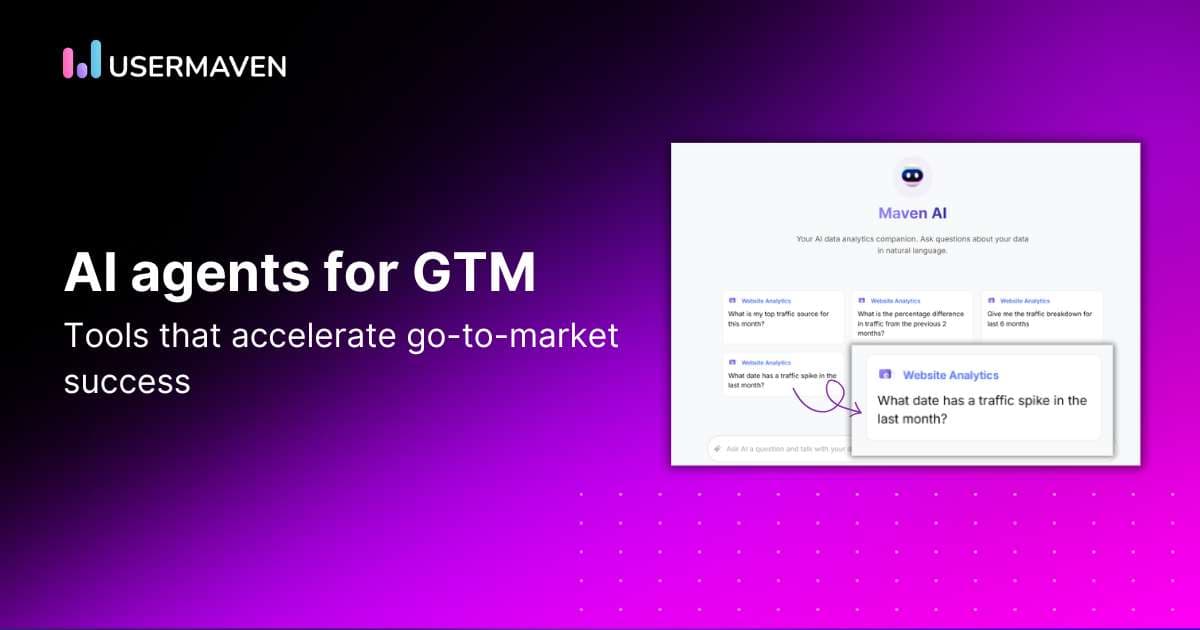
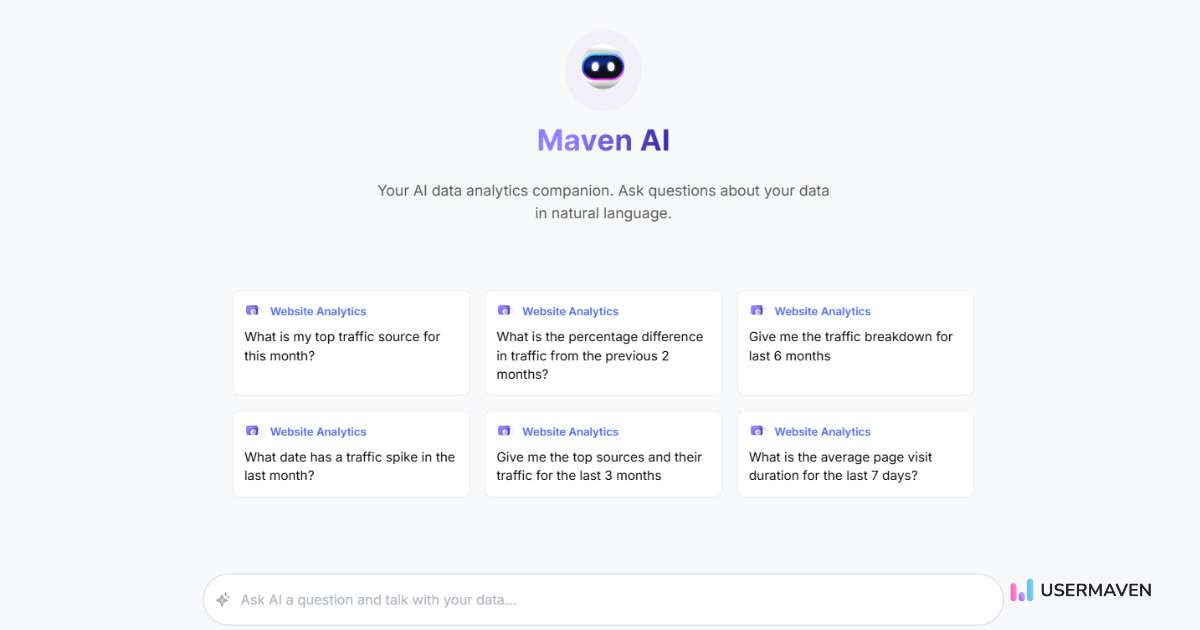
Maven AI is an AI reporting agent for GTM teams. It’s built into Usermaven, a leading analytics platform, and transforms raw data into easy-to-understand insights. Rather than pulling manual reports or waiting for analysts, teams can ask Maven AI direct questions and receive instant, accurate answers.
Key features
- Natural language queries: Ask questions like “What was trial-to-paid conversion last month?” and get immediate insights.
- Custom dashboards: Personalized reporting for sales, marketing, and product leaders.
- Anomaly detection: Surfaces unusual spikes or drops in customer engagement or revenue.
- Easy integration: Runs directly on unified data inside Usermaven, ensuring clean and reliable results.
Benefits for GTM teams
- Removes reporting delays: Get instant answers without waiting on analysts.
- Aligns all teams: Sales, marketing, and product work from the same Dashboards, Attribution, Funnels, and Journeys.
- Surfaces hidden insights: Spot opportunities in retention, attribution, and customer behavior.
- Speeds up decisions: Act quickly on trends or anomalies flagged by Maven AI.
- Optimizes execution: Identify weak channels or churn risks and adjust strategy fast.
- Strengthens other agents: Reliable data from Usermaven makes every GTM agent smarter.
Example use case
A SaaS company gearing up for a launch uses Maven AI to track trial adoption, conversion, and customer behavior in real time. Instead of waiting for an analyst to prepare reports, GTM leaders get insights instantly, enabling them to fine-tune campaigns and accelerate adoption.
Make data-driven decisions
faster with Maven AI
2. Regie.ai
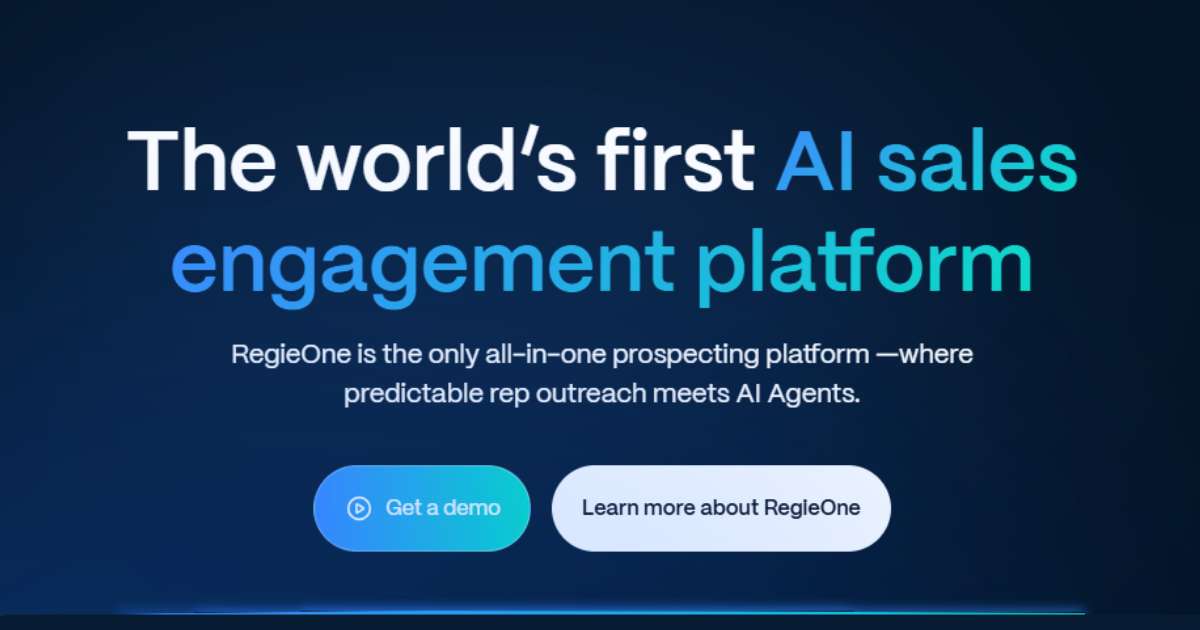
Regie.ai is one of the leading AI sales agents for GTM teams, designed to remove the bottlenecks in outbound messaging. Sales and marketing professionals no longer need to spend hours drafting emails or LinkedIn messages. With this assistant, they can quickly generate multi-touch campaigns that are consistent, personalized, and scalable.
Key features
- AI-generated outbound sequences: Builds multi-touch campaigns tailored to buyer personas and sales goals.
- Personalization at scale: Adjusts messaging based on role, company size, and industry.
- Pre-built templates: Ready-to-use messaging for different verticals and sales motions.
- Integrations: Connects with Salesforce, Outreach, and HubSpot for smooth workflows.
- Performance optimization: Analyzes campaign results and improves messaging automatically.
Benefits for GTM teams
- Boosts efficiency: Saves SDRs and marketers hours each week by automating writing tasks.
- Improves engagement: Personalized outreach increases open and reply rates.
- Scales campaigns: Makes it possible to run hundreds of outbound touches without sacrificing quality.
- Drives alignment: Keeps messaging consistent across sales and marketing channels.
- Frees up focus: Allows GTM teams to concentrate on conversations, not copywriting.
Example use case
A fast-growing SaaS company uses Regie.ai to create outbound email campaigns for new market segments. The AI agent personalizes each email based on role, company size, and industry, leading to a 30% higher response rate compared to manually crafted templates.
3. People.ai
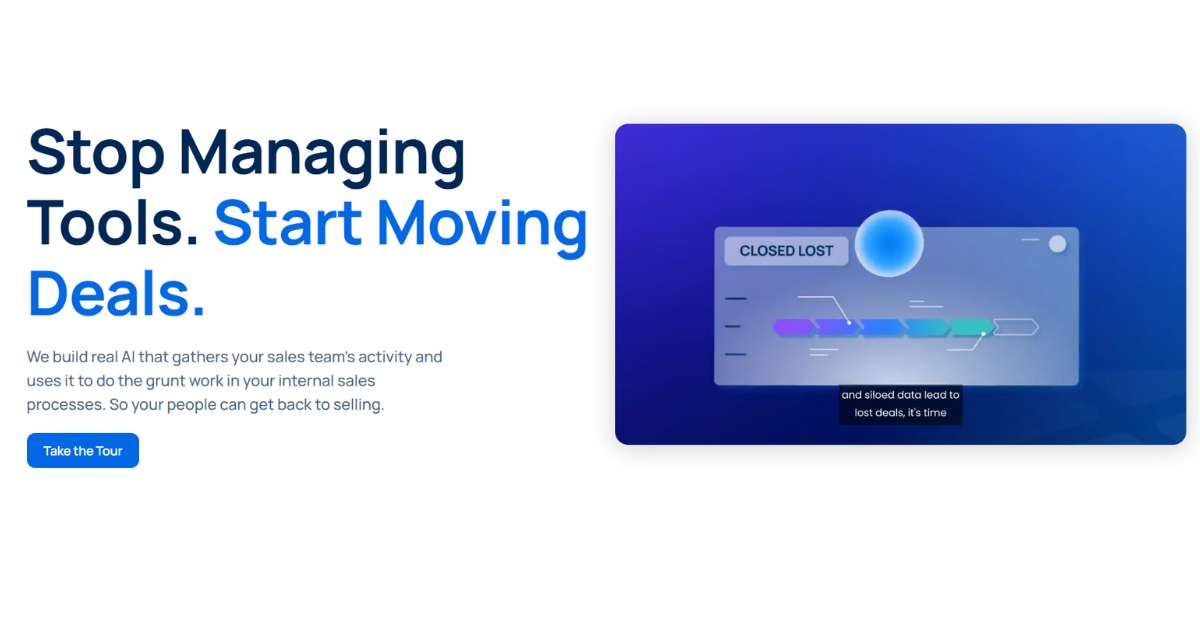
People.ai is an AI revenue intelligence agent that captures and analyzes sales and marketing activity automatically. It removes the need for reps to manually log emails, calls, or meetings, converting this activity into accurate pipeline insights.
Key features
- Automated activity capture: Logs emails, calls, and meetings without rep input.
- Opportunity health scoring: Highlights deals that may be at risk.
- Account engagement mapping: Visualizes interactions across target accounts.
- CRM integrations: Works seamlessly with Salesforce and other leading CRMs.
Benefits for GTM teams
- Ensures data accuracy: No more missed or incomplete activity logs.
- Real-time pipeline visibility: Leaders see which accounts are healthy or under-engaged.
- Improves forecasts: Combines activity data with outcomes for sharper projections.
- Supports coaching: Sales managers gain visibility into rep performance and engagement.
Example use case
A CRO at a B2B SaaS company uses People.ai to identify enterprise accounts with low engagement. By coaching reps to focus on these accounts, the company reduces pipeline leakage and improves win rates.
4. Amplemarket AI agent
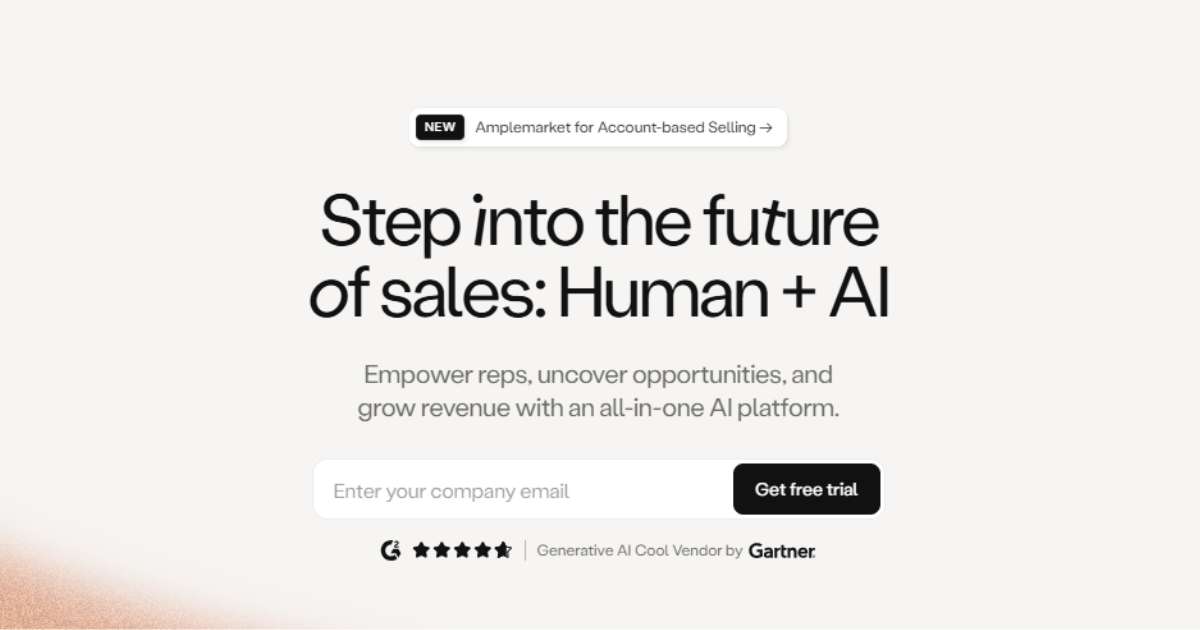
Amplemarket provides an autonomous AI agent for GTM prospecting. It identifies, enriches, and reaches out to leads across multiple channels, freeing reps from repetitive prospecting tasks.
Key features
- AI-driven lead discovery: Finds ICP-fit leads automatically.
- Enrichment: Adds missing contact details and company insights.
- Multi-channel outreach: Runs campaigns via email, LinkedIn, and calls.
- Automated sequences: Schedules touches and follow-ups without manual effort.
- Performance tracking: Measures outreach success for optimization.
Benefits for GTM teams
- Saves time: Removes the manual workload of lead research.
- Increases lead quality: Provides accurate and enriched contact data.
- Keeps reps focused: Reps spend more time closing deals.
- Builds a predictable pipeline: Generates a steady stream of opportunities.
Example use case
A SaaS startup entering a new market uses Amplemarket to identify and engage ICP-matched companies. The agent enriches data, launches outreach, and creates a reliable pipeline of qualified leads.
5. Drift AI
Drift AI is an AI marketing assistant that enables conversational engagement through smart chatbots, similar to AI Voice Agents. It qualifies leads, answers questions, and books meetings in real time. Similarly, an AI customer support agent can handle post-acquisition queries, resolve common issues, and maintain engagement without increasing support headcount.
Key features
- AI-powered chatbots: Engages visitors instantly on websites or apps.
- Lead qualification: Assesses prospects through conversational flows.
- Automated scheduling: Books meetings directly on reps’ calendars.
- Integrations: Syncs with CRMs and marketing automation tools for smooth handoff.
Benefits for GTM teams
- Responds instantly: No more waiting hours to engage inbound leads.
- Boosts conversion rates: Real-time conversations increase demo bookings.
- Removes friction: Automates qualification and scheduling, reducing back-and-forth.
- Supports scalability: Handles thousands of conversations simultaneously.
Example use case
A B2B SaaS company installs Drift AI on its pricing page. Visitors are greeted, qualified with a few quick questions, and immediately routed to the correct account executive’s calendar, dramatically reducing lead drop-off.
6. Artisan

Artisan is an autonomous AI sales agent built for B2B outbound. Its core product is Ava, an AI BDR that handles the entire outbound pipeline without rep involvement, from sourcing leads and writing personalized emails to handling replies and booking meetings directly on your team’s calendar.
Key features
- Autonomous lead discovery: Searches 250M+ verified B2B contacts, filters by ICP criteria, and builds targeted lists without manual input.
- Hyper-personalized outreach: Writes unique, personalized emails using dozens of enrichment sources, no templates or fill-in-the-blank variables.
- Reply handling and objection management: Reads incoming responses, answers questions, handles pushback, and routes qualified prospects to reps.
- Intent signal triggers: Monitors hiring activity, funding rounds, and other buying signals to reach prospects at the right moment.
- CRM integrations: Syncs in real time with Salesforce and HubSpot so your team always has a current view of every contact.
Benefits for GTM teams
- Reduces pipeline cost: Teams using Ava report generating outbound pipeline at roughly one-fifth the cost of a human BDR.
- Scales without headcount: Runs hundreds of personalized outreach sequences simultaneously, without sacrificing message quality.
- Keeps reps focused on closing: Reps only engage once a prospect is qualified and ready to talk.
- Speeds up outbound launch: Onboarding takes minutes, you can start sending from your primary mailbox on day one.
- Fits your existing stack: Plugs into your current CRM, calendar, and data tools with no migration required.
Example use case
A SaaS startup entering a new vertical uses Artisan to stand up outbound without hiring a BDR team. Ava identifies ICP-fit prospects, launches a multi-touch email sequence, handles early replies, and books discovery calls directly on the sales team’s calendar. The team goes from zero to a full pipeline in days, not weeks.
6. Outreach Kaia
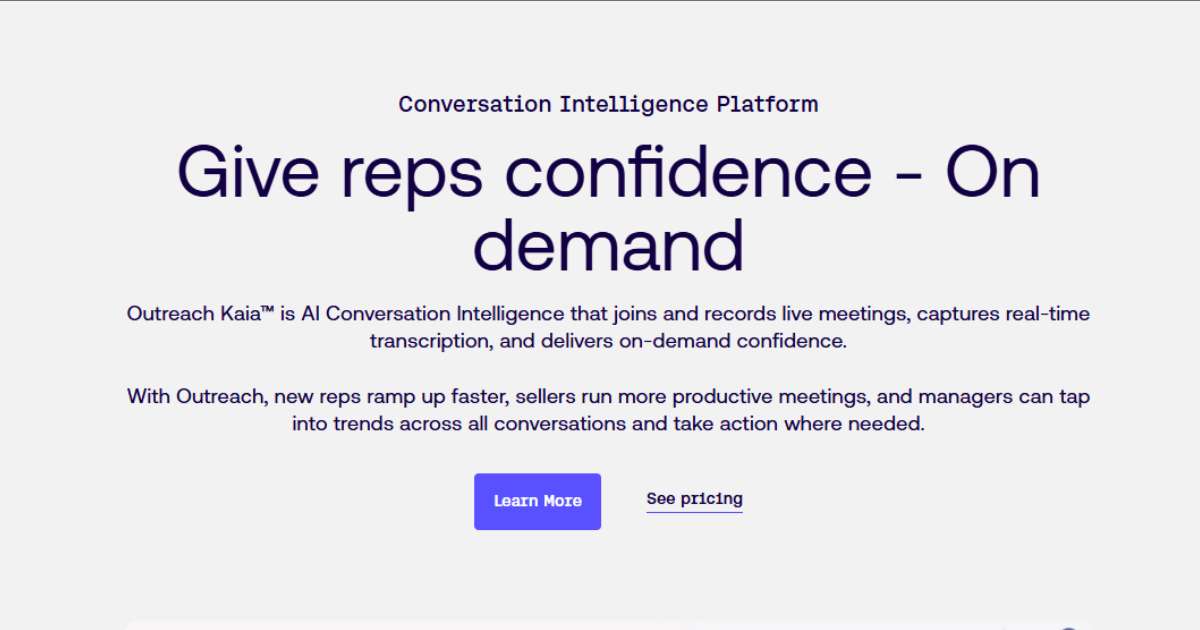
Kaia is an AI-powered GTM assistant from Outreach.io that helps sales reps during calls and ensures consistent follow-ups.
Key features
- Live call coaching: Provides AI-suggested responses in real time.
- Meeting notes and summaries: Automatically captures key points and action items.
- Next-step recommendations: Suggests what to do after each meeting.
- CRM integration: Updates records automatically, reducing admin work.
Benefits for GTM teams
- Improves rep performance: Real-time guidance increases confidence on calls.
- Reduces errors: Eliminates mistakes in follow-ups and action tracking.
- Maintain consistency: Keeps customer communication aligned.
- Saves time: Reps spend less time on note-taking and data entry.
Example use case
During a discovery call, Kaia suggests responses to tough product questions in real time. Afterward, it generates a meeting summary with next steps, ensuring nothing falls through the cracks.
7. Clari Copilot
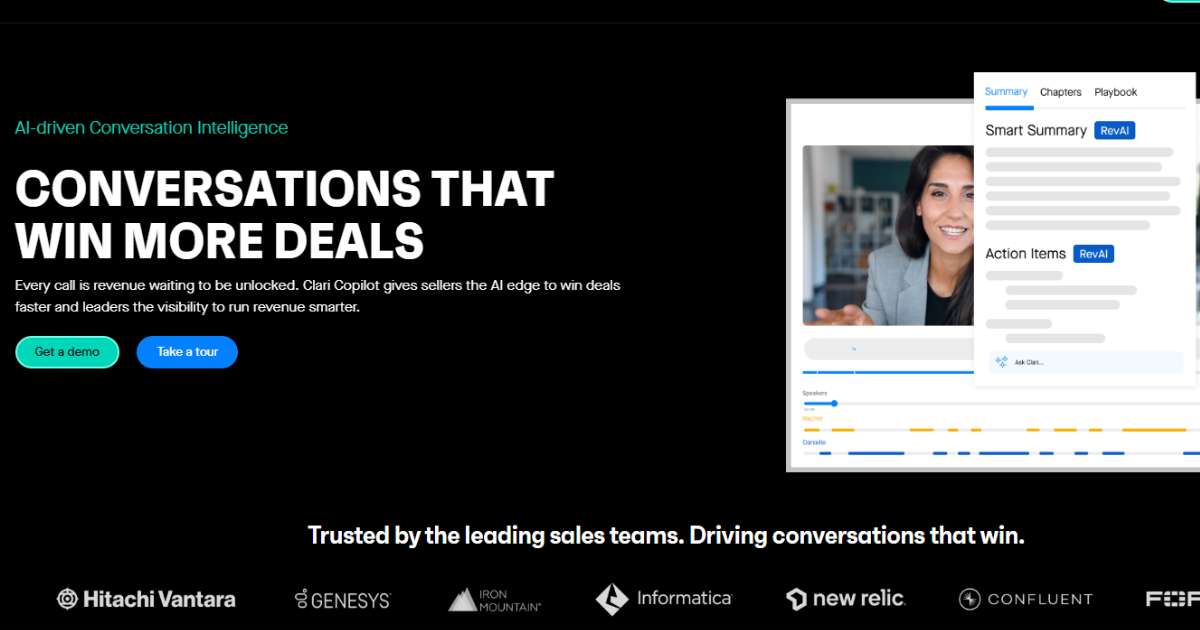
Clari Copilot is an AI revenue intelligence agent that provides forecasting accuracy and deal health visibility. It helps GTM teams spot risks and align on revenue goals.
Key features
- AI-powered forecasting: Predicts revenue outcomes more accurately.
- Deal inspection: Scores opportunities to highlight at-risk deals.
- Call transcription and coaching: Provides insights for rep improvement.
- RevOps integration: Fits seamlessly into Clari’s revenue operations suite.
Benefits for GTM teams
- Improves accuracy: Forecasts with greater confidence for executives and boards.
- Prevents slippage: Identifies risky deals early.
- Aligns teams: Sales, marketing, and finance work from the same numbers.
- Supports coaching: Provides call-level insights to improve rep performance.
Example use case
A revenue operations leader uses Clari Copilot to review pipeline health before quarterly board meetings. By addressing flagged risks early, they deliver more accurate forecasts.
8. Lavender AI
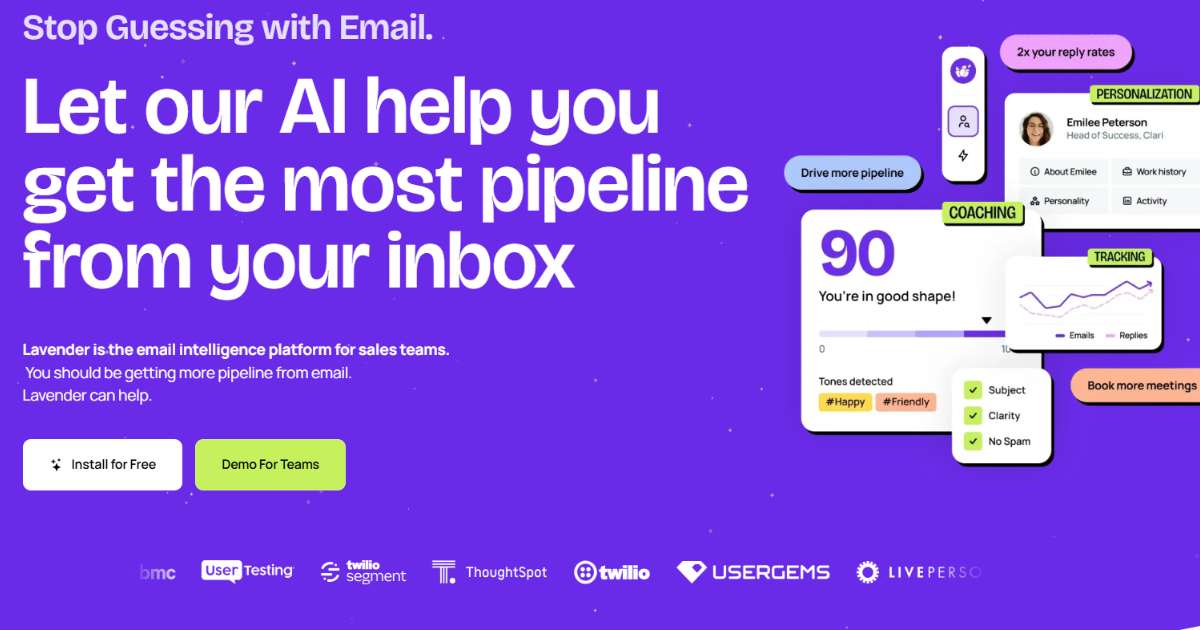
Lavender AI is an AI sales agent designed to optimize email outreach. It helps SDRs and AEs craft messages that are more likely to get replies.
Key features
- Email scoring: Rates emails in real time and suggests improvements.
- Personalization guidance: Recommends tweaks based on prospect data.
- Subject line optimization: Suggests edits for higher open rates.
- Workflow integration: Works within Gmail, Outlook, and CRMs.
Benefits for GTM teams
- Boosts response rates: Improves cold email performance.
- Saves time: Speeds up email writing for SDRs.
- Ensures relevance: Helps reps stay focused on prospect needs.
- Increases confidence: Provides clear, actionable feedback on every email.
Example use case
An SDR writing to a high-value prospect uses Lavender AI to refine tone and subject line. The improved email secures a meeting that may have otherwise gone unanswered.
9. Zendesk
Zendesk AI agents are purpose-built for customer service environments, but for GTM teams, the value is in what great service unlocks. Faster resolution, lower churn, and stronger retention directly impact revenue, making customer service a growth lever, not just a cost center.

Key features
- End-to-end ticket resolution: Handles common requests autonomously across chat, email, voice, and messaging.
- Intelligent routing: Directs conversations based on intent, urgency, and customer history.
- Real-time agent assistance: Surfaces relevant knowledge to human agents during live interactions.
- Responsible AI framework: Operates under a governance model with ISO 42001 certification for enterprise compliance.
Benefits for GTM teams
- Reduces churn: Faster, more consistent resolution keeps customers from walking away.
- Supports expansion revenue: Satisfied customers are more likely to upgrade and renew.
- Frees human agents: Automation handles volume so reps focus on high-value interactions.
- Connects service to revenue: Links support performance to retention and lifetime value metrics.
Example use case
A SaaS company scaling its GTM motion deploys Zendesk AI agents for service to handle tier-one support automatically. Resolution times drop, CSAT improves, and the customer success team shifts focus to expansion opportunities, turning the support function into a measurable growth driver.
Why do businesses need AI agents for marketing?
Modern marketing moves fast. Teams are expected to create personalized campaigns, qualify leads in real time, and track results across dozens of channels. Doing all of this manually slows things down and leaves room for mistakes.
This is why many businesses are turning to AI agents for marketing. These agents act like dedicated helpers that focus on specific jobs. Instead of replacing marketers, they take over the repetitive, manual work so teams can focus on strategy and creativity.
Here’s why businesses are adopting them:
- Faster campaign execution: AI agents can generate emails, ads, and outreach messages in minutes, helping teams launch campaigns quicker.
- Personalization at scale: They tailor content to each audience segment, ensuring messages feel relevant without requiring hours of manual effort.
- Smarter lead qualification: Chat-based AI agents can engage website visitors in real time, qualify them, and even book sales meetings automatically.
- Data-driven insights: Reporting agents highlight which campaigns perform best, so marketers can adjust quickly instead of waiting weeks for reports.
- Cost efficiency: By automating repetitive tasks, businesses reduce operational costs and make better use of their marketing budget.
What features to look for in AI GTM agents?
The right agents should actually make work easier, decisions clearer, and results stronger. Look out for these features:
- Role-specific focus: A good agent doesn’t try to do everything. Instead, it excels at one job, whether that’s analyzing pipeline health, writing sales emails, or qualifying leads.
- Context awareness: Agents should work with the data you already have in your CRM, product analytics, or marketing tools. Without context, the output often feels generic or inaccurate.
- Real-time performance: GTM decisions can’t wait for weekly reports. Look for agents that respond instantly with insights or next steps.
- Ease of adoption: The best agents fit naturally into existing workflows. Teams shouldn’t need months of training to start using them.
- Scalability: As your team grows, the agent should scale with you, handling more leads, more campaigns, or more data without breaking.
- Clear outputs: Insights should be easy to understand and act on. If you still need an analyst to interpret the results, the agent isn’t doing its job.
- Trustworthiness: Accuracy matters. Choose AI agents that rely on clean, reliable data rather than producing “black box” recommendations.
Pro tip: The best way to evaluate an AI GTM agent is to test how it supports one of your real workflows. For example, can it help a strategist prepare for a product launch, or a sales rep handle live objections? If it makes a real task faster and more effective, it’s a keeper.
How do AI agents work for GTM strategists?
AI agents for GTM are like task-focused assistants that plug directly into the strategist’s workflow. Instead of trying to replace an entire platform, each agent specializes in one job and executes it with precision, saving time and reducing complexity.
Here’s how they typically work:
- Connect to your data: AI reporting agents pull information from tools like CRMs, analytics platforms, and marketing systems.
- Automate repetitive tasks: Sales agents can write cold emails or build outreach sequences, while marketing assistants can qualify inbound leads through chat.
- Surface insights: Revenue intelligence agents highlight at-risk deals, trends in customer behavior, or unusual activity that strategists should know about.
- Guide decision-making: By handling the heavy lifting, these agents give GTM strategists the context they need to adjust campaigns, reallocate resources, or coach their teams more effectively.
In summary,
AI agents are reshaping how GTM teams work. From content creation to forecasting, they handle repetitive tasks so teams can focus on strategy and execution.
Now you have the list of top AI agents for GTM strategies to explore and put into action. But remember, the common thread is data. AI-powered GTM assistants can only be as strong as the information they run on. That’s why businesses looking to adopt AI agents should start by ensuring their data is unified, reliable, and accessible across teams.
With Usermaven, that foundation is already built. It unifies product, sales, and marketing data while giving you a marketing attribution tool to see which channels drive revenue. Maven AI then turns this data into clear insights that keep GTM teams aligned and confident.
Are you ready to execute smarter go-to-market strategies? Book a demo with Usermaven and see how it can transform the way your team works.
Drive business growth
with AI-powered analytics
FAQs
1. Why does agentic AI matter for GTM?
Agentic AI matters for GTM because it gives teams the ability to automate complex tasks with context and autonomy. Instead of only generating outputs, these agents can decide what to do next, adapt to changing data, and complete work without constant setup. For GTM teams, this means faster execution, more accurate insights, and better alignment across sales, marketing, and product.
2. AI agents vs chatbots vs multi-agent systems: What’s the difference?
These terms often get mixed up, but they are not the same. Here is the difference between these terms:
• AI agents are task-focused assistants. They specialize in a role like reporting, lead scoring, or forecasting, and operate with autonomy.
• Chatbots are more limited. They respond to questions or follow scripts but usually cannot make decisions or take action beyond a conversation.
• Multi-agent systems involve several AI agents working together. For GTM, that could mean one agent handling outreach, another managing data analysis, and another tracking revenue, all collaborating for a smoother process.
3. What is agent washing, and how do you tell real AI agents from impostors?
Agent washing happens when companies label ordinary software features as “AI agents” to ride the trend. These tools often lack autonomy and only perform basic automation. You can spot impostors by checking if the tool actually works independently. Real AI agents adapt to context, make decisions, and handle tasks without constant setup. If the tool just runs a script or repeats rules, it is not a true AI agent.
4. Do I need technical expertise to use AI agents?
No, most AI agents for GTM are built to be user-friendly. They integrate with CRMs, analytics platforms, and marketing tools without requiring coding. GTM teams can use natural language to interact with reporting agents or plug AI sales assistants directly into their outreach platforms. While advanced users may customize integrations, the day-to-day use is designed to be simple enough for non-technical teams.
Updated

Written by
Imrana Essa
SaaS Marketing Lead
Imrana Essa is a marketing lead and content strategist with 8+ years of experience creating and leading content for B2B and SaaS brands. She specializes in marketing analytics, attribution, content strategy, and organic growth, translating complex marketing concepts into clear, actionable insights. Her work focuses on helping marketers understand performance, make data-informed decisions, and build strategies that contribute to sustainable growth.
All articles by Imrana →